

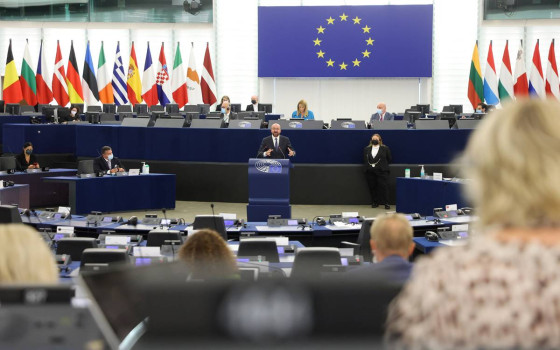
It includes more than 186 billion euros for commitments and more than 168 billion for payments. The EU countries approved the 2023 budget and await its approval by the European Parliament tomorrow, Wednesday.

- Europe and Arabs
- Tuesday , 22 November 2022 17:21 PM GMT
Brussels: Europe and the Arabs
The member states of the European Union approved today, Tuesday, the common text of the general budget of the European Union for the year 2023, which was agreed upon in negotiations with the European Parliament on November 14. The qualified majority required for approval has been reached during today's meeting in Brussels, meaning the Council is giving the green light to the EU budget for 2023.
The adoption of the budget will be announced by the European Parliament once the joint text is also approved. A budget consists of commitments, which are legally binding promises to spend money on activities that are carried out over several years. The payments cover expenses arising from commitments entered into during the current or prior years. Negotiators of the EU Council representing member states and Parliament reached an agreement on the EU budget for 2023 on November 14, within the deadline set in the treaty. Formal approval of the agreement is required from both institutions. It is expected to be approved by the European Parliament on November 23, 2022.
According to the EU institutions in Brussels, the Council and the European Parliament have reached an agreement on the EU budget for 2023, which has a strong focus on the main policy priorities of the EU.
Total liabilities have been set at €186.6 billion. This is an increase of 1.1% compared to the 2022 budget as revised. €0.4 billion has been kept under the spending cap of the multiannual financial framework for 2021-2027, allowing the EU to respond to unforeseen needs.
Payments totaled €168.6 billion, up 1% from 2022.
"We welcome our agreement on next year's budget because it will allow us to focus on priority areas for the EU in a particularly volatile geopolitical context," said the current Czech rotating presidency of the Union. "It also ensures a realistic approach, taking into account the current economic situation, the interests of taxpayers and the need to address challenges." new ones that may arise in 2023. "




No Comments Found