

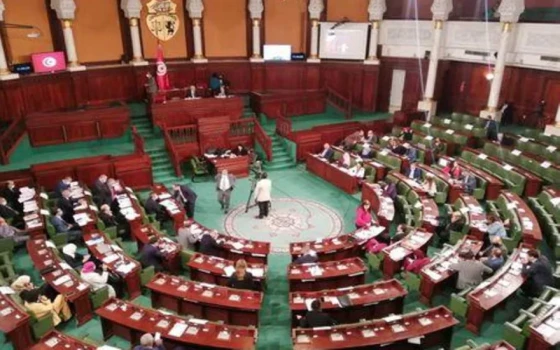
Tunisia: Voting has begun in the legislative elections
- Europe and Arabs
- Saturday , 17 December 2022 16:14 PM GMT
Today, Saturday, voting began inside Tunisia in the legislative elections, after voting began outside the country, since December 15.
Today, Saturday, Tunisian President Kais Saied and his wife cast their votes at a polling station in the Nasr district to elect members of the Assembly of the Representatives of the People.
The polling stations have opened their doors since eight in the morning to receive voters, to elect their representatives in the Assembly of the Representatives of the People, and the polling process continues until six in the evening.
The Independent Higher Authority for Elections allocated 11,485 polling stations and 4,692 polling centers inside and outside Tunisia, under the supervision of 46,000 human cadres.
1058 candidates are competing in the legislative elections for 161 seats in the parliament, while the total number of voters who have the right to vote exceeded 9 million voters, for the first time in the country's history, with 50.8% of women and 49.2% of men.
The legislative elections are being monitored by more than 5,000 local, Arab, African and international organizations, in addition to many local and international media.
The head of the Independent High Authority for Elections in Tunisia, Farouk Bouaskar, confirmed the availability of the ingredients for the success of the legislative elections that will take place tomorrow, Saturday, inside the Tunisian territories, especially in light of the state of awareness experienced by the Tunisian people and their keenness to exercise their electoral right.
Bouaskar said - in an interview with the Middle East News Agency, hours before the start of the polling process to elect members of the Assembly of the Representatives of the People - that the authority has taken all preparations to ensure the success of these elections, which represent a historical date and a very important entitlement, as it allocated 11,485 polling stations and 4,692 polling centers. Inside and outside Tunisia, it delegated 46,000 human cadres responsible for organizing the voting process, qualifying them, and scrutinizing their impartiality, independence, and integrity.
Bouaskar expressed his hope that the voters would turn out for the ballot boxes out of awareness of the importance of this stage and the national and historical responsibility to express their will with the utmost freedom and independence and to choose their representatives in the Assembly of the Representatives of the People, stressing the Commission's keenness to hold free, pluralistic and democratic elections in light of its commitment during all the electoral events that took place. I have supervised its implementation since 2011 with the principles of transparency, integrity, independence and impartiality.
Source: agencies,



No Comments Found