
Arab and international reactions to the Riyadh and Tehran agreement to resume relations
- Europe and Arabs
- Saturday , 11 March 2023 16:36 PM GMT
Brussels: Europe and the Arabs - agencies
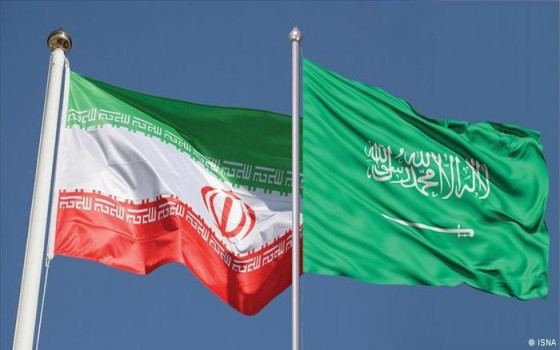
Arab and international reactions followed the announcement of Riyadh and Tehran's agreement to resume relations after negotiations sponsored by China that took place over the past two years.
The European Union welcomed the announced agreement on the resumption of diplomatic relations between the Kingdom of Saudi Arabia and the Islamic Republic of Iran, and looks forward to its implementation. According to a statement issued by the European Foreign Policy Spokesperson on Saturday and distributed in Brussels, "The European Union recognizes the diplomatic efforts that have led to this important step.
Since both Saudi Arabia and Iran are central to the security of the region, the resumption of bilateral relations could contribute to the stability of the region as a whole.
Promoting peace and stability and reducing tensions in the Greater Middle East are among the main priorities of the European Union. The European Union remains ready to engage with all actors in the region in a gradual and comprehensive manner, with full transparency.
Saudi Foreign Minister Prince Faisal bin Farhan said that the agreement with Iran came as a result of two-year talks and understandings based on good neighborliness, respect for the sovereignty of states, and addressing all regional security challenges through this dialogue.
Prince Faisal bin Farhan added - in an exclusive statement to Al-Arabiya Al-Hadath news channel today, Saturday - that "the Kingdom of Saudi Arabia is convinced that dialogue is the most effective way to address all problems and matters," stressing that the Kingdom of Saudi Arabia looks optimistically to the future and works to consolidate relations. Serving the interests of all countries in the region and protecting the security of the region.
In a statement issued by Iran, Saudi Arabia and China, Tehran and Riyadh announced the agreement to "resume diplomatic relations between them and reopen their embassies and representations within a maximum period of two months."
The statement reached stated that the agreement included "their affirmation of respect for the sovereignty of states and non-interference in their internal affairs."
The statement came as a culmination of four-day talks that took place in Beijing, from the sixth to the tenth of March, and it was not disclosed. He is scheduled to meet with the foreign ministers of both countries to implement this decision and make the necessary preparations for the exchange of ambassadors.
"The world is not limited to the Ukraine issue"
For his part, Chinese chief diplomat Wang Yi said today, Friday, that the successful talks between Iran and Saudi Arabia in Beijing are a victory for dialogue and peace, after China led a major diplomatic shift in the Middle East region.
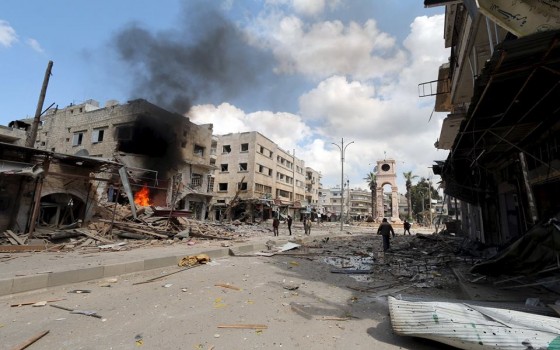
The agreement comes after a seven-year diplomatic break that threatened stability and security in the Gulf region and helped fuel conflicts in the Middle East from Yemen to Syria.
"This is a victory for dialogue, a victory for peace, and it brings great good news at a time when the world is witnessing a lot of turmoil," the Chinese Foreign Ministry quoted Wang as saying at the conclusion of the dialogue between Saudi Arabia and Iran.
Today's historic agreement is a diplomatic victory for China in a region whose politics are dominated by the United States. It also comes at a time when China is calling for dialogue on the Russian war in Ukraine, amid accusations from the West that Beijing has not done enough on the issue.
"As a good-faith and reliable mediator, China has faithfully fulfilled its duty as the host country," Wang said. He said China will continue to play a constructive role in dealing with thorny issues in the world today and will show its "responsibility" as a major country. "The world is not limited only to the issue of Ukraine," he added.
Saudi and Iranian welcome
Saudi National Security Adviser Musaed bin Muhammad Al-Aiban said, "The Kingdom's leadership welcomes the initiative of His Excellency President Xi Jinping, based on the Kingdom's firm and continuous approach since its founding in adhering to the principles of good neighborliness and taking everything that would enhance security and stability in the region and the world, and adopting the principle of dialogue and diplomacy to resolve disagreements.”
For his part, Iranian Foreign Minister Hossein Amir Abdollahian said: "Politics with neighboring countries, being the main focus of the Iranian government's foreign policy, is moving strongly in the right direction, and the diplomatic apparatus is actively working to prepare for further steps at the regional level."
Washington: The pressure brought Iran to the negotiating table
White House spokesman John Kirby said today that Saudi Arabia kept Washington informed about its talks with Iran to restore diplomatic relations, but the United States did not participate directly in them.
Kirby said that the road map announced today was apparently the result of several rounds of talks, some of which were held in Baghdad and the Sultanate of Oman, explaining that the United States supported this process as it seeks to end the war in Yemen and what he described as Iranian aggression.
"The Saudis actually kept us informed about these conversations that they were having, just as we inform them of our activities, but we were not directly involved," he added.
He expressed the White House's belief that internal and external pressure, which included effective Saudi deterrence of attacks by Iran and its proxies, eventually brought Iran to the negotiating table. "We support any efforts that would de-escalate tensions there and in the region. We believe this is in our interest, and it is something we have worked on through our effective mix of deterrence and diplomacy," he said.
Israeli criticism
For his part, Barak Ravid, the political affairs reporter for the Hebrew website Walla, reported on his Twitter account that a senior Israeli official said in a briefing with reporters who traveled with Prime Minister Netanyahu to Rome that the agreement between Saudi Arabia and Iran is a result of the weakness of the United States, the West and the Israeli government. precedent towards Iran.
Egypt is watching with interest
Egypt announced that it was "following with interest the agreement" announced to resume diplomatic relations between Saudi Arabia and Iran.
In a statement issued by the Ministry of Foreign Affairs, Egypt expressed its aspiration for the agreement to contribute to easing tensions in the region, to strengthening the pillars of stability and preserving the capabilities of Arab national security, and the aspirations of the peoples of the region for prosperity, development and stability.
Oman, the Emirates and Qatar: a step to support the stability of the region
Omani Foreign Minister Badr al-Busaidi said that his country welcomes "the results of the talks hosted by China between brothers in Saudi Arabia and Iran and their agreement to resume diplomatic relations and activate security, economic and cultural cooperation. We believe that this step will enhance security and stability in the region and work to consolidate relations between countries and peoples."
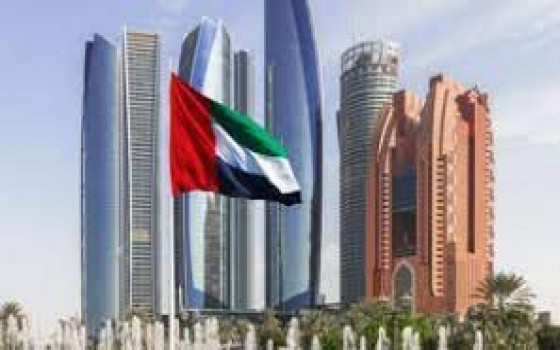
While the diplomatic advisor to the Emirati President, Anwar Gargash, wrote on Twitter, "We welcome the agreement between Saudi Arabia and Iran to resume diplomatic relations between the two countries, and we value the Chinese role in this regard. The UAE believes in the importance of positive communication and dialogue between the countries of the region towards consolidating concepts of good neighborliness and starting from common ground to build a future." more stable for all
In Qatar, Prime Minister Sheikh Mohammed bin Abdulrahman bin Jassim Al Thani, who also holds the position of foreign minister, said two calls to his Iranian and Saudi counterparts to welcome the agreement.
Hezbollah: "a good turnaround"
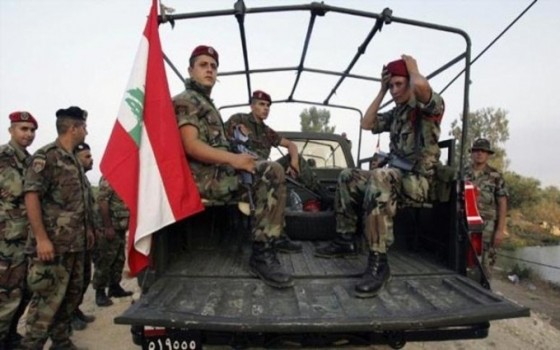
The Secretary-General of the Lebanese Hezbollah group said that the resumption of relations between Iran, which supports his group, and Saudi Arabia is a "good turnaround".
Nasrallah said in a televised speech, "This is a good transformation... and it will not be at the expense of the peoples of the region, but rather in the interest of the peoples of the region, and we are absolutely confident that this will not be at our expense."
Nasrallah warned that the full results of the move were still unknown, but said, "We are happy." He added, "It is certainly an important development if it follows its normal course. This, of course, can open horizons in the entire region, including in Lebanon."



No Comments Found