

Fears of the expansion of the conflict in Lebanon increased after the assassination of Al-Arouri during an attack on the southern suburb of Beirut

- Europe and Arabs
- Wednesday , 3 January 2024 21:2 PM GMT
Capitals: Europe and the Arabs - agencies
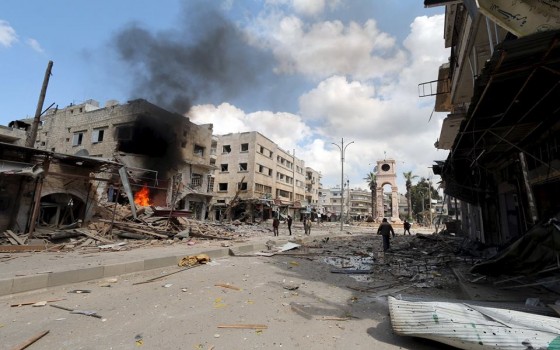
The Mufti of Lebanon considered that Israel is trying in various ways and methods to plunge Lebanon into war through its repeated aggression against southern Lebanon and targeting villages and towns and those who are safe in their homes, the latest of which is the treacherous targeting of the southern suburb of Beirut. It also launches an unprecedented attack with its drones that arrive and roam in the skies of Lebanon, violating international resolution 1701. .
The Mufti of the Lebanese Republic, Sheikh Abdul Latif Derian, condemned the Israeli aggression on the southern suburb of Beirut and the assassination of the Deputy Head of the Political Bureau of the Hamas Movement, Saleh Al-Arouri, and a number of his companions, considering this operation to be an assault on Lebanon and the Lebanese.
Sheikh Derian said in a statement today, Wednesday, that terrorism and criminality are the hallmark of Israel, which violates all international resolutions in Gaza, the rest of the occupied Palestinian territories, and Lebanon.
The Mufti of Lebanon considered that Israel is trying in various ways and methods to plunge Lebanon into war through its repeated aggression against southern Lebanon and targeting villages and towns and those who are safe in their homes, the latest of which is the treacherous targeting of the southern suburb of Beirut. It also launches an unprecedented attack with its drones that arrive and roam in the skies of Lebanon, violating international resolution 1701. .
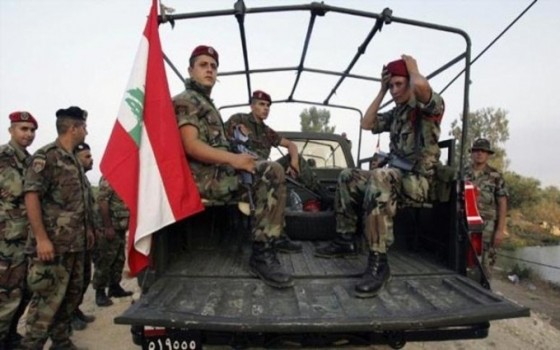
Speaker of the Lebanese Parliament, Nabih Berri, discussed with the Commander of the Lebanese Army, General Joseph Aoun, the field and security developments in the country.
This came during their meeting today, Wednesday, at the headquarters of the Lebanese Parliament in Ain al-Tineh in the capital, Beirut.
During the meeting, the general situation and the latest field developments were presented in light of Israel's continuation of its aggressive war on the Gaza Strip and Lebanon and the conditions of the military establishment.
Earlier, Lebanese newspapers published today considered that Israel’s assassination of Hamas leader Saleh Al-Arouri through missile strikes in the capital, Beirut, threatens stability in Lebanon, especially since it is the first incident of its kind in nearly 17 years.
Under the title, “The most dangerous breach portends a broader conflagration,” the Lebanese newspaper An-Nahar wrote, “Days before three months had passed since the Gaza War and the field confrontations in southern Lebanon, Israel struck the most dangerous blow deep inside Lebanon and the first since the 2006 war, by assassinating Saleh Al-Arouri, one of the greatest symbols and leaders.” The Hamas movement, deputy head of the movement’s political bureau, is described in the axis of resistance as the architect of the “unity of the squares,” in the heart of the southern suburbs of Beirut.
The newspaper added that this development is considered the most dangerous because Israel has violated the rules of engagement prevailing in southern Lebanon since October 8, even if it does not directly target Hezbollah or the Lebanese government.
She considered that the incident constituted the most dangerous intelligence and military security breach since the “Al-Aqsa Flood” operation, explaining that this development raises questions about whether a new phase of the military and intelligence conflict will open to the West between Israel on the one hand, and “Hamas” and “Hezbollah” in particular on the other. An opposing party pointed out that it does not seem clear whether the incident will lead to the transition of all-out war to Lebanon or whether the response to Al-Arouri’s assassination will remain within the framework of a traditional escalation in operations, even if it exceeds the framework of the previous stage.
In the Lebanese newspaper Nidaa Al-Watan, the main headline was titled “Israel assassinates Al-Arouri and the “Rules of Engagement,” stressing that the incident is an unprecedented development in the context of the Gaza war.
The newspaper said, "Yesterday, Israel assassinated Saleh Al-Arouri, deputy head of the political bureau of the Hamas movement, and carried out its operation in the southern suburb of Beirut when Al-Arouri left the meeting place in a building on Hadi Nasrallah Highway yesterday evening and got into the car."
The newspaper monitored early reservations for tourists who came to Lebanon on the occasion of the holidays, against the backdrop of the Israeli targeting of the suburb, which is only a few kilometers from the airport.
Under the title “The most dangerous violation in 17 years: the assassination of Saleh Al-Arouri in the suburb,” the Lebanese newspaper Al-Liwaa wrote: “What was expected has happened. As for the high-ranking figure targeted, he is the deputy head of the Hamas political bureau, Sheikh Saleh Al-Arouri (58 years old), who He fell as a martyr in a treacherous assassination operation in a residential apartment on a main street in the southern suburb by an Israeli march that struck in the heart of the suburb for the first time since 2006, and in the most serious violation of international resolutions and the rules of engagement. Two Qassam leaders fell with him, namely Samir Fandi (Abu Amer) and Azzam. Al-Aqraa (Abu Ammar), in addition to 3 other martyrs and a number of wounded.”
The newspaper quoted political sources as saying, “The assassination of Al-Arouri and his two companions in the southern suburb of Beirut is a dangerous Israeli escalation in the midst of the ongoing confrontation between Hezbollah and Israel along the southern Lebanese border and in the ongoing war between the movement and Israel in the Gaza Strip, and it may have undesirable repercussions and risks.” Calculated on and around the southern border.
Sources for Al-Liwaa newspaper ruled out that the incident would lead to a wide-scale war affecting the Israeli interior and the Lebanese interior, for many reasons and caveats, the most prominent of which is that the decision to such a war exceeds the capabilities and capabilities of both parties.


No Comments Found