

The UN envoy to Yemen: Keeping the political process in the 'waiting room' has disastrous consequences for the entire region
- Europe and Arabs
- Tuesday , 16 April 2024 12:16 PM GMT
New York - Sanaa: Europe and the Arabs
Hans Grundberg, the Special Envoy of the United Nations Secretary-General for Yemen, expressed concern about the “increasing and clear divergence between the parties to the conflict” in the country instead of narrowing the dispute and building confidence. According to what was stated in the daily news bulletin of the United Nations.
In his speech before the UN Security Council, Mr. Grundberg said that the month of Ramadan and Eid al-Fitr this year did not foster hope as was the case in the past two years, as roads remained closed and detainees who were looking forward to spending the Eid with their families remained in detention.
In addition, the parties' unilateral actions threaten further bifurcation of the economic system, including the disintegration of the currency in circulation in areas controlled by Ansar Allah, also known as the Houthis.
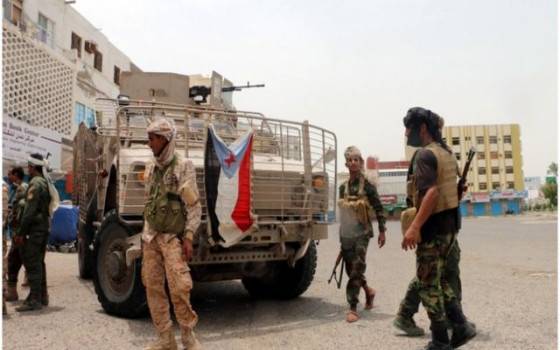
On the military front, the Special Envoy said that the situation is still under control compared to the situation before the agreement on a national truce in April 2022, but he pointed out that recent times have witnessed an escalation of hostilities on several fronts, especially in Al-Dhalea and Lahj.
He added: "What Yemenis ultimately need is a nationwide ceasefire, improved living conditions, and the resumption of an inclusive political process in which a wide range of voices meaningfully participate, including women, youth, civil society, and marginalized groups."
With more than six months having passed since the ongoing escalation in the Red Sea and Gulf of Aden, Mr. Grundberg warned of the repercussions of not having a ceasefire in Gaza and not completely stopping the attacks by the Houthis on commercial and military ships and by the United States, the United States and the United Kingdom on military targets in the group’s areas of influence. .
He said: “The recent developments related to Iran and Israel underscore the urgency of this matter. The region, with the support of the international community, must seek ways to coexist on the basis of increased confidence-building and mutual security and move away from the zero-sum mentality of achieving victory at the expense of others.” .
The Special Envoy stressed the need not to make the solution to the conflict in Yemen conditional on resolving other issues, and explained: “We cannot risk Yemen’s chance at peace becoming a secondary loss. The Yemeni people have suffered for too long already, including the 17 million who are still "They depend on humanitarian aid for their survival."
Mr. Grundberg said that neglecting the political process in Yemen and “leaving it in the waiting room” could have disastrous consequences, not only for the country, but for the region as a whole. He said that his efforts to bring viewpoints between the two parties closer will continue. He added that his recent visits to Washington, Riyadh, Muscat, and Moscow focused on the need to reduce the escalation in the Red Sea and focus on the long-term goals of Yemen, and that these goals received great support.
For her part, Edem and Surno, Director of Operations and Advocacy at the Office for the Coordination of Humanitarian Affairs (OCHA), said that while the truce provided valuable relief to the humanitarian situation even after its expiration, the main causes of the widespread needs in Yemen have not yet been addressed, especially with regard to the economy. deteriorating conditions, poorly functioning public services, and protracted displacement due to conflict.
Ms. and Surno highlighted two major issues facing Yemen today: the resurgence of cholera and increasing levels of acute malnutrition.
Regarding cholera, she said that the disease had re-emerged in an alarming manner since October, but the response in government-controlled areas had slowed its spread. As for the areas controlled by the Houthis, the OCHA official said that more than 11,000 cases and 75 related deaths have been reported, and that the disease has been spreading very quickly since March.
Ms. Wesorno said that nearly half of the children under the age of five in Yemen suffer from stunting, while she expected that food and nutrition security would worsen with the start of the lean season in the coming weeks. She said Ramadan and Eid had provided some temporary relief through zakat transfers, alms and community-led mechanisms, however the United Nations and humanitarian partners needed more to keep the threat of hunger at bay.
She noted that while the humanitarian response plan for Yemen has been significantly reduced from $4.3 billion last year to $2.7 billion this year, it is still only ten percent funded.





No Comments Found