
Riyadh Declaration: A Shared Vision for the Future... Alliance of Civilizations Forum Calls for Dialogue Over Division... A Message to Youth: Make the 21st Century the Last Century of Wars
- Europe and Arabs
- Monday , 15 December 2025 9:1 AM GMT
Riyadh: Europe and the Arabs
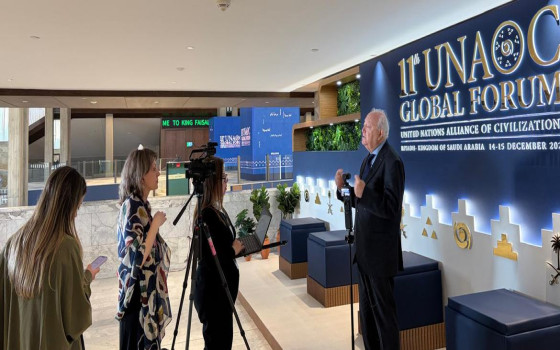
The 11th Global Forum of the United Nations Alliance of Civilizations, held in the Saudi capital, Riyadh, delivered a clear message emphasizing the urgent need to uphold dialogue to address the turmoil the world is witnessing today.
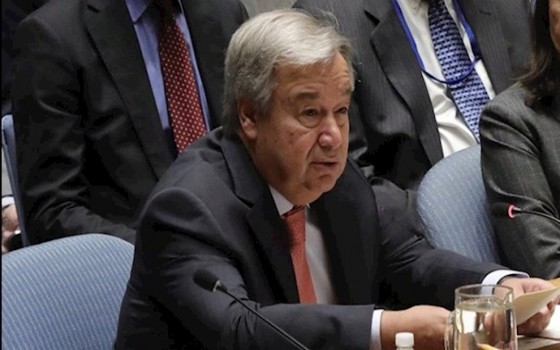
At a time of escalating mistrust, division, and conflict, speakers at the forum—held in Riyadh on December 14 and 15—affirmed that building bridges between cultures is not a utopian dream, but the only viable path forward. According to the UN Daily News, which added under the headline "Dialogue is not naiveté, but a necessity," during the opening session, UN Secretary-General António Guterres rejected criticisms that the goals of the Alliance of Civilizations are unrealistic or unsuitable for today's world. He stressed that dialogue is not naive and that it, along with diplomacy, is essential, not a luxury.
Former UN Secretary-General Kofi Annan launched the Alliance of Civilizations initiative in 2005 with the support of Spain and Turkey. Since then, the world has changed dramatically, but the Alliance’s goal has remained constant: to combat extremism and intolerance, address growing polarization, and build societies where people of all cultures, religions, and civilizations can live together in peace and dignity.
Secretary-General António Guterres addressed the forum on the contradictions facing the world, stating that humanity has never been more connected, yet at the same time, it has never been more divided.
He spoke of two paths: one that fuels fear, erects walls, and intensifies wars; and another, more difficult but essential, that of building bridges between religions, cultures, and civilizations.
He emphasized that only through this path can the world move toward lasting peace, and then there will be no more tragedies like those of October 7th, or more cities destroyed like Gaza or starving like El Fasher.
The Secretary-General highlighted three forces he believes can accelerate positive change: the energy and creativity of young people, the power and potential of women and girls, and the moral influence of believers. He called on the forum participants to embody the mission of the Alliance of Civilizations with courage, clarity, and hope. Equal Voices and Shared Responsibility
In his opening remarks, Miguel Moratinos, High Representative of the Alliance and UN Special Envoy to Combat Islamophobia, stressed the need for all cultures and civilizations to have an equal voice in shaping an increasingly complex world.
Moratinos warned against a "resurgence of hatred" and emphasized the need for vigilance against discrimination and division.
He quoted a verse from the Quran, Surah Al-Hujurat: "O mankind, indeed We have created you from male and female and made you peoples and tribes that you may know one another. Indeed, the most noble of you in the sight of Allah is the most righteous of you. Indeed, Allah is Knowing and Acquainted."
He reiterated that Islam is a religion of peace and that Islamophobia must not be tolerated in any country. He also stressed the need to eradicate antisemitism, adding that legitimate criticism of governments should not be interpreted as antisemitism, nor should it be used to demonize entire societies.
Riyadh Declaration: A Shared Vision for the Future
Participating countries at the Forum affirmed their support for the Secretary-General’s message on the need to renew the commitment to coexistence. The Forum adopted the Riyadh Declaration, which emphasizes that combating all forms of religious intolerance must be a global priority.
It also affirmed the central role of education in promoting dialogue, understanding, human rights, and building peaceful societies. It acknowledged the role that religious leaders can play in mediating conflicts and fostering development cooperation.
The Declaration reaffirmed political support for the United Nations Alliance of Civilizations and its goals and principles.
The Riyadh Declaration reaffirmed the Alliance’s core mission of promoting cooperation among cultures and religions, fostering mutual respect, and building inclusive societies.
Saudi Arabia’s Call for Dialogue
In his address, Saudi Foreign Minister Prince Faisal bin Farhan Al Saud affirmed his country’s unwavering commitment to intercultural dialogue. He stated that Saudi Arabia's support for the coalition stems from its deep belief that dialogue between civilizations and cultures is essential for achieving peace, cooperation, and trust-building, as well as preventing and resolving conflicts.
He pointed to several Saudi initiatives aimed at promoting intercultural dialogue and countering extremist ideology.
He also addressed the rise of religiously and nationally extremist movements worldwide, along with the significant increase in hate speech and Islamophobia over the past two decades. He emphasized that these challenges should not be a source of discouragement, but rather should motivate the world to strengthen the values of dialogue, communication, and coexistence, not retreat from them.
Artificial Intelligence: Opportunities and Challenges
During the first day of the forum, a seminar was held on AI-driven misinformation, deepfakes, the rise of algorithm-driven hate speech, and the urgent need for regulations to protect societies from the risks of technology.
Ismail Serageldin, co-chair of the Nizami Ganjavi International Center (a non-profit organization) and former World Bank vice president, stated that the use of artificial intelligence is inevitable. He urged the public not to fear new technologies, recalling the invention of the calculator when many thought accountants would lose their jobs, but they adapted and developed their skills.
Sirajuddin explained that artificial intelligence will not replace humans, but those who know how to use it will have a significant advantage. He emphasized the need to develop legislation that protects people without stifling innovation and creativity.
He said that artificial intelligence can help people in their work, enabling them to achieve a better work-life balance.
For his part, Ashraf Tasfawt, a data scientist in the banking sector, warned that artificial intelligence (AI) is accelerating the spread of hate speech and making it difficult for people to distinguish between truth and fake content.
He advocated for clear regulations that ensure safe limits for its use while still allowing room for innovation. He added that policymakers and journalists have a pivotal role in protecting society, while young people, as the most frequent users of these technologies, are at the forefront of finding solutions.
He also pointed out that AI itself can be a tool for addressing these challenges.
Atef Rashid, editor-in-chief of Analyst News, cautioned that AI systems are being rolled out to the public too quickly without sufficient safety safeguards.
He said it seems as though humans are being used as "guinea pigs" for AI technologies, with regulations only being implemented after these technologies have become widespread. He emphasized that these technologies must be developed to serve all of humanity and built upon deeply rooted human values. On the eve of the forum, and in a world witnessing escalating conflicts and hate speech, Miguel Moratinos, High Representative for the United Nations Alliance of Civilizations, addressed a direct message to young people: Let the 21st century be the last century in which humanity experiences war. He warned against the world becoming so preoccupied with security concerns that it forgets the importance of achieving peace.
On the eve of the 11th Global Forum of the Alliance, held in Riyadh, Saudi Arabia, on November 14 and 15, the UN Daily News conducted an interview with Moratinos, in which he called on young people everywhere to put peace back at the top of their priorities.
He said that the future of the world depends on a new generation willing to choose dialogue over division, and humanity over hatred.
As the Alliance of Civilizations marks its 20th anniversary, Moratinos spoke about how the world has changed over the past two decades.
When the Alliance was founded in 2005 at the initiative of former UN Secretary-General Kofi Annan, the international system was unipolar. Today, the world is multipolar, with new powers emerging in the Arab world, Asia, Africa, and Latin America demanding to be heard and recognized.
Moratinos emphasized that the alliance is uniquely positioned to bring all parties together at the table.
He added that the world has become more complex, presenting a challenge that requires a deeper commitment to listening, dialogue, and understanding.

No Comments Found