

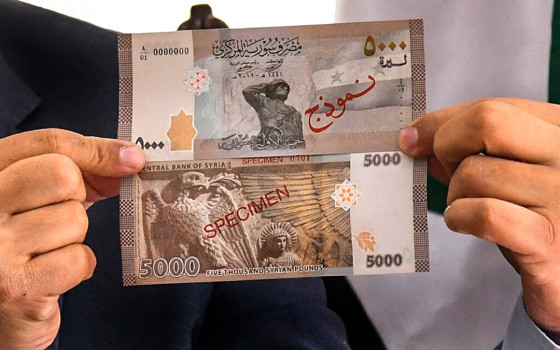
Syria officially announces the launch of a new currency in January 2026 to address the collapse of the lira and the chaos in circulation. Six new denominations will be introduced, with two zeros removed from all denominations.
- Europe and Arabs
- Friday , 26 December 2025 9:34 AM GMT
Damascus: Europe and the Arabs
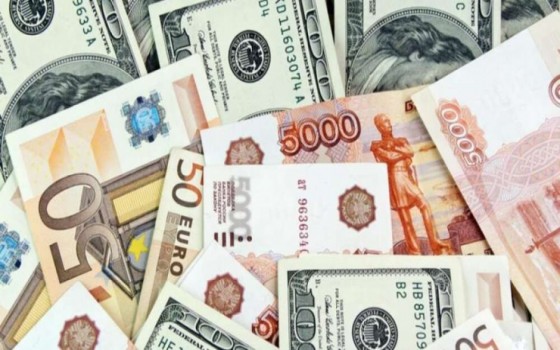
The 5,000 Syrian pound note, printed in Russia in 2023, is the most widely circulated note today, followed by the 2,000 and 1,000 pound notes—the latter bearing the image of Bashar al-Assad.
The Governor of the Central Bank of Syria, Abdul Qader Hasriya, announced that January 1, 2026, will be the official date for the start of replacing the current Syrian currency with a new one.
According to a report published by the Brussels-based European news network Euronews, accompanied by photos from the Associated Press, "This step aims to address the monetary challenges that have accumulated over the years, amid a sharp decline in the value of the lira and widespread chaos in cash transactions." The governor, in a post on his official Facebook page on Thursday, indicated that the executive instructions regulating the replacement process will be issued soon, confirming that he will hold a press conference next Sunday to fully explain the mechanisms. He noted that the presidential decree concerning the issuance of the new currency granted the central bank the authority to determine the deadlines and exchange centers. Last August, the governor revealed that the country would issue six new banknote denominations, removing two zeros from all denominations. He explained that the printing would be distributed among two or three sources for logistical reasons, a shift from the previous phase, which relied solely on Russia as the printing supplier, especially after the Bashar al-Assad regime resorted to Russia following the opposition factions' advance on Damascus in late 2014. In May 2015, Reuters quoted Syrian officials as saying that Damascus Advanced negotiations are underway with two companies—one Emirati and the other German—to print Syria's new currency.
In the UAE, the two officials said that negotiations are focused on the Emirati company Omolat, following a visit by Central Bank of Syria Governor Abdul Qader Hasriya and the finance minister to Abu Dhabi earlier this month.
Omolat did not respond to Reuters' requests for comment, and the UAE Foreign Ministry did not issue an official statement at the time.
In Germany, the two sources indicated that the Bundesdrückerriee—partially state-owned—and the private company Giesecke + Deferent had expressed initial interest in the project. However, it has not yet been decided which company will be tasked with printing the currency.
A spokeswoman for Bundesdrückerriee later denied any talks with the Syrian side, while Giesecke + Deferent declined to comment. The German government has not issued a response, and Governor Hasriya has not commented on the negotiations.
Before 2011, the dollar was worth approximately 50 Syrian pounds. As the crises intensified and sanctions were imposed on the former regime, the pound plummeted dramatically, reaching nearly 15,000 to the dollar before Assad's fall on December 8, 2015, before temporarily stabilizing at around 10,000-11,000 pounds in recent weeks.
On Wednesday, the Central Bank issued a statement condemning the refusal of some financial institutions to accept banknotes such as the 1,000 and 2,000 pound notes, emphasizing that these actions were unilateral and unauthorized.
It affirmed that all currently circulating denominations remain legal tender until an official decision is announced through the media. The 5,000 pound note, printed in Russia in 2013, is the most widely circulated today, followed by the 2,000 and 1,000 pound notes—the latter bearing Bashar al-Assad's image.
According to official statistics, approximately 14 billion banknotes of various denominations are currently circulating outside the banking system, exacerbating the liquidity crisis and forcing citizens to carry large sums of cash in bags or purses to cover their expenses.




No Comments Found