

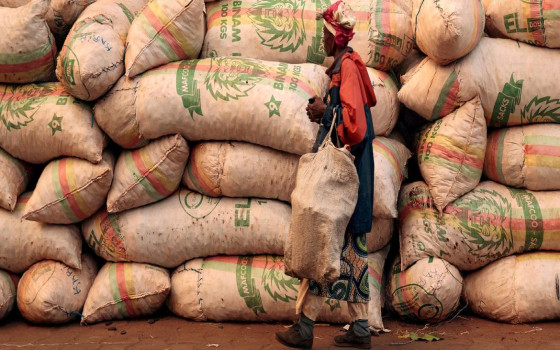

A UN report on the global economic situation predicts slower growth in 2026, despite resilience in the face of trade tensions.

- Europe and Arabs
- Friday , 9 January 2026 6:32 AM GMT
New York: Europe and the Arabs
Global economic output is projected to grow by 2.7% in 2026, slightly lower than the 2.8% estimated for 2025 and significantly below the pre-pandemic average of 3.2%, according to a new United Nations report. The report, titled "World Economic Situation and Prospects 2026," was published in the UN Daily News, a copy of which we received this morning, Friday. It explained that unexpected resilience in the face of sharp increases in US tariffs, supported by strong consumer spending and low inflation, contributed to continued growth.
However, it warned that structural weaknesses remain. Weak investment and limited fiscal space are weighing on economic activity, raising the possibility that the global economy will settle into a permanently slower growth trajectory compared to the pre-pandemic period.
The report also noted that a partial easing of trade tensions has helped to mitigate disruptions in international trade. But he predicted that the impact of higher tariffs, coupled with increased macroeconomic uncertainty, would become more pronounced in 2026.
Developing Economies Struggle
The new report stated that financial conditions have improved amid monetary easing and improved sentiment, but risks remain high due to high valuations, particularly in sectors linked to rapid developments in artificial intelligence.
It noted that high debt levels and borrowing costs are constraining economic policy space, especially for many developing economies.
UN Secretary-General António Guterres said that a combination of economic, geopolitical, and technological tensions is reshaping the global landscape, generating new economic uncertainty and social vulnerabilities.
He added: “Many developing economies continue to struggle, and as a result, progress towards the Sustainable Development Goals remains elusive for most of the world.” Uneven Growth Across Regions
The report's forecasts for different regions are as follows:
The United States is projected to grow by 2.0% in 2026, up from 1.9% in 2025, supported by monetary and fiscal easing. However, a weak labor market is likely to dampen the pace of growth.
In East Asia, growth is projected to reach 4.4% in 2026, down from 4.9% in 2025.
The Chinese economy is expected to grow by 4.6%, slightly lower than in 2025.
In Africa, output is projected to grow by 4.0% in 2026, a slight increase from 3.9% in 2025. However, rising debt and climate-related shocks pose significant risks.
In West Asia, GDP is projected to grow by 4.1% in 2026, up from 3.4% in 2025, but the region remains vulnerable to geopolitical tensions and security risks.
Global coordination is needed.
The new report indicates that global trade demonstrated remarkable resilience in 2025, expanding by 3.8%, a faster rate than anticipated, despite heightened political uncertainty and increased tariffs.
Meanwhile, investment growth remained weak in most regions, impacted by geopolitical tensions and challenging financial conditions.
The report also notes that rising prices remain a major global challenge, despite continued slowdown in inflation rates. The overall inflation rate is projected to decline from 4.0% in 2024 to an estimated 3.4% in 2025, and is expected to slow further to 3.1% in 2026.
He emphasized that addressing an era of trade restructuring, persistent price pressures, and climate-related shocks will require deeper global coordination and decisive collective action at a time of heightened geopolitical tensions, increasingly isolationist policies, and waning momentum toward multilateral solutions.





No Comments Found