

Israeli agents in Gaza vow to thwart Trump's peace plan for the Strip, and occupation forces raid al-Khader town south of Bethlehem.
- Europe and Arabs
- Saturday , 17 January 2026 7:36 AM GMT
Gaza: Agencies – Europe and the Arabs
Israeli occupation forces stormed the town of al-Khader, south of Bethlehem, at dawn on Saturday. A local source told the Palestinian News Agency that the occupation forces entered al-Khader and deployed in the Abu Sarra neighborhood, near the gate area, and the al-Saifi neighborhood, without any reports of house raids or arrests.
In a related incident, on Friday evening, Israeli occupation forces stormed the towns of Idhna, Beit Ummar, al-Dhahiriya, and al-Arroub refugee camp in the Hebron governorate, injuring a Palestinian with shrapnel from live ammunition.
Local sources said that the occupation forces stormed the center of Idhna, west of Hebron, and conducted patrols through the neighborhoods.
They also stormed the al-Tariqa area in Beit Ummar, north of Hebron. A Palestinian was injured by shrapnel during the raid on al-Arroub refugee camp.
The occupation forces also stormed the town of al-Dhahiriya, firing stun grenades and tear gas at residents and their homes in the town center. In the same vein, militias widely considered to be Israeli agents and supporters announced their rejection of any civilian or political arrangements stemming from US President Donald Trump's peace plan for Gaza.
The Israeli newspaper Yediot Aharonot quoted officials from these militias as confirming their commitment to thwarting the new administration in the Gaza Strip on the ground and refusing to cooperate with it.
These stances coincided with the announcement of the formation of a committee to manage civilian affairs in the Gaza Strip, which is supposed to lead the so-called next civilian phase within the framework of the internationally proposed arrangements.
However, the Israeli-backed militias were quick to attack this committee, describing it as a mere formality lacking legitimacy and the ability to impose any new reality on the ground.
One of the militia leaders in Gaza, Ghassan al-Dahini, ridiculed the committee, calling it a "coupon and container committee," arguing that it is nothing more than a tool for distributing food and water aid and does not address the core of the conflict or the future of the Strip. In statements to the Israeli newspaper Yediot Aharonot, Al-Dahini said that talk of a civilian administration, committees, and agreements does not reflect the true balance of power on the ground, emphasizing that the militias he leads possess extensive influence and the capacity for recruitment and expansion.
Similar positions were expressed in Khan Younis, where Husam Al-Astal, a leader of a local militia affiliated with Israel, declared his categorical rejection of any political or security agreement that does not conform to the conditions set by these armed groups.
He stated that any talk of an Israeli withdrawal or civilian arrangements is nothing but media hype and political posturing, stressing that no agreement will be signed without the disarmament of Hamas, a condition he described as unattainable, effectively undermining any proposed negotiation process.
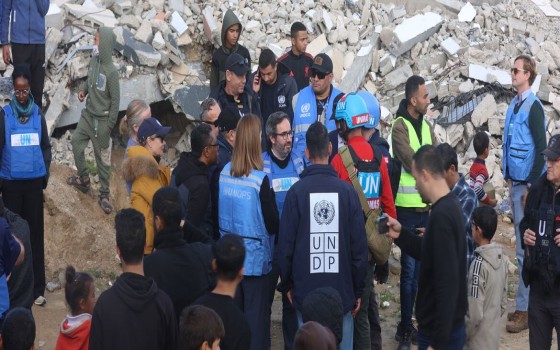
Al-Astal criticized the composition of the civilian committee, arguing that it includes figures who are unpopular with the public and lack any real legitimacy within the Gaza Strip. He asserted that the decision-making power in Gaza must rest with those on the ground, not with external parties or imposed committees. It is worth noting that during a field visit to Gaza two days ago, a senior UN official called for improved humanitarian access and the opening of all crossings and corridors leading to the Gaza Strip. He pointed out that the people of Gaza urgently need an increased flow of essential supplies and a reduction in restrictions to support the humanitarian response and early recovery efforts, including allowing the entry of "dual-use materials" necessary to repair and restore basic services such as water, primary healthcare, and education.
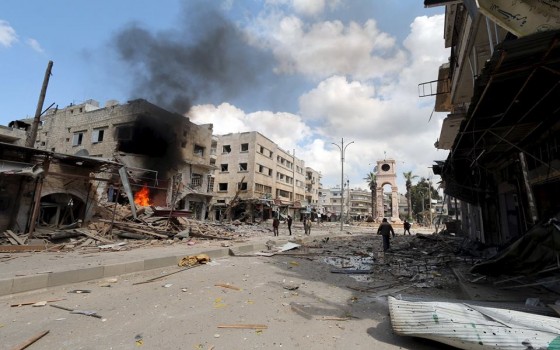
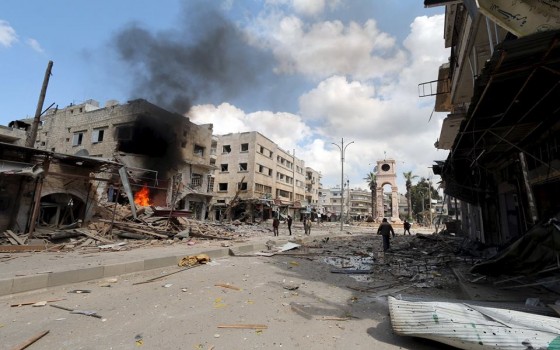
In a statement at the end of the visit, the Executive Director of the United Nations Office for Project Services (UNOPS), Jorge Moreira da Silva, described the level of destruction in Gaza as immense, noting that homes, schools, clinics, and water and electricity networks had been razed to the ground or severely damaged.
Da Silva said: "I have just returned from Gaza, where the humanitarian crisis is worsening. People are exhausted and traumatized, and the harsh winter conditions and heavy rains are compounding the suffering and despair of the displaced." The UN official warned of the risk of children in Gaza becoming a "lost generation" after being out of school for the third year in a row, stressing that their physical and psychological wounds are becoming more difficult to heal with each passing day.




No Comments Found