

The Netherlands appeals to the European Commission: A seven-year-long crisis has brought housing, agriculture, and industry projects to a standstill, turning the country into a hotbed of tension for the far right.
- Europe and Arabs
- Tuesday , 18 August 2026 6:2 AM GMT
The Hague – Brussels: Europe and the Arabs
The Dutch government in The Hague has asked the European Commission in Brussels for greater flexibility in enforcing EU environmental laws, in an attempt to break a seven-year-long crisis that has stalled housing, agricultural, and industrial projects and become a hotbed of tension for the far right.
"I desperately need the Commission's support now," Agriculture Minister Jaime van Eysen told Playbook from his office in The Hague, overlooking a shared courtyard with the Ministry of Economic Affairs. Playbook, the European edition of Politico, ran an article titled: "How Did We Get to This Point?"
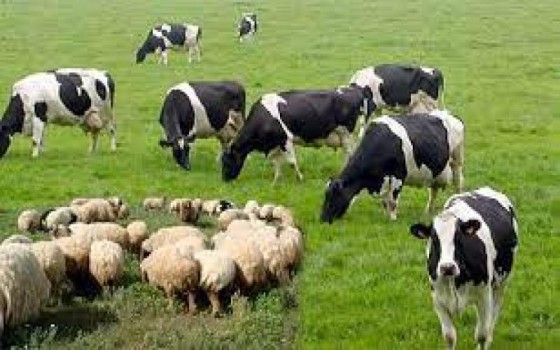
The Netherlands has one of the most intensive livestock sectors in Europe. Years of nitrogen pollution – mostly from agriculture – have degraded nature reserves. EU law requires governments to prevent the degradation of these habitats, making it difficult for Dutch authorities to approve construction projects that would add more nitrogen near affected natural areas. Matters became even more complicated after a Dutch court ruled in 2019 that promises to offset pollution were insufficient to justify issuing permits.
Van Essen said the construction sector's paralysis was costing the Dutch economy around €15 billion annually, adding that his priority was getting housing and other projects off the ground around Eindhoven—a high-tech hub that includes semiconductor giant ASML—and the port of Rotterdam, one of Europe's largest trading centers.
The status quo: Van Essen belongs to the centrist Democrats 66 party, led by Prime Minister Rob Geiten, which formed a minority government with the People's Party for Freedom and Democracy (VVD) (center-right) and the Christian Democratic Party (CDP) after winning the October election. Geiten faces the difficult task of reaching a budget agreement by the end of August to avoid another political crisis that could bring down the coalition.
Van Essen, who has allocated €20 billion to help farmers reduce their nitrogen use, explained that the centrist government needs to demonstrate its ability to resolve the crisis "to stop the rise of the far right." The government has secured the support of the center-left PRO party for a nitrogen reduction package, which is due to be presented to parliament in October.
A rallying point: Nitrogen has become a central political issue in the Netherlands, dominating successive elections, boosting support for agricultural protest parties, and fueling broader anti-EU sentiment.
The Netherlands is urging the European Commission to allow authorities to approve projects that are currently polluting but offer long-term environmental benefits. Van Essen hopes that official Commission guidance will provide courts with a basis for interpreting EU nature laws less restrictively, thus enabling the resumption of permit issuance and calming farmers' anger. The minister insists he is not asking Brussels to weaken environmental protection rules, but rather to apply them more flexibly.
At stake: These laws are already the target of a broader deregulation campaign led by the center-right European People's Party (EPP), the dominant political force in the EU. Wouter Beek, head of the Belgian EPP delegation, told Playbook: "We need a better balance between environmental protection and the investments needed for the transition." Streamlining procedures: Meanwhile, the Commission is asking capitals and NGOs how to facilitate the implementation of the rules and simplify bureaucratic procedures. It will decide by the end of the year whether to reopen the directives, as part of Brussels' ongoing de-escalation campaign.



No Comments Found