

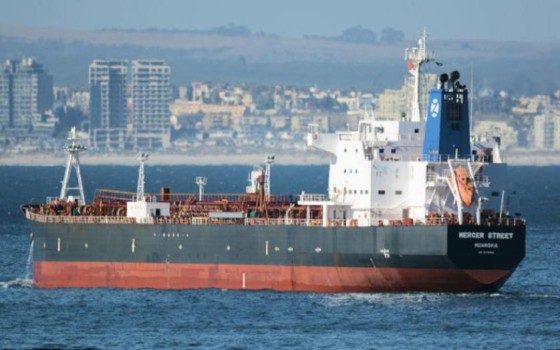
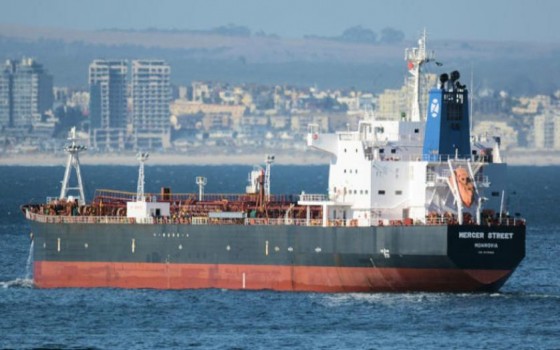
Oil prices rise as tensions escalate between the US and Iran, and Washington continues its sanctions against Tehran.

- Europe and Arabs
- Monday , 31 August 2026 4:42 AM GMT
Washington-Tehran: Europe and the Arabs
Oil prices rose Monday morning as tensions in the Middle East escalated, while investors assessed the likelihood of a US interest rate hike.
The United States launched an attack on two missile launch sites on Iran's Larak Island on Sunday. Iran retaliated by firing ballistic missiles at two US bases in Jordan. This marks the first known US attack on Iran since late July.
Larak is a small Iranian island located in the Strait of Hormuz, near the strategic port city of Bandar Abbas. The island overlooks shipping lanes at the entrance to the Persian Gulf, making it crucial to the tensions surrounding Iran, maritime security, and global energy supplies.
According to a US official, elements of Iran's Islamic Revolutionary Guard Corps were preparing to launch missiles loaded with naval mines into the Strait of Hormuz. US Central Command described the attack as "limited and precise" against Iranian units planting mines and posing a "direct threat."
Later, Iran launched ballistic missiles at two US bases in Jordan. Jordanian state television reported that Jordanian forces intercepted eight missiles that entered Jordanian airspace. A U.S. source told Fox News that nearly all of the missiles were intercepted and that the impact was limited.
Meanwhile, Iran’s Revolutionary Guard claimed that a number of soldiers and civilians were killed or wounded in the attack. According to Iranian state media, the Revolutionary Guard announced a “response and punishment” from Tehran.
This escalation comes after weeks in which the Trump administration has primarily relied on economic sanctions to pressure Iran and its trading partners. U.S. Treasury Secretary Scott Bisent expects Washington to announce new secondary sanctions weekly going forward, initially targeting banks.
“We will start with the banks and make it clear to them that it is unacceptable to hold Iranian funds and support the regime,” Bisent said. According to a report published by the Brussels-based European news network Euronews, the Federal Reserve's battle against inflation has been complicated by the US-Iran conflict, which has driven up oil prices. After a decline for most of last week, prices jumped again on Monday, the day after Washington announced it had attacked Iranian missile launch sites on a small island in the Strait of Hormuz, its first strikes on Iran in nearly a month. This prompted Tehran to retaliate by striking US military targets in Jordan. Brent crude and West Texas Intermediate crude futures rose by more than 2% on Monday in an exchange of fire that came shortly after the war between the two countries reached six months and at a time when the intensity of hostilities had relatively subsided.
This development has revived fears about the trajectory of the conflict, given the stalled attempts to reach a political settlement and the continued near-closure of the Strait of Hormuz, through which a fifth of the world's oil and gas exports pass. This month, US officials pledged to "strangle Iran economically" to force it to reopen the waterway. Stephen Innes of Quintex Intel stated, "Hormuz is once again threatening to put a floor on oil prices at a time when the Fed is already putting a ceiling on the patience markets are supposed to have with inflation exceeding the Fed's target." He added that this move serves as a stark reminder to oil traders how quickly the geopolitical risk premium can return. While crude flows through Hormuz have improved significantly from their lowest point and oil prices have begun to shed some of their "fear premium," this latest round of escalation reveals the fragility of this progress and how quickly the issue of navigation in the strait can once again dominate trading screens.
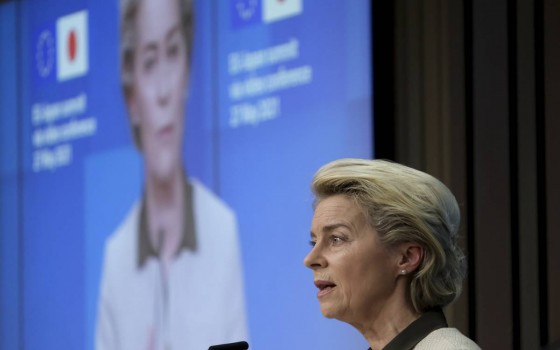
Asian stocks fell on Monday after hawkish comments from Federal Reserve Chairman Kevin Warsh prompted investors to increase their bets on a US interest rate hike, as inflation remained stubbornly high due to energy costs. Uncertainty deepened as Warsh refrained from providing clear guidance ahead of his highly anticipated speech at the Jackson Hole symposium, where he reiterated the Fed's readiness to raise borrowing costs. "We have to be confident that underlying inflation is moving clearly and quickly enough toward our goal, or we have work to do," he said.
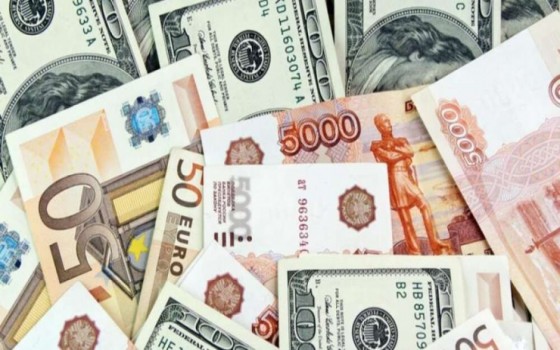
Warsh described the surge in inflation, currently at 3.7%, nearly double the Fed's 2% target, as "concerning." He noted that it would be "difficult" to characterize current financial conditions as "restrictive," a possible indication that further rate increases were still on the table. However, he clarified that he was "committed to a methodology, not a specific decision." On Wall Street, the three major indexes fell on Friday, while short-term US Treasury yields, which reflect expectations of monetary policy, rose. The dollar strengthened against most currencies, while gold, which typically benefits from low interest rates, declined. Asia followed suit, with technology companies, heavily reliant on borrowing to finance their massive investments in artificial intelligence, leading the sell-off in Tokyo, Seoul, Hong Kong, Shanghai, Taipei, and Jakarta. Singapore and Wellington, however, posted slight gains.
Investors are now focused on a series of key macroeconomic data releases over the next two weeks before the Federal Reserve's decision. This week's release begins with the jobs report, followed by the Consumer Price Index (CPI) the following week. Chris Weston of Pepperstone writes that a satisfactory reading of the jobs data will not provide the central bank with much information, making next week's core inflation report the crucial factor in shaping the market's "belief system" regarding the Fed's direction. He adds that price swings around that result in the interest rate, currency, and equity markets could be significant.



No Comments Found