

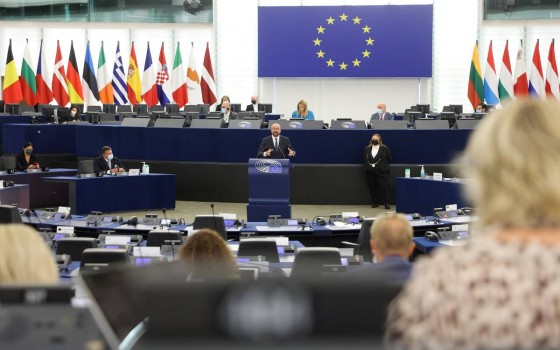
In response to the UN's call for reparations for the colonial and slave periods, a draft resolution in the European Parliament states: "Europeans today should not pay for the past."

- Europe and Arabs
- Tuesday , 1 September 2026 5:5 AM GMT
Brussels: Europe and the Arabs
Tom Vandendreich, a Member of the European Parliament from the Belgian right-wing party Vlaams Belang, circulated a draft resolution among his colleagues in the European Parliament opposing financial reparations for historical slavery and colonialism across the European Union. This stems from a new recommendation by the UN Committee on the Elimination of Racial Discrimination, which calls for shared responsibility for reparations policies even for countries that did not participate in or benefit from the slave trade. Vandendreich asserts, "Europeans today do not enslave anyone, and they should not pay for it centuries later." This statement was issued by the far-right party in Belgium, a copy of which we received. The UN Committee on the Elimination of Racial Discrimination published a new recommendation on reparations for slavery and colonialism at the end of August. The document goes far beyond mere apologies, commemorations, or historical research, explicitly addressing financial, structural, and interstate reparations. Notably, the Committee also assigns responsibility for supporting reparations policies to countries that did not participate in or benefit from the aforementioned practices. “Guilt cannot be passed down to future generations indefinitely,” says Vandendrich. “The Flemish or European who works, runs a business, and pays taxes today has no connection to the slavery that occurred centuries ago. So why should they bear the burden?”
Vanddendrich’s draft resolution aims to prevent the European Union from including financial reparations for slavery in European legislation, budgets, or programs. According to the text, European development aid and foreign policy funds should also not be used for such reparations. “Historical crimes should not lead to the accumulation of financial debt on people living today who have committed no wrong,” Vandendrich emphasizes.
Furthermore, the UN recommendation states that denying people “effective restorative justice” is itself a form of racial discrimination. In his draft resolution, Vandendrich rejects any interpretation that treats the refusal of financial reparations as racial discrimination. He says: “Those who refuse to pay for crimes they did not commit are not racists. Democracy must allow for fundamental differences of opinion on reparations without placing citizens under moral suspicion.”
The draft resolution, open for signature by members of the European Parliament until September 7, calls on the European Commission not to include financial reparations for historical slavery and colonialism in European legislation, funding programs, or the EU’s anti-racism strategy.






No Comments Found