

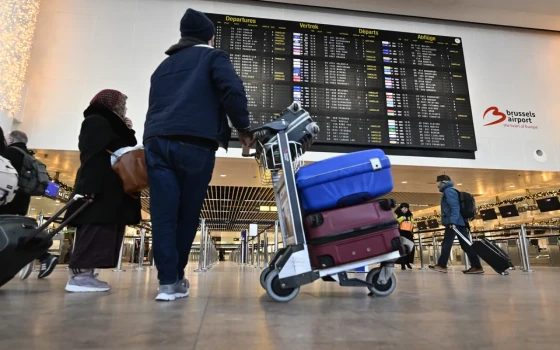
Non-European travelers face long queues at passport control in Brussels Airport, the capital of the European Union, due to digital registration using fingerprints and facial scans.

- Europe and Arabs
- Friday , 4 September 2026 6:45 AM GMT
Brussels: Europe and the Arabs
At the passport control checkpoints of Brussels Airport, travelers from outside Europe face waiting times of up to three hours. Those arriving at Zaventem, in particular, need to be very patient, according to reader comments on the Belgian news station VRT's website. The airport attributes the delays to the revised European Border and Coast Guard System (EES) and the large number of travelers returning for their holidays. The VRT NWS editorial team received several reports from frustrated travelers who described the situation at the airport's border checkpoints on Thursday as "catastrophic." Reader Stéphane commented, "We've been waiting for over an hour and a half for a family member arriving from Washington, and the queue is getting longer." Brussels Airport confirms the problem, with spokesperson Geoffrey Françains stating, "During the morning rush hour, passengers arriving from outside Europe had to wait in queues of up to three hours." For European citizens, the screening process is much faster at the automated electronic gates. There, waiting times during the morning rush hour remained between 30 and 60 minutes. For departing non-Europeans, the waiting time also did not exceed 30 minutes. Digital fingerprinting and scanning are also used. Photogrammetry
The delays are mainly linked to the implementation of the European Entry/Exit System (EES). This digital border system aims to improve the registration of those entering and leaving the Schengen Area, combating identity theft and overstaying.
Digital registration requires more procedures and time for each traveler.
Instead of a traditional passport stamp, non-European visitors are now registered digitally using fingerprints and facial scans. “This registration requires more procedures and time for each traveler,” explains Franzens. “As a result, waiting times increase rapidly during peak periods.”
For EU citizens, the inspection process is much faster via automated electronic gates. To manage the transition, Interior Minister Bernard Quentin (of the Republican Movement party) had already announced the deployment of additional aviation police personnel before the summer to ensure coverage of all border control points. However, this capacity is proving insufficient on peak days.
Faster after registration
The approaching end of summer further complicates the situation. “We see a peak in the number of arriving travelers at the end of August and the beginning of September anyway,” concludes Franzens. This combination of increased passenger numbers and the new expanded e-Entry system is currently resulting in exceptionally long waiting times. During off-peak periods, waiting times for non-European travelers remain capped at a maximum of 30 minutes. Furthermore, improvements are on the way: travelers who have completed their initial e-Entry registration will be able to pass through border control much faster on subsequent visits.






No Comments Found