
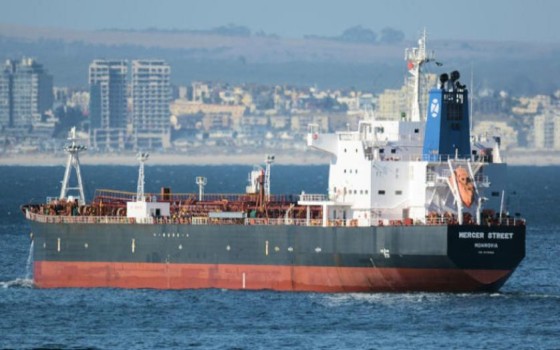
Amidst threats from Iran and talk from Washington of progress in negotiations, an energy crisis is striking a blow to Europe’s competitiveness, leaving its companies falling behind in the race against the United States and China.
- Europe and Arabs
- Saturday , 7 November 2026 8:26 AM GMT
Brussels: Europe and the Arabs
High energy prices, increasing competition from China and the United States, and an abundance of regulations have weakened the competitiveness of European industry—particularly in energy-intensive sectors, as well as the automotive and home appliance industries. Poland is now seeking to exert a more effective influence on European economic policy. According to a report by the Brussels-based European news network "Euronews," while European companies remain global leaders in many sectors, they are finding it increasingly difficult to compete with firms from the United States and Asia. Rising energy costs are a primary factor, placing a heavy burden on European production and diminishing its appeal in the global market.
Speaking to "Euronews" during the European Forum for New Ideas, Maciej Witucki, President of the Polish Confederation "Lewiatan," stated: "In many fields, we are undoubtedly leaders. Yet, on the other hand, we are losing our competitiveness. Unfortunately, the cost of electricity—and energy in general—is significantly higher in Europe than it is for our key international rivals in the United States or Asia, especially China."
This issue also affects Poland, where energy prices are higher than in many other European nations. These elevated production costs are taking a toll on entire industrial sectors. Witucki notes that automotive production in Europe has declined by approximately 20 to 25 percent in recent years, and similar challenges are being faced by sectors such as the manufacturing of large household electrical appliances. However, this does not mean that Europe has lost all its advantages; it remains strong in many market segments, including the production of luxury goods. Maintaining this position will require further investment and bolder policy decisions.
Poland seeks a stronger voice in Brussels
The Polish business sector is actively engaging in the European debate on competitiveness. For years, the Lewiatan Confederation has been developing its representation in Brussels—an initiative that marks its 25th anniversary this year. The organization was present within EU structures even before Poland joined the bloc, and for over two decades, it has been a member of BusinessEurope, the leading organization representing employers in Europe.
This allows Polish employers to participate in consultations and discussions regarding the EU’s economic policy direction. They exert influence through direct contact with European institutions, collaboration with both Polish and international Members of the European Parliament, and by fostering relationships with business organizations in other countries.
Poland’s standing in discussions about the future of the EU economy has grown steadily stronger—a result not only of the size of its market but also of its pace of economic growth. Poland’s GDP is projected to grow by 3.6 percent in 2026, with a similar growth rate expected for the following year. Gorski emphasized: "Poland, especially in recent years, is viewed as a country developing economically at a very dynamic pace—a prime example of economic growth. Among the larger nations, we are the fastest-growing economy, and we are leveraging that."
One of the primary demands from the business community is the simplification of regulations. The European Union’s "simplification" initiative aims to reduce bureaucracy and make it easier for companies to conduct their operations. However, a representative from the Lewiatan Confederation argues that the pace of change remains insufficient.
Of the 12 "omnibus" packages announced—to which the speaker refers—only three have been implemented so far. To further complicate matters, the removal of certain regulations is often accompanied by the introduction of new ones.
The head of the Lewiatan Confederation stated that the business sector requires, above all, stability and predictability.
In another matter—one with implications for energy prices—the situation in the Strait of Hormuz remains highly volatile. Military escalation persists, with multiple flashpoints spanning from Iran to Yemen, as well as the Palestinian territories and Lebanon.
In Iran, explosions on Qeshm Island and Iranian threats to target U.S. bases have occurred alongside remarks by President Donald Trump regarding progress in talks with Tehran.
For its part, Qatar has indicated that both the United States and the Islamic Republic share a desire to reach a political solution to end the tensions between these historic adversaries.
Meanwhile, in Yemen, confrontations continue as battlefronts flare up. Reports regarding control over areas south of Taiz remain conflicting, all while the humanitarian situation deteriorates, with more than 80% of healthcare facilities now out of service. In the Palestinian territories and Lebanon, meanwhile, Israeli bombardment, targeting, and incursions have continued, resulting in further casualties and destruction.
No Comments Found