
Abu Dhabi Talks on Ukraine Spark Division in Europe; Brussels Summit Focuses on Drones
- Europe and Arabs
- Monday , 9 November 2026 6:56 AM GMT
Brussels: Europe and the Arabs
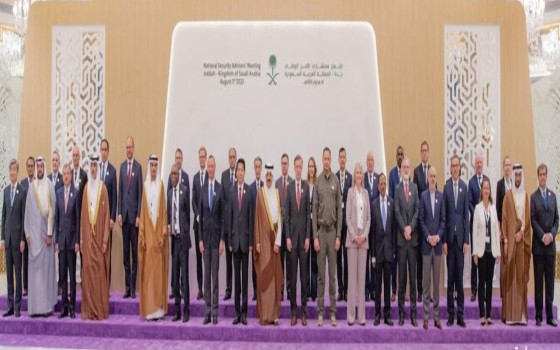
National security advisors from France, Germany, and the United Kingdom—collectively known as the "E3" group—will participate in talks regarding Ukraine to be held in Abu Dhabi this week, according to three officials who spoke to *Politico Europe*. The outlet noted that this participation grants Europe a nominal role in the ongoing negotiations between Ukraine and Russia, which are being mediated by the United States. However, those who advocate for a more inclusive approach—including Italian Prime Minister Giorgia Meloni and Polish Foreign Minister Radosław Sikorski—are unlikely to be satisfied, setting the stage for further debate over how the European Union should be represented in this process.
Furthermore, the focus of the discussions on a new "European security architecture"—a term used on Friday by Jared Kushner, Donald Trump’s son-in-law and envoy—has raised concerns among Eastern and Northern European nations. In this context, Sikorski told reporters in Warsaw: "The last thing we want is for Western Europe to deal with Russia behind the backs of Eastern European countries."
Meanwhile, French Foreign Minister Jean-Noël Barrot stated to local media on Sunday that France and Europe would be "well represented" at the Abu Dhabi talks, which are scheduled for tomorrow and Wednesday. As of yesterday evening, it remained unclear whether any representative from European Union institutions would attend the discussions.
A German official confirmed that the E3 group would be present at the level of national security advisors, noting that the meeting... The Abu Dhabi gathering is considered a "preliminary meeting," to be followed by "follow-up meetings." Furthermore, officials from the "E3" (France, Germany, and the UK) intend to brief a broader group of parties on the details of these discussions on the sidelines of the "European Political Community" meeting in Dublin this Thursday, with the aim of "broadening the scope of the dialogue."
When asked whether the national security advisors from the E3 nations would be physically present inside the meeting room in Abu Dhabi, a German official stated that "the format of participation will be determined as the discussions progress." An EU official—who requested anonymity due to the sensitive nature of the preparations—indicated that while the national security advisors would be on-site or nearby, they would not be directly involved in the deliberations.
Given that fundamental questions regarding European security are being raised, EU member states—which have a vital stake in the outcome of these negotiations—are demanding a greater role in the process. Meloni, Sikorski, and European Council President António Costa have all called for a more inclusive approach. Speaking to the *Playbook* newsletter, an EU diplomat remarked: "There can be no discussion about Europe in the absence of Europe; nor can the European security architecture—or any other security-related issues—be discussed without our participation."
EU Drone Summit
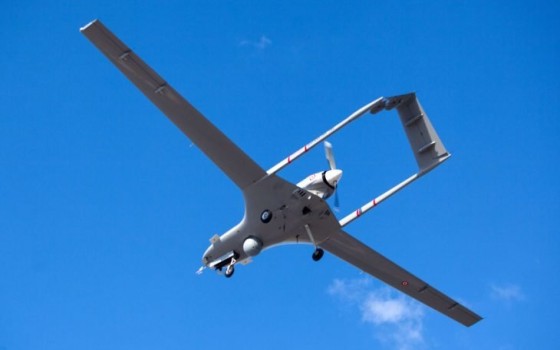
The "EU Drone Summit" begins today in Brussels—a two-day series of discussions during which EU institutions, member states, and the industrial sector will review the progress made on the "EU Drone Strategy 2.0." But what exactly is this strategy? The strategy was adopted in 2022 and aims to develop the drone market in the European Union—valued at approximately €17 billion—by integrating civil, security, and defense technologies.
Summit Security
Ireland is on high alert: Dublin is preparing for a massive security operation as it hosts two summits this week, amid a wave of bomb threats that have disrupted air travel across Europe, reports Sebastian Starcevic.
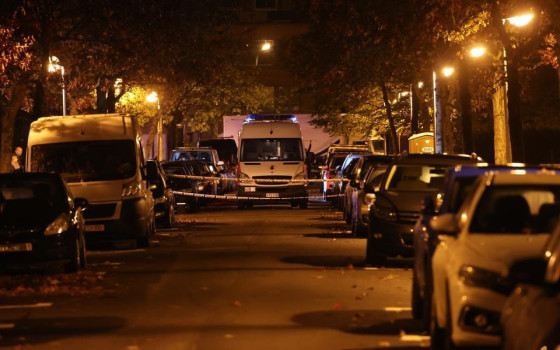
On Friday, the studios of the Irish national broadcaster, RTÉ, in Dublin were evacuated following a bomb threat. Furthermore, at least 27 aircraft were the targets of false alarms last week, necessitating flight diversions, fighter jet escorts, and security searches at airports. EU Commissioner for Transport, Apostolos Tzitzikostas, stated that it is too early to determine whether these incidents are connected.
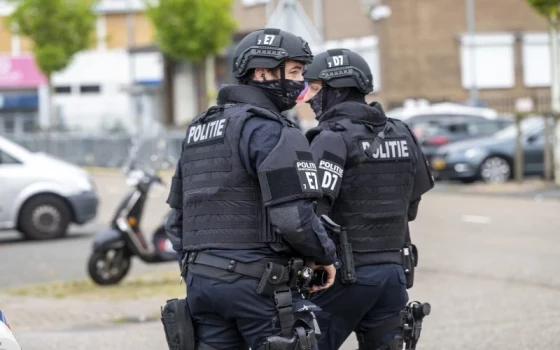
However, Irish authorities are leaving nothing to chance. With more than 50 leaders set to arrive in Dublin over the coming days for meetings of the European Political Community and an informal European Council, an Irish police spokesperson told *Playbook* that the force is carrying out a "major security operation." The city is expected to face widespread paralysis due to road closures and disruptions to public transport.
In a notable statement, Inspector Liam Geraghty remarked: "We have not seen..." Ireland has rarely seen a security operation of this scale; it is even more extensive than those mounted for visits by U.S. presidents. Irish Minister for Justice Helen McEntee expressed "grave concern" regarding these threats, noting that the most stringent security measures possible will be implemented to protect the leaders and their delegations. She added, "This is the largest event of its kind that we have ever hosted." Irish Prime Minister Micheál Martin stated that there is no evidence of a link between the threats directed at Irish media outlets and the Kremlin, while noting that hybrid attacks in Europe have been on the rise and are frequently linked to Russia. Martin further expressed his confidence that the summits would proceed without any obstacles.
For its part, the European Commission explained that it typically provides up to 10 staff members to the country holding the rotating presidency of the Council to assist in organizing such summits, while emphasizing that responsibility for security matters rests with the host nation.
No Comments Found