
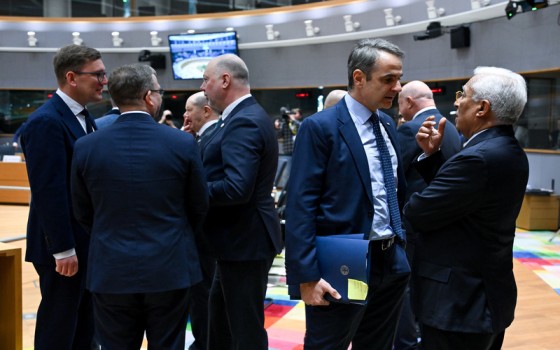
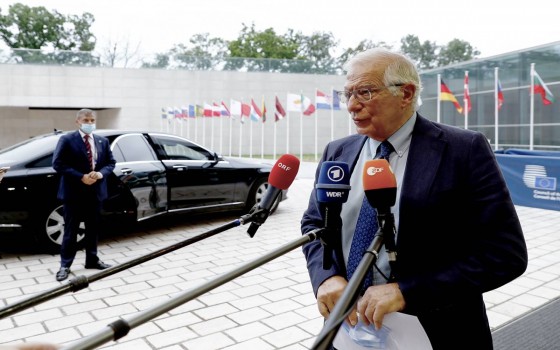
A summit is taking place in Dublin today, attended by over 50 leaders, to discuss issues including Ukraine, European security, competitiveness, artificial intelligence, digital transformation, energy, and the defense of European democracy.
- Europe and Arabs
- Thursday , 12 November 2026 6:45 AM GMT
Dublin – Brussels: Europe and the Arabs
More than 50 leaders and their delegations are arriving in Dublin today for the latest summit of the "European Political Community" (EPC). However, according to diplomats and officials who spoke to the *Playbook* team, enthusiasm for this forum has waned among some—with a few even hoping it will fade away once a new French president is elected next year.
The European Political Community (EPC) was the brainchild of French President Emmanuel Macron, launched in the wake of Russia’s full-scale invasion of Ukraine. Although the gathering attracts prominent political figures—including, in this edition, Canadian Prime Minister Mark Carney and British Prime Minister Andy Burnham—some have come to view it as little more than a "talking shop," a sentiment echoed in our rather bleak report on last year’s summit in Copenhagen. According to *Playbook* in Brussels—the European edition of the American outlet *Politico*—a European diplomat stated that leaders have grown weary of this gathering. This is one reason why European capitals have shown little enthusiasm for Ursula von der Leyen’s proposal to establish a "European Security Council," which would effectively add yet another forum to an already crowded agenda. Another diplomat expressed hope that the "European Political Community" would not outlast Emmanuel Macron’s tenure, which is set to conclude following the second round of the French presidential election next May.
Conversely, the Élysée Palace rejects these criticisms. An official asserted that the "European Political Community" has become a fundamental diplomatic pillar and will persist even in a post-Macron era, as reported by *Playbook’s* Paris correspondent. Meanwhile, an EU official noted that the forum has proven its value as a platform for substantive discussions. Notably, summits are already scheduled through the end of 2028, with upcoming meetings planned for Switzerland, Greece, Azerbaijan, and Latvia.
Separately, Fabrice Leggeri—a Member of the European Parliament representing Marine Le Pen’s "National Rally" party—dismissed speculation that the far-right leader (currently a frontrunner in the presidential race) might scrap the forum if she were to win. He remarked that the "European Political Community" is not "necessarily a waste of time," even if there are already far too many "tedious, pointless, and endless meetings" taking place within the EU framework.
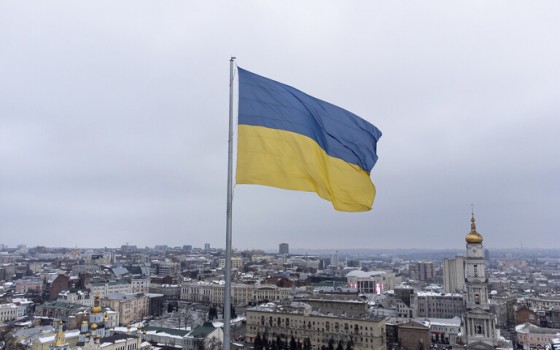
What is on today’s agenda? Macron is seeking to launch an initiative aimed at defining the fundamental principles for the future of European security. An EU official stated that Ukraine will remain at the heart of the discussions, with the participation of President Volodymyr Zelenskyy.
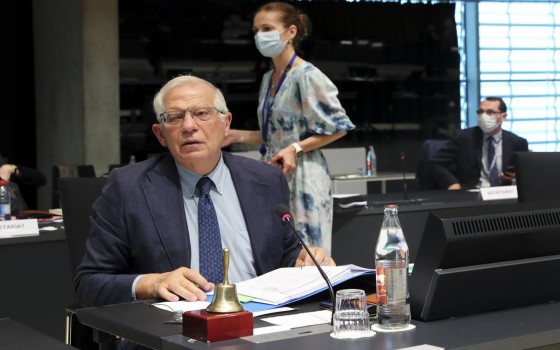
Another EU official indicated that Zelenskyy, European Council President António Costa, and Irish leader Micheál Martin will deliver opening remarks. A diplomat familiar with the agenda noted that the joint plenary session will focus on Ukraine and European security, after which leaders will break into roundtable discussions covering two main themes: the first concerns competitiveness, artificial intelligence, digital and energy transitions, and the reduction of energy prices; the second focuses on the defense of European democracy.
Additionally, Italian Prime Minister Giorgia Meloni and French President Emmanuel Macron will co-chair a meeting of an alliance against drug trafficking. Two European diplomats noted that the leaders will issue a joint statement on migration and conclude the day with a dinner at the National Gallery of Ireland.
What will not be on the table, however, is the "enlargement of the European Union"; the European Political Community (EPC) was not designed as a platform for discussing EU membership. A high-ranking diplomat from one of the EU candidate countries explained that this topic has remained off the official agenda—despite efforts by Turkey and other nations in recent years—though it is likely to be raised on the sidelines of the meetings. Among those absent are Belgian Prime Minister Bart De Wever and Dutch Prime Minister Rob Jetten—both of whom are grappling with domestic political turmoil—as neither will attend the gathering in Dublin. Spanish Prime Minister Pedro Sánchez will also be absent, with national elections in his country just weeks away.
The most significant event this week is tomorrow’s informal meeting of the European Council, where leaders will discuss who should represent Europe in peace talks between Ukraine and Russia, and hold their first in-depth discussion on artificial intelligence. Additionally, German Chancellor Friedrich Merz is scheduled to hold bilateral talks with several leaders—including Emmanuel Macron—starting today, with the aim of advancing discussions on the European Union’s seven-year budget, which totals two trillion euros.
Significant and Urgent Developments
In Moscow today, Donald Trump’s envoys, Jared Kushner and Steve Witkoff, are arriving in Russia to urge Vladimir Putin to allow European representatives to participate in future peace talks regarding Ukraine. According to a report on the Abu Dhabi-based discussions concerning the Ukraine dossier, the American delegation will subsequently travel to Dublin to meet with Zelenskyy and push this process forward. Notably, Kushner remarked yesterday: "If Europe could manage to designate a single person to speak on its behalf, that would be a greater achievement than persuading the Russians to include it in the negotiations."



No Comments Found