

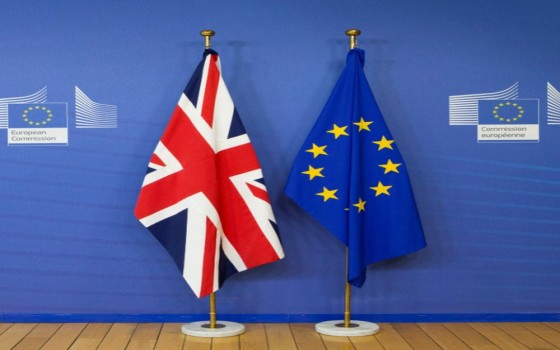
Britain’s Return to the EU: A New Relationship Ten Years After Brexit—and in Light of EU-Canada Ties

- Europe and Arabs
- Friday , 20 November 2026 7:15 AM GMT
Brussels: Europe and the Arabs
"The 'Ex-Partner' Reappears": This was the headline of a report by *Playbook* in Brussels—the European edition of the American outlet *Politico*—published ahead of a summit between the United Kingdom and the European Union. The report poses a question: Should the EU move closer to the United Kingdom, or to Canada? It notes that as Andy Burnham arrives in Brussels this Friday to discuss a new relationship—a decade after the UK voted to leave—the stark contrast in sentiment toward the "ex-partner" versus a more intriguing "new partner" is clear.
Do the two sides need "relationship therapy"? The enthusiasm that once accompanied the friendly overtures during the era of Mark Carney—when the EU made an unprecedented offer for Canada to become the bloc’s first "associate member"—is nowhere to be found today. Instead, the EU displays nothing but indifference toward the prospect of its former partner returning to the fold.
After the departure, one European diplomat describes the prevailing mood: "We didn’t want them to leave; they were the ones who ended the relationship. As for us—we’ve completely moved on."
A policy of "playing hard to get": While Andy Burnham supports rejoining the EU and expresses a desire for closer ties, he simultaneously insists that "there is no need to rush," carefully avoiding any specifics regarding the extent of the rapprochement he envisions. According to my colleagues in London, he intends to present a range of options and give the British public an opportunity to weigh in at the appropriate time—especially given the reservations within his own government, which remains weary from the long-drawn-out Brexit process, about reopening this issue.
Defining the nature of the relationship: Sandro Gozi, head of the European Parliament’s delegation to the UK Parliament, has stated that Burnham must "clarify exactly what he wants" from this partnership. (You can listen to our interview with him here.)
An EU official—who requested anonymity due to the confidential nature of the discussions—explains that this hesitation is why Brussels is approaching the matter with greater caution than it did with Canada. While Ottawa was keen to achieve the closest possible alignment for a non-member state, London chose to leave and is now ambivalent about whether it wishes to return. A second European official confirms that the bitter memories of the Brexit process continue to cast a long shadow over these discussions. On the agenda: A meeting between Burnham, European Commission President Ursula von der Leyen, and European Council President António Costa—accompanied by their respective ministers and commissioners—is expected to yield a package of agreements, following a breakthrough in negotiations late last night. These agreements include understandings on food standards, carbon emissions trading, and a youth mobility program that would allow up to 100,000 young people from the European Union—and a similar number from the UK—to live, work, and study on the other side of the English Channel on a temporary basis. According to the *Financial Times*, the EU has dropped its demand that European students attending British universities be charged the same tuition fees as their British counterparts.
Naturally, these arrangements fall far short of the benefits London enjoyed as an EU member before its departure in 2020. Brussels is well aware of this; while it shows a willingness to make certain concessions and cooperate on shared challenges, there is little enthusiasm for a comprehensive "reset" of the relationship with its only former partner.
Tough negotiators: This was evident in the intense, last-minute wrangling over the summit’s joint statement. A special meeting of the member states’ ambassadors—the Committee of Permanent Representatives (Coreper)—was held yesterday to reach an agreement among capitals that remain skeptical and wary of making excessive concessions.
How romantic: Nevertheless, should the United Kingdom ever wish to rejoin, the European Union would not close the door. During a summit held last week in Dublin, Estonian Prime Minister Kristen Michal stated that the European Union and the United Kingdom belong together, remarking: "I told Andy: we miss having you in the EU." Similarly, European Commissioner Glenn Micallef told my colleague Zoya Sheftalovich: "The door is open, and we want them back." It is hard to imagine a better endorsement for the European Union than a scenario in which Britain emerges from its isolation to return.
The ball is in London’s court: our colleagues in London note that Burnham hopes to see Britain rejoin the EU within his lifetime—a possibility he might even put before voters as early as 2029. For now, however, the United Kingdom is still trying to determine exactly what it wants. Until that becomes clear, Brussels will not take the initiative to pursue it.



No Comments Found