

Political deadlock leaves thousands of poor families in Iraq without cash
- Europe and Arabs
- Saturday , 20 August 2022 14:24 PM GMT
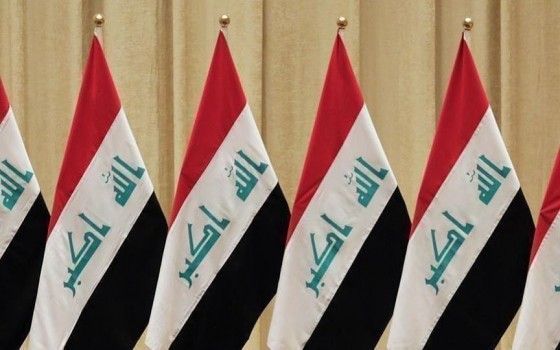
(Reuters) - Sabreen Khalil lost her husband after contracting COVID-19 last year, leaving her alone to raise seven children, but the Iraqi government's funding for her family and hundreds of thousands of other poor families has been halted due to political stalemate. With politicians deadlocked over forming a new government since elections were held in October, rival Shiite factions in Baghdad on Friday continued weeks of protests that prevent parliament from convening. This confrontation raises fears of renewed unrest in a country where armed groups wield significant influence, and is already causing trouble for the most vulnerable Iraqis. Explaining the impact of her husband's death on her, Sabrine said that she was a woman who suddenly found herself responsible for seven children, describing it as a back-breaking thing. Sabreen, who was sitting on the floor of her one-room brick house in the "Al-Saada" village on the outskirts of Baghdad, said she could not pay for her treatment for a chronic illness she suffers from. She added that her children eat some meals and not others because of the high prices. Nine months have passed since she applied for a monthly pension from the government, but Sabreen has not received anything from the Ministry of Labor and Social Affairs. She said that every time she went to inquire about the outcome of the request, she would receive a response that they were waiting for a budget to be approved. An official in the ministry said that Sabreen deserves support, but stressed that there is no budget to pay her pension. "Our hands are tied because we don't have a budget," he said, after requesting that his name not be published. He added that Sabreen Khalil's family is one of 370,000 families who are entitled to a government pension, but none of them get it because of the political deadlock. * Attempt to talk The crisis in Iraq since elections took place 10 months ago is the country's longest period without a fully functioning government in nearly two decades since Saddam was toppled in the US-led invasion in 2003. The rival Shiite factions want to form a government, but they differ on the steps to achieve this. The followers of the powerful Shiite cleric Muqtada al-Sadr, who fought the US occupation forces before emerging as the main opposition to the armed factions backed by Iran and its political parties, are demanding new elections. Al-Sadr was the biggest winner in last year's elections, but he cannot form a government with the Kurdish parties, and the Sunni Arab parties exclude his Shiite rivals backed by Iran. These competitors, who are collectively known as the Coordination Framework, say that the elections will not take place until after the formation of a government that leads a transitional period and issues legislation, including a new election law, during its term. A source in the caretaker government said, "There is consensus to dissolve parliament and hold early elections. The problem is in the mechanism." He added that talks are continuing. On Wednesday, the caretaker prime minister, Mustafa Al-Kazemi, met with political leaders and called on Sadr's followers to participate in a national dialogue. He also called on all parties to refrain from any political escalation. Al-Sadr did not attend the meeting, and his followers showed little enthusiasm for the initiative. Speaking to the thousands of Muqtada al-Sadr's followers who gathered to protest outside parliament on Friday, a cleric said, referring to the rivals, "The political dialogues you hold for your political and party interests are not for the benefit of the country and the people. All they care about is your survival and your authority and nothing else. These dialogues are of no value to us. We never give them any weight." Some carried pictures of al-Sadr and his late father, who was also a prominent cleric, and raised Iraqi flags. For their part, dozens of followers of the coordination framework organized a protest outside the Green Zone, which is witnessing strict security measures. Hamdi Malik, a Washington Institute associate researcher and expert on Shiite armed groups, said there appeared to be little sign of quick results, despite some efforts to resolve differences. "The division is so great that I don't see any solution. The possibility of clashes is already increasing," he added. Parliament passed an emergency law in June allocating billions of dollars to buy wheat, rice, gas and pay wages. But other than that stopped the work of the government. Hana Edwar, a prominent Iraqi human rights activist, said all political factions are responsible for this predicament and that ordinary Iraqis are paying the price. She added that people's anger is increasing, economic conditions are worsening, and unemployment is increasing. She went on to say that leaders hold dialogues in order to distribute the spoils to politicians. Meanwhile, Sabreen Khalil is still waiting in the village of "Al-Saada" for the government to come to her aid. She said that the political process is stalled. "They (the politicians) say it is wrong not to vote...but the elections didn't change anything," she added


No Comments Found