

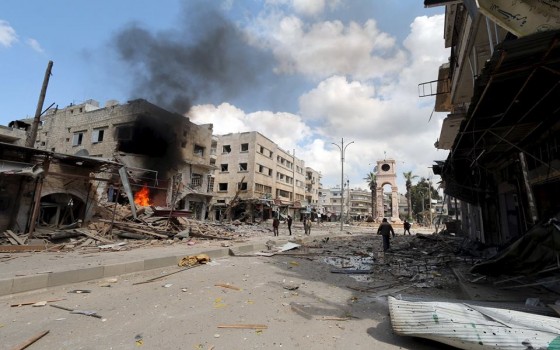
A UN official: Violence threatens the progress of the political process in Syria and warnings of the increasing suffering of Syrians
- Europe and Arabs
- Thursday , 15 September 2022 16:35 PM GMT
Deputy United Nations Special Envoy for Syria, Najat Rushdie, affirmed that progress in the political process in Syria is possible, but on condition that violence recedes to its end, stressing the need to provide a sustainable and comprehensive political solution to preserve hope for those who struggle on a daily basis, and put Syria on the right track. This was stated in her briefing to the Security Council.
According to the United Nations Information Center, the UN official clarified that Special Envoy Geir Pedersen has participated in extensive consultations aimed at pushing the political process forward and is still focused on addressing the fundamental challenges facing the Constitutional Committee, which he hopes to meet as soon as possible in Geneva.
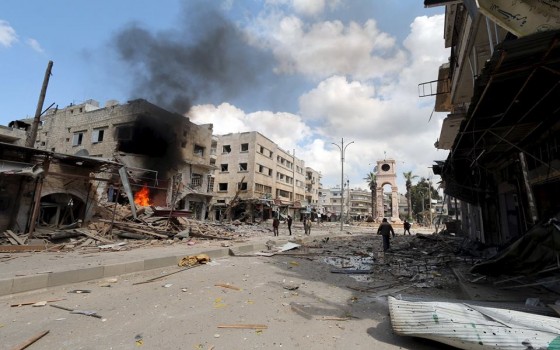
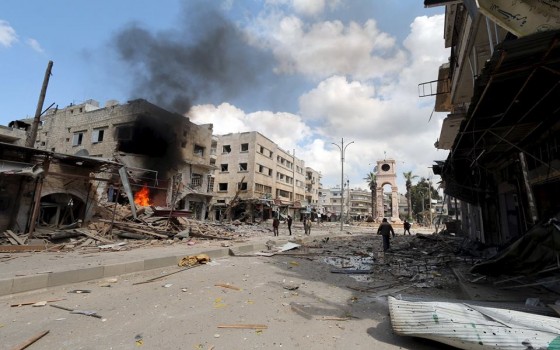
The Deputy Special Envoy indicated that despite the relative calm that prevailed in the past two weeks, there was a continuous exchange of missiles, artillery fire and other security incidents, including by terrorist groups, and there were reports of sporadic air strikes in different areas of northern Syria, As well as reports of Israeli air strikes, including those that temporarily put Aleppo's airports out of service.
Rushdie stressed that the ceasefire at the national level remains an essential goal of the political process - "which we continue to emphasize to the parties participating in the working group on the ceasefire in Geneva, and we continue to strongly emphasize the need for strict adherence by all parties to humanitarian law." international law and international human rights law.
With regard to the humanitarian situation in Syria, the Deputy Special Envoy said that the needs in the country are rising with continued restrictions on access and dwindling resources, and that stopping the escalation of violence and addressing the factors that drive displacement or fear of return can have a real positive impact on the humanitarian situation and create A safe, calm and nurturing environment in which the political process can unfold.
Rushdi said that stabilizing the conflict and finding a sustainable political solution are the best ways to address the economic collapse in Syria, "but in the meantime, Syrians are struggling to provide the necessities of life: food, fuel for heating, basic services and livelihoods."
The Deputy Special Envoy stressed the need to prioritize addressing the cases of tens of thousands of detainees, abductees and missing persons, saying that women who are looking for their relatives are at risk of exploitation, harassment and violence, in addition to exhaustion to obtain ransom or bribes, especially in these difficult economic conditions.
Rushdi also noted that Syrian women bore a special burden throughout the conflict, as many of them run their families and gather their communities, in the absence of men, yet others find themselves unable to secure jobs or achieve career advancement, given the conflict and its repercussions on Economy.
The UN official called on the importance of hearing the voices of Syrian women in the political process, and that Syrian women can and should play an active role in formulating the political solution and ensuring its implementation on the ground.
In the same context, United Nations human rights experts warned of the possibility of a violent escalation in the Syrian conflict, during a report on the 11-year war, and the Independent International Commission of Inquiry on the Syrian Arab Republic warned in its new report covering the period from January 1 to 30 June that Syrians face increasing suffering and hardship stemming from the deadly consequences of the more than a decade-long war that has intensified along its northern front. According to the United Nations Information Center
"Syrians today are facing increasing and intolerable hardships and are living among the ruins of this long conflict," said the head of the commission, Paulo Pinheiro, during the launch of the report on the human rights situation in Syria.
The head of the committee added that millions are suffering and dying in displacement camps, while resources are becoming increasingly scarce and donor fatigue is increasing: "Syria cannot afford to return to fighting on a large scale, but that is how it is heading."
youm 7




No Comments Found