
uring the annual meeting of the United Nations General Assembly .. a united European message on how to face international challenges
- Europe and Arabs
- Tuesday , 20 September 2022 16:15 PM GMT
Brussels: Europe and Arabs
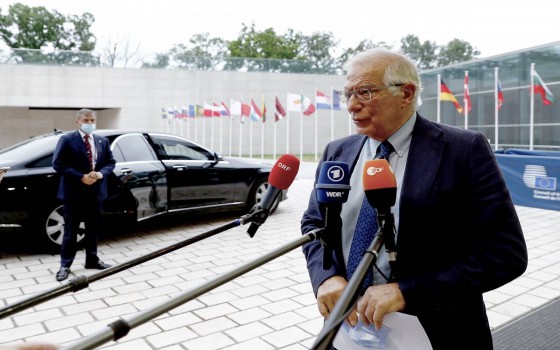
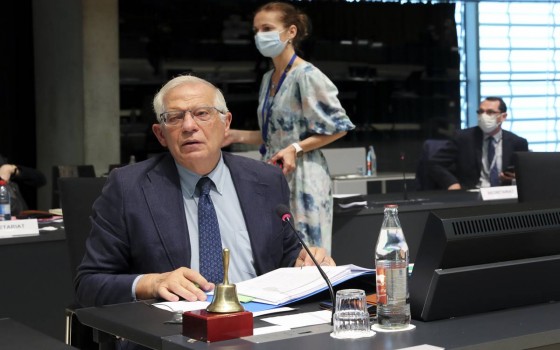
With the aim of coordinating European positions on the sidelines of the annual meeting of the United Nations and sending a unified European message to the world, the foreign ministers of the European Union held a meeting headed by Josep Borrell, the coordinator of foreign policies, according to what was stated in a statement issued in Brussels on Monday evening, and after the meeting Borrell said"
We are starting the high-level week in the United Nations. [Today’s meeting is] the traditional informal meeting with the Foreign Affairs ministers, which has provided us with a good opportunity to coordinate our messages and our outreach to explain to political leaders from around the world, which will be gathering here in New York.
Certainly, it is the most important platform for multilateral engagement to tackle the world's problems, and we, the European Union and our Member States, will have a very strong presence here.
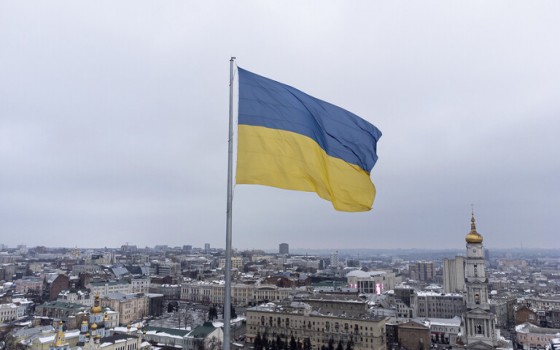
Last year, we were talking about Afghanistan, you will remember. Afghanistan was the key issue. This year, Ukraine will be very high on the agenda. It will be unavoidable. There are many other problems, we know. But the war in Ukraine has been sending shockwaves around the world.
It is not only Ukraine who is suffering from this war. Ukrainian people are being bombed with missiles and with guns, and the rest of the world is being affected by the price increase in energy and food insecurity and being affected by - as a consequence - the economic problems. We can say that the war is affecting everybody on earth. It is not only against Ukraine. It is about all of us. And this is what we will try to explain here in New York.
We want to promote international support for Ukraine. Not because it is our neighbour, and not only because it is our neighbour and our partner. Because we are strongly convinced that [by] defending Ukraine, we are defending the principles that everybody who is coming here to New York has signed [up to]: the principles of international law - sovereignty and independence of countries.
We will continue to explain that to our partners in Asia, Africa, Latin America, who is the real culprit of the growing instability, energy and food crisis. We will demonstrate that the European Union does not forget and remains committed to addressing other challenges and crises in other parts of the world – and there are many. But for us, it is not a question of choosing between Ukraine and the others. We can do all at the same time. We care about Ukraine and we care about the rest of the world. This is what we will do during this critical week, using this opportunity.
We need to continue pushing back the Russian propaganda and its misleading narrative. Allow me to do so a little bit here, because I want to mention some facts.
The United Nations’ Grain Deal and our efforts through the [EU] Solidarity Lanes have already led to a decrease in food prices worldwide. Most of the Ukrainian exports have gone to the countries that need them. Look at the data. Look at the statistics: two thirds of the Ukrainian exports have gone to Africa, to the Middle East and Asia.
So, it is not true what Mr Putin says, that the grain that has been exported from Ukraine has not gone to the people that need it. Two thirds [of the Ukrainian exports have gone] to Africa, Middle East and Asia.
We would not be in such a situation if Russia had not launched this illegal aggression against Ukraine and blocked Ukrainian exports in the first place. In addition to bombing Ukrainian agricultural infrastructure, destroying and looting Ukrainian grain supplies, now they are flowing. But they will arrive late for many people who have been suffering hunger.
I want to stress that our sanctions are targeting the Russian war economy, not food or agriculture. Our sanctions apply to the European Union’s citizens and the European Union’s operators. They apply only in the European Union’s territory. None of our sanctions targets the trade of fertilisers between third countries and Russia. Even us, we continue importing fertilisers from Russia, with a limit. So, how could we prevent our fertilisers going to third countries if we are still importing? On the other hand, many operators prefer not to do business with Russia anymore. It is their choice. It is not because they have to, it is because they do not want. This is called overcompliance. They can, but they do not. They could, but they do not want to. Not because of the sanctions, but because of the uncertainties of doing business with a regime that is killing and kidnapping civilians in a neighbouring country.
Unlike the one who aggravated the global food crisis, we are at the forefront in helping the affected countries to deal with it. We are co-leading the world efforts to face food security. We are doing that on the ground. We do it here with the events that will take place at the UN General Assembly (UNGA).
We have allocated €7.7 billion until 2024 to address the most immediate needs in this regard. If you have to look at the amount of humanitarian help that we, the European Union and the Member States, have been [providing], we are ranking much, much, much higher than what Russia is doing. This is from the point of view of humanitarian needs, economics, energy and food. But let's go to the military side of the problem.
Today, the [Foreign Affairs] Ministers have - all of them - resolved to continue helping Ukraine to defend itself. And we will continue using the European Peace Facility to finance weapons deliveries successfully and effectively. We have also continued discussing the proposal to establish a European Union Military Assistance Mission. I can say that the work is underway, and I hope that we will see concrete results soon.
Let me use this opportunity finally to talk about the situation around the Zaporizhzhia nuclear power plant. Russia must cease the occupation immediately. We support the establishment of a nuclear safety and security protection zone, as [IAEA Director General] Dr Grossi proposed in his report following the visit. I want also to use this opportunity to draw attention to the two OSCE staff members of the Special Monitoring Mission to Ukraine who have been sentenced to 13 years in prison as a result of a so-called legal proceeding in Luhansk. They need to be unconditionally released immediately.
Finally, this week, we will be looking closely at the issue of accountability, because the reports on war crimes in Ukraine continue building up. These atrocities cannot happen without those responsible being [held] accountable. We will continue supporting Ukraine in this regard, through the Joint Investigation Teams, supporting the International Criminal Court and [through] the EU Assistance Mission to Ukraine.
I hope that this week will be a week of very intensive work, and at the end we will be closer to solving some of the existing challenges.
Secretary-General [António Guterres] said: “This is a perfect storm”. And that is right - many crises looming, many problems affecting the world international community. The European Union will continue being an actor that brings security and stability and solidarity to the world.



No Comments Found