
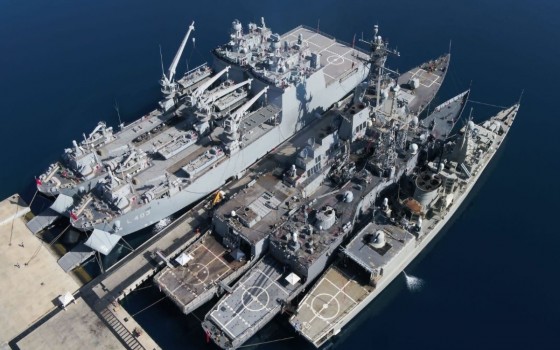
The end of NATO exercises in the Mediterranean .. 12 allied countries gathered off the coast of Turkey under the titel "DYNAMIC MARINE

- Europe and Arabs
- Friday , 23 September 2022 15:32 PM GMT
Brussels: Europe and Arabs
Yesterday, the NATO exercise under the name Dynamic Mariner, which is a crisis response exercise, was completed in conjunction with the Turkish Navy exercise Mavi Balina, which brings together 12 allied countries off the coast of Turkey.
The Dynamic Mariner aims to test and demonstrate the maritime component of the NATO Response Force (NRF/M) and interoperability between NATO forces, enhancing resilience and improving the ability to work together between Allied countries.
The exercises lasted from September 11 to 22 of the same month.
According to the NATO statement, "This year's event includes more equipment than ever before, facilitating increased interoperability between our countries and enhancing operational readiness. We continue to work closely with Turkey and other allies and partners to deter aggression and defend the Alliance."
The exercise includes 50 ships, 5 submarines, 5 aircraft (including naval patrol aircraft and helicopters), 1,500 Marines and personnel from 13 NATO countries - Belgium, Bulgaria, Canada, France, Germany, Greece, Italy, the Netherlands, Poland, Romania, Spain, Turkey and the United States.
The exercises also included the NATO Standing Maritime Group 2 (SNMG2) and the NATO Standing Mine Action Group 2 (SNMCMG2), two active-duty NATO naval forces that contribute to the Alliance's collective defense on a permanent basis.
"The Dynamic Mariner is a large-scale and incredibly important naval exercise," Vice Admiral Didier Piatton said. “This year’s event includes more assets than ever before, facilitating increased interoperability between our nations and enhancing operational readiness. We continue to work closely with Turkey and other allies and partners to deter aggression and defend the Alliance.”
The Dynamic Mariner-Mavi Balina included training in specific skill sets including surface and air warfare, anti-submarine warfare (ASW), anti-surface warfare (ASuW), anti-mine action, amphibious, hybrid and force operations.
According to NATO Headquarters in Brussels, NATO's naval strength lies in the ability of the permanent forces and components of the North Atlantic Response Force (NRF) to rapidly integrate with national forces and mission groups with high readiness and high capabilities. Regular training between these groups is a strength multiplier and provides an interoperable group training capability that NATO can confidently deploy.
The statement said the Rapid Response Force (NRF) is a highly prepared and technologically advanced multinational force consisting of land, air, sea and Special Operations Forces (SOF) components that the Alliance can rapidly deploy, whenever and wherever needed. Collective defense remains the Alliance's greatest responsibility, and deterrence is an essential component of NATO's overall strategy - preventing conflict and war, protecting allies, preserving freedom of decision and action, and upholding the principles and values it represents.
Headquartered in Northwood, UK, MARCOM is the central command of all NATO naval forces. The MARCOM Commander is the coalition's primary naval advisor. Like its ground and air counterparts (LANDCOM and AIRCOM), MARCOM reports to NATO's Allied Command Operations (ACO), which is located in Mons, Belgium.




No Comments Found