

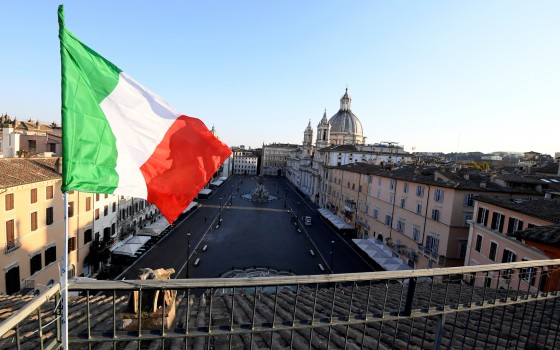
Italy's far-right hopes for historic victory on eve of legislative elections

- Europe and Arabs
- Saturday , 24 September 2022 17:48 PM GMT
AFP
Italy's far-right hopes Saturday to score a historic victory Sunday in legislative elections that could make Georgia Meloni the first woman to head an unprecedented hard-right government in the country.
The leaders of the main political parties did everything they could Friday in their last attempts to attract voters during their last electoral rallies before the electoral silence that began Friday at 10 pm GMT and continues until the polls close on Sunday.
In Naples (south), Giorgia Meloni, leader of the Fascist-rooted "Brothers of Italy" (Fratelli d'Italia) party, which has about 25% of voting intentions, according to the latest polls, said, "I am a patriot!"
In the media, her ally, the leader of the anti-immigration "League" party Matteo Salvini, was dominant, demanding "apologies or the resignation" of European Commission President Ursula von der Leyen after she threatened Thursday in the United States with sanctions if it violated the democratic principles of the European Union.
It is possible to rely on the latest polls that were published to predict the winning rates in the legislative elections, bearing in mind that the conduct of polls stops in the two weeks preceding the polls.
The polls suggested that the “Italy Brothers” would receive between 24 and 25% of the voting intentions, compared to between 21 and 23% of the voting intentions for the Democratic Party, and between 13 and 15% for the populist “5 Star Movement”, 12% for the “League” and 8% for “the League”. Forza Italy".
The right-wing and far-right coalition could get 45 to 55 percent of the seats in parliament.
Abstentions could exceed 30% in this election, according to analysts, a high number for Italy.
- Brussels is on the lookout -
The European Union is closely following the Italian legislative elections, especially in light of the sensitive handling of the sanctions imposed on Moscow, with the possibility of differences between the European Commission and the government if it is conservative.
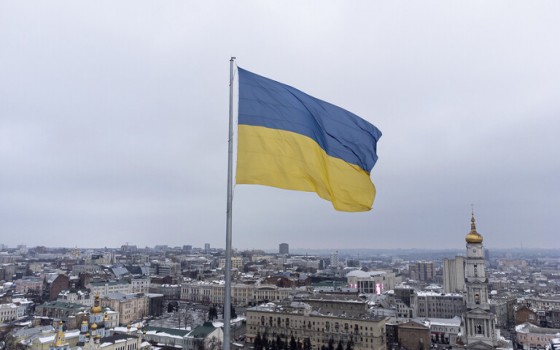
Rome has historically maintained friendly relations with Moscow, but has remained in solidarity with NATO since the beginning of the Russian invasion of Ukraine under Mario Draghi's government.
The third partner in the right-wing coalition, Silvio Berlusconi, sparked controversy when he said Thursday evening that Russian President Vladimir Putin had been "pushed" by his own people to invade Ukraine. He returned Friday to affirm his "absolute loyalty" to NATO and the European Union.
And when Berlusconi was Italy's prime minister, he treated Putin like a friend that he hosted him at his Sardinian palace and went with him to Crimea after Moscow annexed it in 2014.
Matteo Salvini, for his part, presses for the easing of sanctions imposed on Moscow, considering them ineffective and counterproductive, but he also sees the Russian invasion of Ukraine as "unjustified".
As for Georgia Meloni, she took clear positions on supporting Ukraine, sanctions against Moscow, and supplying weapons to Kyiv.
On Saturday, Italian newspapers expressed their concerns on the eve of the legislative elections.
"Zelensky to the Italians: 'Don't vote for Putin's friends'," the left-wing newspaper La Repubblica wrote on its front page.
"The final challenge to Europe and Putin," read the headline of the Corriere della Sera newspaper.
Italy's relations with the European Union will also be closely monitored.
In Meloni's promises of cooperation, hidden threats. "We want a strong, serious and respected Italy on the international stage," she said.
The extremist right-wing coalition promised to fulfill its European commitments, and Meloni officially backed down from her project to remove Italy from the eurozone, but fears remain, especially with the reaffirmation of its support for the Hungarian regime led by the ultra-nationalist Viktor Orbán.
Meloni is calling for the renegotiation of Italy's post-pandemic recovery plan, which the European Union has allocated some 200 billion euros in funding to take into account the rise in energy costs in the wake of the war in Ukraine.
However, Italy's granting of European funding conditional on a series of reforms that Draghi's government strictly respected their entry into force but currently appear to be in jeopardy.



No Comments Found