

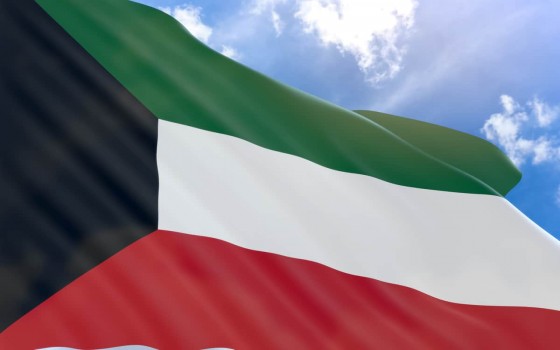
Kuwaitis go to the polls for the sixth time in ten years
- Europe and Arabs
- Wednesday , 28 September 2022 12:38 PM GMT
AFP
Kuwaiti voters will go to the polls Thursday to choose members of the new parliament, two months after the parliament was dissolved and the ruler of the oil-rich Gulf state, which enjoys an exceptional parliamentary life compared to its neighbors, promised not to interfere in the parliament's work.
The country, which lies close to Iran and Iraq, is rocked by frequent political crises involving the government, figures from the ruling family and the parliament that has been dissolved several times. The reason is often the demand of deputies to hold ministers from the princely family accountable over issues including corruption.
Kuwait is one of the largest exporters of crude oil in the world and was the first Gulf country to adopt a parliamentary system in 1962.
And participate in Thursday's elections, which is the eighteenth in the history of political life and the sixth in ten years, opposition figures and political currents who boycotted the polls a decade ago, accusing the executive authorities of influencing the work of Parliament.
The candidate of the "People's Action Movement" that boycotted the elections during the past years, Muhammad Musaed Al-Dosari, told AFP that the reason for this return is the content of the speech delivered by the Crown Prince of Kuwait on behalf of the Emir of the country last June.
"It included clear and explicit pledges and commitments not to interfere in the elections and to protect democracy," he added.
The Crown Prince of Kuwait, Sheikh Mishaal Al-Ahmad Al-Jaber Al-Sabah, said in his speech, "We will not interfere in the people's choices for their representatives, nor will we interfere in the choices of the next National Assembly in choosing its speaker or its committees, so that the parliament will be the master of its decisions. We will not support one group at the expense of another."
The decision to dissolve parliament went into effect in August.
Political analyst Ayed Al-Manna believes that the Kuwaiti leadership, in this speech, "reassured" the Kuwaitis, "which encouraged the political forces and the boycott former MPs to return to run in the elections."
In 2021, the emir issued a pardon for political opponents who were tried on various issues.
313 candidates, including 22 female candidates, are competing for 50 seats representing 5 constituencies, amid aspirations for women to return to Abdullah Al-Salem's hall in the National Assembly after losing her only seat during the legislative elections that took place in December 2020.
Women represent 51.2 percent of the 795,920 voters.
- Political and economic challenges -
In contrast to the previous elections, which were overshadowed by the Corona virus, the authorities allowed candidates to open electoral headquarters and organize speech festivals to present their electoral programs, while the security services intensified their efforts to monitor any attempts to buy electoral votes.
Official results are expected to be announced on Friday.
Al-Dosari expected "the majority of members of the new National Assembly to cooperate with the government in order to reform and dismantle the state of corruption that has dominated the country, while approving a real development plan."
Like its neighbors, Kuwait aspires to diversify its economy that is almost entirely dependent on oil, but bureaucracy, corruption and the lack of effective economic transformation plans threaten to put the US ally and which hosts thousands of American soldiers, facing major economic difficulties.
Likewise, Kuwait, which includes a mixture of Sunnis and Shiites and has a population of about 4.2 million people, lacks young leaders, unlike other Gulf countries that are appointing young politicians and diplomats to senior positions.
In recent years, Kuwaitis have expressed their desire for reform and change in a country where expatriates make up 70 percent of the population.
Kuwait faces another challenge related to the fate of tens of thousands of stateless Bidoon, and is accused of treating them in a discriminatory manner.
In addition, Kuwait faced security challenges, particularly in the presence of networks supporting armed groups in the region. It witnessed bloody attacks, the last of which was in 2015, when a suicide bomber blew himself up in a Shiite mosque, killing 25 people and wounding more than 200.
According to the constitution, the government headed by Sheikh Ahmed Nawaf Al-Ahmad Al-Jaber Al-Sabah, son of the Emir of the country, will submit its resignation the day after the election results are announced.
The opposition, which includes mostly Islamist politicians, won 24 seats out of 50 in the previous elections, knowing that it had won a historic victory in 2012 when it won more than half of the parliament’s seats before the National Assembly was dissolved shortly after.
A new government was formed in August following the resignation of the Council of Ministers in April, while MPs were preparing to question its prime minister, Sheikh Sabah Al-Khaled Al-Sabah over practices considered "unconstitutional."
And the government formed is the fifth in two years.

No Comments Found