

The European Green Deal: A new law to reduce aviation emissions by promoting sustainable fuels

- Europe and Arabs
- Wednesday , 26 April 2023 13:30 PM GMT
Brussels: Europe and the Arabs
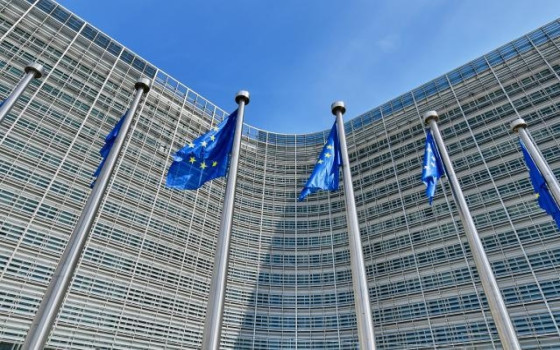
The European Commission in Brussels on Wednesday welcomed the political agreement on the ReFuelEU aviation proposal, reached on Tuesday evening between the European Parliament and the Council of Member States. Once in place, the commission said, the new rules will help decarbonise the aviation sector by requiring fuel suppliers to blend sustainable aviation fuel (SAF) with kerosene in increased quantities from 2025.
This action alone is projected to reduce aircraft CO2 emissions by about two-thirds by 2050 compared to the “no action” scenario, and provide climate and air quality benefits by reducing non-CO2 emissions.
This agreement represents the latest agreement on transportation proposals under the “Fit for 55” package, such as agreements on updated rules on emissions trading in the aviation and maritime sectors, on promoting sustainable fuels for shipping, and on accelerating the pace of trade. Alternative fuel infrastructure has already been reached.
Increase quantities of sustainable aviation fuel
The new rules will require:
1) Jet fuel suppliers to supply minimum SAF at EU airports, starting at 2% of total fuel supplied by 2025 and reaching 70% by 2050. The new EU jet fuel mix will also need to contain a minimum amount of most modern and environmentally friendly synthetic fuels, which increase over time;
2) aircraft operators depart from EU airports to refuel only with the fuel needed for the flight, to avoid emissions related to excess weight or carbon leakage caused by “tankering” practices (deliberately transporting excess fuel to avoid refueling with SAF);
3) Airports to ensure that the fueling infrastructure is available and fit for SAF deployment.
The blending mandate includes biofuels, recycled carbon fuels, and synthetic jet fuels (e-fuels) in line with the Renewable Energy Directive, but excludes food and forage crops that support sustainability goals. As it will be applied across the EU, the new mandate will ensure a level playing field within the EU's internal market, provide legal certainty to fuel producers and help start large-scale production across the continent. It will also increase the energy security of the EU by reducing dependence on energy products from third countries and creating thousands of new jobs in the energy sector. EU airlines will have access to increased amounts of sustainable jet fuel throughout the EU.
The political agreement reached yesterday requires formal approval by Parliament and the Council. Once this process is complete, the new legislation will be published in the Official Journal of the European Union and enter into force immediately.
This agreement is an important step towards implementing the Commission's "Fit for 55" legislative package, and will help achieve the EU's climate ambitions under the European Green Deal.
Aviation emissions in Europe increased by an average of 5% year-on-year between 2013 and 2019. While they have decreased significantly during the pandemic, aviation emissions are still expected to increase further. The growing climate ambition of the aviation sector will be crucial for the EU to reach its climate targets under the Paris Agreement and make the European Green Deal a reality.
To achieve climate neutrality, the EU needs to reduce transport emissions by 90% by 2050 (compared to 1990 levels). RefuelEU Aviation will help the aviation sector to contribute to this goal, together with the revised rules on the EU Emissions Trading Scheme in the aviation sector.




No Comments Found