

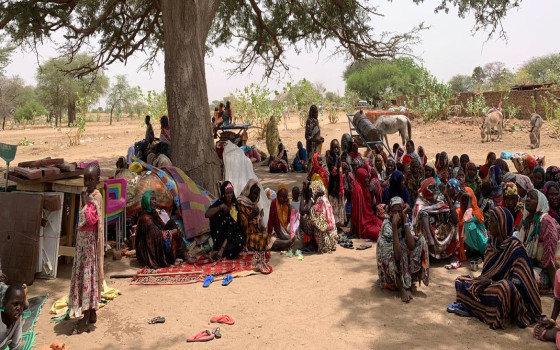
Growing humanitarian needs due to the crisis in Sudan... is of concern to the United Nations

- Europe and Arabs
- Wednesday , 28 June 2023 17:28 PM GMT
Khartoum - New York: Europe and the Arabs
There is growing concern about growing humanitarian needs among people affected by the crisis in Sudan, with numbers of displaced people continuing to rise, while aid delivery remains severely constrained by insecurity, access and funding shortfalls, said the UN Assistant High Commissioner for Refugees for Operations.
And according to what was stated in the United Nations news bulletin, of which we received a copy this morning, Rauf Mazo stated, during his speech to reporters at the United Nations headquarters in Geneva, that more than 2.5 million people have been displaced by the conflict since April 15, and that 560 thousand have taken refuge in neighboring countries. In search of safety, Egypt received the largest number of them, followed by Chad, South Sudan, Ethiopia and the Central African Republic. About two million Sudanese have also been internally displaced.
“Many people are stranded in Sudan and cut off from basic humanitarian assistance due to the fighting in the capital, Khartoum, and the regions of Darfur and Kordofan. UNHCR has received disturbing reports of displaced civilians, including refugees, who have experienced life-threatening obstacles while trying to find safety within the country and across borders,” said Mazu. .
"Because of the raging fighting, the vulnerable on the move are left with no choice but to flee under extremely dangerous and difficult conditions, where they face risks of physical assault, robbery and looting, and are sometimes prevented from leaving conflict areas and forced back into harm's way," the UN official added.
Extensive efforts and cooperation with everyone
The Assistant United Nations High Commissioner for Refugees for Operations explained that UNHCR teams are intensifying their efforts to help people who reach safer sites by registering, providing urgent assistance and expanding services in existing sites.
However, he noted that the difficulty of accessing the affected areas hinders the provision of basic resources and services to vulnerable civilians.
“We are particularly concerned about the deterioration of the situation in West Darfur where, according to reports from our colleagues on the ground, conflict has reached alarming levels, making it virtually impossible to deliver life-saving aid to the affected population. Among the refugees arriving is an increasing number of injured civilians. to Chad."
In response to this escalating crisis, the UN official confirmed that the UNHCR has strengthened its efforts to meet the needs of the displaced and refugees inside and outside Sudan, adding that they are "working with the government, other United Nations agencies, humanitarian aid partners and host communities to ensure the provision of emergency shelter, clean water, health care services, psychological support and aid." other basic.
Challenges at the border
But the Assistant High Commissioner for Refugees said the remote and, in some cases, unstable nature of the border areas raised concerns about refugee safety.
Mazu said that because of the rains in some countries, the delivery of aid has begun to be severely affected.
The UN official also indicated that the limited infrastructure in South Sudan and security concerns pose an additional challenge to the movements of new refugees.
In Chad, concerted efforts are being made to meet the needs of new refugees, including women and children, who have fled violence and fighting in West Darfur, according to the Assistant High Commissioner for Refugees for Operations.
"In order to ensure the safety and health of the new refugees, 26,000 refugees out of 120,000 have been transferred from the border area to refugee camps, while humanitarian workers continue to provide emergency aid to refugees at the border," Mazu added.
Mazo warned that despite all these efforts, resources are being depleted, noting that the humanitarian response plan and the refugee response plan have been funded by less than 20 percent so far.





No Comments Found