

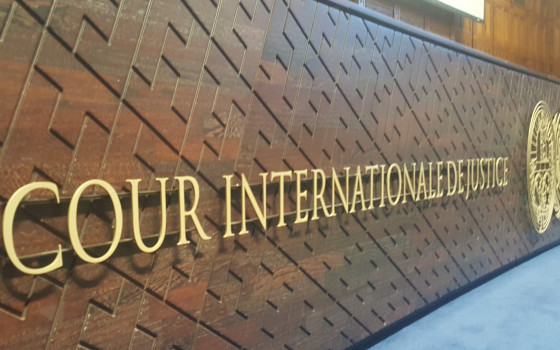
Justice International decided to postpone the public hearings in the case of the Netherlands and Canada v. Syria

- Europe and Arabs
- Saturday , 15 July 2023 17:41 PM GMT
The Hague: Europe and the Arabs
The International Court of Justice, the principal judicial organ of the United Nations, decided to defer the oral proceedings upon a request for provisional measures brought by Canada and the Netherlands in the case concerning the Convention against Torture and Other Cruel, Inhuman or Degrading Treatment or Punishment
(Canada and the Netherlands v. The Syrian Arab Republic), which was scheduled to open on Wednesday 19 July 2023, has been postponed to 10 and 11 October 2023.
According to a court statement, which we received a copy of this morning, the court reached its decision after considering the opinions and arguments of the parties, following Syria's request for postponement.
On July 19 and 20, the International Court of Justice was supposed to hear a request from the Netherlands and Canada to order Syria to stop all acts of torture and arbitrary detention, in a case that includes allegations that Syria violated the United Nations Convention against Torture. The hearings will take place in the Peace Palace, which is the headquarters of The court is in The Hague, with two sessions, one in the morning and the other in the evening, on the first day, and it will last two hours. On the second day, the eleventh of October, the duration of each session will be one hour.
According to media reports, this will be the first time that an international tribunal will look into alleged abuses in Syria during the 12-year conflict. Last month, the court announced that the Netherlands and Canada had filed a case against Damascus, accusing it of violating the United Nations Convention against Torture since 2011.
The Syrian government and President Bashar al-Assad have rejected accusations of torture and extrajudicial killings in a war the United Nations says has killed hundreds of thousands. Canada and the Netherlands asked the court to take emergency action and order Syria to cease all acts of torture and cruelty and to end arbitrary detention, among other requests.
The ICJ can issue such orders in an effort to ensure that the situation does not deteriorate in the many years it generally takes for the court to decide the main case, but the court has no power to enforce its rulings.
This is the first time that an international court has held a hearing on a case that attempts to hold the Assad government responsible for gross human rights violations and torture. The International Court of Justice is the highest court of the United Nations. Judicial investigations have been conducted to prosecute some Syrian regime officials due to acts of torture in cases filed within the framework of what is known as universal jurisdiction, especially in Germany, but these cases focus on individual criminal responsibility.
"The situation here is different because (the case) holds the state responsible for torture committed on a large scale," said British lawyer Toby Cadman, who is advising the Dutch government on the case.
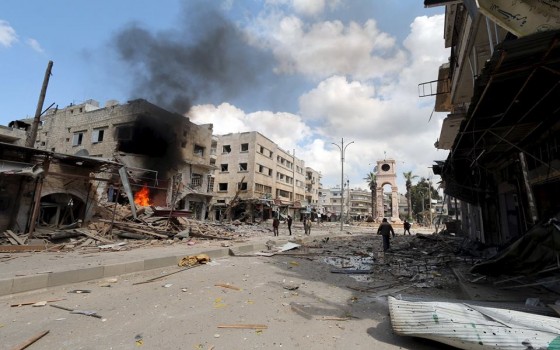
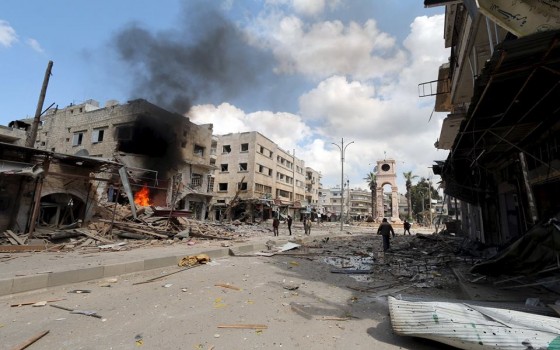
The Syrian civil war, which has been going on for 12 years, has killed hundreds of thousands, displaced millions, and involved regional and global powers.








No Comments Found