
European Foreign Policy Coordinator: Russia's threat to grain transport ships from Ukraine will lead to a huge food crisis in the world
He said on the sidelines of the European Union foreign ministers' meeting: We are discussing the response to the Turkish request to re-negotiate accession
- Europe and Arabs
- Thursday , 20 July 2023 17:49 PM GMT
Brussels: Europe and the Arabs
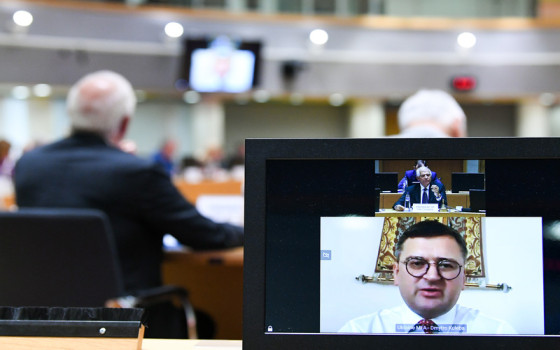
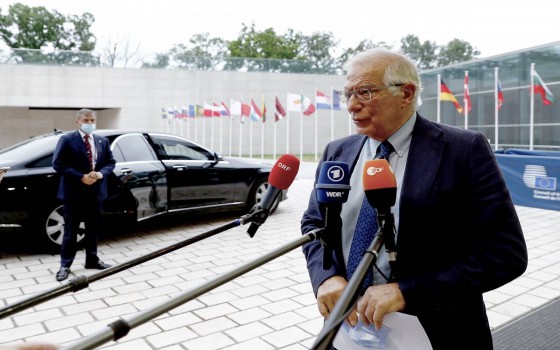
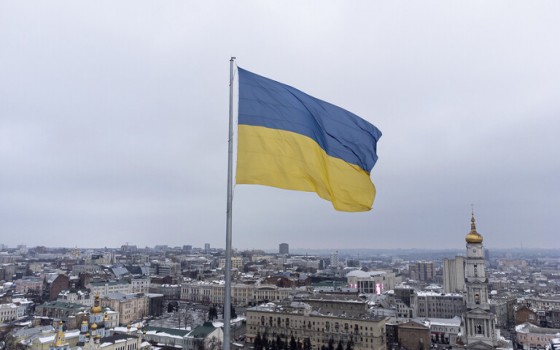
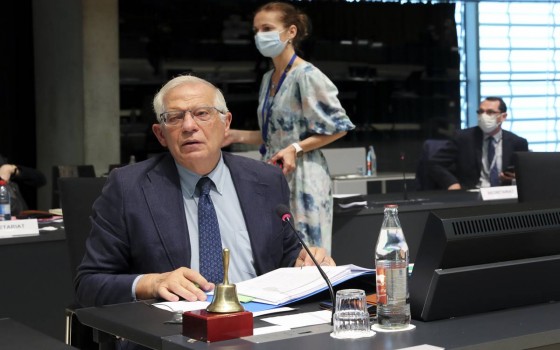
The European Union foreign ministers held discussions this morning about [Russian aggression] against Ukraine. With the participation of the Minister of Foreign Affairs of Ukraine, Dmytro Kuleba. On the sidelines of the meeting in Brussels, Josep Borrell, European foreign policy coordinator, said, "But at this moment, for the third night, Russia bombed and destroyed all port infrastructure in Odessa [and other coastal cities] and granaries - more than 60,000 tons of grain were burned. So it didn't They just withdraw from the grain agreement, in order to [stop] the export of grain from Ukraine, but they burn the grain. It's the third night [of] intense air attacks on Odessa port and infrastructure causing not only civilian casualties, but great destruction to the grain stocks there. This It is a barbaric position that will be taken into account by the European Ministerial Council today. [During] the talks with [Minister] Kuleba, we will have more information, but what we already know is that this will lead to a huge food crisis in the world. If this is not stopped Only grain but [also] destroyed, it means that there will be a shortage of food and grain in the world. Therefore, we will listen to [Minister] Kuleba, and we will discuss how to continue to support Ukraine in the long term - a long-term security commitment and guarantees for Ukraine on our part, which means Increasing the resources of the European Peace Facility. I have presented a plan to guarantee financial support to Ukraine in the coming years, which will amount to a very large sum of money, Borrell told reporters. I hope the ministers will support it. I do not want to give numbers now because I prefer to first obtain the political agreement of the ministers. But it is clear that we will have to deal more with Ukraine having a stable instrument, because Ukraine will need support not month after month, but in the long run, [with] organized and continuous support. But what is happening in Odessa these three nights is very serious. I will provide more details after the board.
Regarding a question about the Russian threat considering all ships in the Black Sea ports as military vessels? How can the European Union and the international community interact with it? Borrell replied "As I said, what's happening in Ukraine, in the port of Odessa, it's a very serious situation. [It's] a new thing, because until now, at least the grain has been exported but not destroyed. So, to consider a ship [is] a ship warlike and therefore an object of Russia's military activities, it is a step forward in order to continue to prevent Ukraine from exporting its grain.It has two consequences: first, for Ukraine itself - they are denied resources - and second, for the rest of the world, who are being denied a critical material - this is a crucial raw material Speaking of critical materials, grain is an important material.
Ministers will have to discuss how to move forward, but there is only one solution: increasing military support to Ukraine. If they are bombed, then we have to provide the anti-aircraft capabilities. If the Russians are using drones, we have to provide the Ukrainians with anti-aircraft capabilities to destroy these drones. But the massive attacks of these last three nights require an answer on our part, and the answer can only be one, regardless of the rhetoric - the provision of more military resources. That's why I'm going to make a proposal to increase -- I don't want to say the number now, [I'll do it] after the meeting -- in a very important way, the capacity of the European Peace Facility. This has become very dangerous. And about Poland's declaration that it will not open its borders to grain. Away from the sea, Borrell said, "we have the Solidarity Corridors that allow us to export a lot of grain from the Black Sea ports to the Sea, and it can pass through the [land] borders of member states neighboring Ukraine. This has to be increased. If the sea route is closed, we'll have to increase export capacity." Ukrainian grain through our ports, which means greater effort for Ukraine's neighbors. They will have to contribute more, open borders and facilitate transportation in order to take Ukrainian grain from Black Sea ports. This will require more participation from member states. We have done a lot, and we must do more. .
In another file, Borrell said, "We will also have a conference call with [United States Secretary of State, Anthony] Blinken. We will return to the China issue following the guidelines presented by the European Council, and the ministers will revisit the paper presented at the Gymnich [meeting] to further reshape our relationship with China. I hope that my visit to China - which has been canceled twice for health reasons - will take place shortly after the summer .
On the Türkiye file, Borrell said that Türkiye is once again on the agenda. We will also discuss how to restore our relations with Türkiye. It was a long time ago without talking about Turkey, but today Turkey is again on the agenda.
In response to a question, he says, "Turkey wants negotiations to join the European Union. What do you expect internally?" He replied, "This is the first time we have discussed Turkey in several months. Türkiye finally agreed to lift its veto on Sweden's entry into NATO. Latest news from Turkey: I met Turkey's new foreign minister [Hakan Fidan] at the ASEAN meeting in Jakarta. They want to restart negotiations for their accession [to join the European Union]. They want to place the European agenda high in their political approach to us. This is good news. The ministers will discuss how to respond to Türkiye's request. As you know, Ukraine's candidacy for membership in the European Union has created a new dynamic in our neighborhood. If Ukraine were a candidate, it would speed up the process in the Balkans And then, for sure, Turkey also wants to be part of this game. We have to look first at modernizing our customs union and also on the issue of visas.
He concluded by saying that economic security is not just a matter of technology, as it discusses which technologies pose a danger, and what dependencies must be controlled or abolished, but that it will fully affect our foreign policy. And that is why the [foreign] ministers have asked us to study in depth how we are carrying out this process, and what are the implications for foreign policy. So, I think it is very important for the EU foreign policy to integrate the economic security dimension.



No Comments Found