
Challenges facing Belgium during the presidency of the European Union.. Focusing on youth, culture, elections and political awareness... Confronting the files of climate change, economic growth and social cohesion
- Europe and Arabs
- Monday , 7 August 2023 17:58 PM GMT
Brussels: Europe and the Arabs
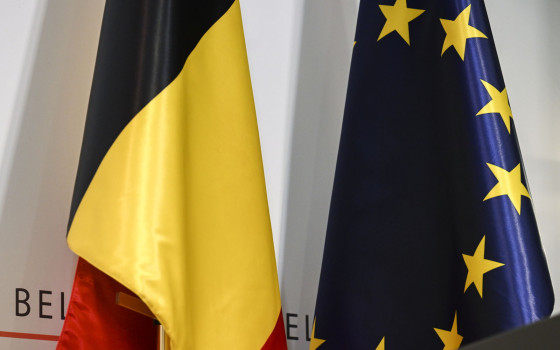
Every six months, a member state of the European Union assumes the presidency of the Council of the European Union. At the beginning of 2024, Belgium will fulfill this role and will be responsible for organizing and directing the work of the various Council formations. The state will set the work program and determine its priorities.
As president, Belgium will lead the European agenda and strengthen cooperation among member states. The aim is to strengthen the European Union and make progress in many areas, such as climate change, economic growth and social cohesion. There will also be a focus on culture and public participation to inform and raise awareness of European policies among citizens and civil society.
According to the Belgian news agency BELGIUM in Brussels reported Monday, the Belgian regions - Flanders, Wallonia and Brussels - will highlight the cultural component of the presidency. Particular attention will be given to people between the ages of 16 and 18, who are able to vote in European elections for the first time. This election will take place between 6 and 9 June 2024.
European elections
During the Belgian presidency, the mandate of the Ursula von der Leyen Commission will end. It is expected that several files will be adopted in the first three months of 2024. After that, it is likely that there will be a vacuum until the end of the presidency. Therefore, Belgium faces the challenge of concluding the negotiations with the European Parliament on the ongoing legislative files in the first months of 2024.
There are no elections for the EU presidency. Each member state takes its turn. In 1958, Belgium was the first country to assume the presidency of the European Economic Community, before it was called the European Union, which had six members: Belgium, the Federal Republic of Germany (West Germany), France, Italy, Luxembourg, and the Netherlands.
Three presidencies
Today the European Union includes 27 countries, and the job of the president has become more and more important. For example, each country that holds the presidency works closely with two other countries that take turns holding the presidency. One of them held the previous presidency and the other will hold the next presidency
The three chairmen set long-term goals and set a common agenda for important issues and topics that the council will deal with for the next 18 months. On this basis, each of the three countries - in this case Spain in the second half of 2023, Belgium in the first half of 2024 and Hungary in the second half of 2024 - develops a six-month programme.
Whoever assumes the presidency helps set the European agenda, negotiates and works on decisions. It is an opportunity for a member state of the European Union to place its priorities on the European agenda, raise its status and increase its visibility.
The council does not have a fixed composition but meets in 10 council formations, depending on the policy area for which the ministers are responsible. There are two formal meetings per Presidency to ratify a series of decisions and one informal meeting to exchange views on specific issues.
Divided opinions
Meanwhile, opinions are divided about Hungary's presidency in the second half of 2024. In a resolution in June, the European Parliament denounced Orban's government's lack of respect for the rule of law. She also said she did not trust the Hungarian presidency and called on other member states to find a "solution".
The presidency is not only a privilege, it is also a duty.
Belgian Prime Minister Alexandre de Croo thinks it would be a bad idea. "I think it would be counterproductive. The presidency is not only a privilege but also a duty. It obliges the member state to show its colours, play its role as president and be a conciliator. It would even put Hungary in a luxury position," he said.



No Comments Found