

The United Nations Special Envoy to Syria: A comprehensive solution to the conflict is elusive
- Europe and Arabs
- Thursday , 28 September 2023 14:1 PM GMT
New York - Damascus: Europe and the Arabs
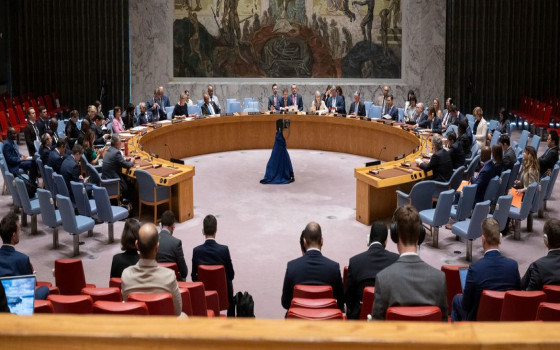
Before the UN Security Council, the United Nations Special Envoy for Syria, Geir Pedersen, said that a comprehensive solution to the Syrian conflict “is still far from reach,” pointing to the lack of trust and divergence of positions. According to what was stated in the United Nations daily news bulletin, a copy of which we received on Thursday morning.
Pedersen added in his briefing yesterday, Wednesday, before a session of the UN Security Council on the situation in Syria, that "the gaps in political will, the divergence in the fundamental positions of the parties, the deep lack of trust, and the international climate are all factors that contribute to this stagnation."
He also warned that the Syrians' suffering and sense of despair are deepening, adding that "we cannot simply accept the status quo because it will get worse and could collapse, which will lead to the creation of new challenges." Pedersen stressed that there is a need for the political process to begin. Achieving results on the ground and giving hope.”
A threat to relative calm
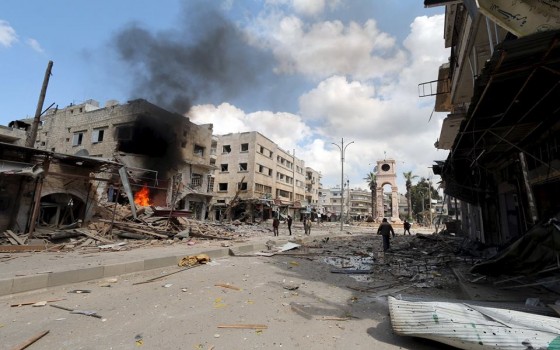
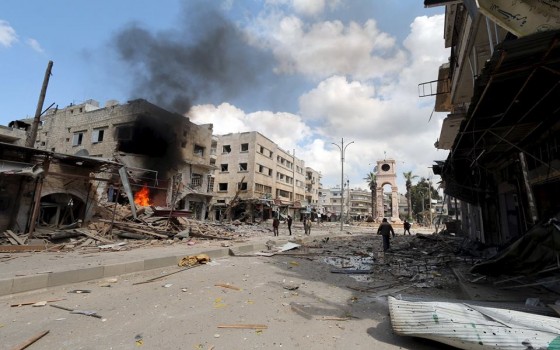
The UN official said that instead of creating conditions for the voluntary return of displaced persons and refugees in safety and dignity, "civilians are still being killed and injured as a result of violence, as tens of thousands were displaced last month."
Pedersen touched on what he described as some of the “most serious threats” to the relative calm that has prevailed since 2020, pointing to a number of violent incidents and clashes that Syria witnessed in the recent period.
He also spoke about the emergence of "new evidence of popular frustration in Syria," pointing to the continuation of protests in Suwayda Governorate for more than a month, in which participants raised economic, social, and political grievances and demands.
He stressed the need to respect the right to peaceful protest in all regions of Syria, the need for protests to remain peaceful, to end all acts of violence against civilians, to fully respect international human rights law and international humanitarian law, and to work for a nationwide ceasefire.
Settlement
The UN envoy urged the Syrian parties and all major international actors to “embrace the settlement” more fundamentally than many are doing so far, stressing that this “will make it possible to work in parallel and urgently to reverse negative economic, security and political trends, and to relaunch a political process led and owned by Syria.” Syrians as called for in Security Council Resolution 2254.”
He added, "We will need concrete steps through contributions from all parties, step by step. This can help us move towards a safe, calm and neutral environment."
Pedersen stressed that this matter requires the implementation of serious commitments to address the concerns of Syrian civilians inside and outside the country.
A disastrous recipe
The UN envoy to Syria stressed that donors can provide more support, while the countries imposing sanctions are working to take steps to facilitate this matter, when Syrians’ concerns about protection are addressed.
At the same time, he said, the various de facto arrangements for calm could be integrated into a more sustainable ceasefire at the national level, and a more acceptable approach could be developed to support efforts to combat Security Council-listed terrorist groups that remain active in Syria.
Pedersen pointed out that there are clear ideas on the table, and that there is a call for real participation and concrete discussions, stressing the need to seize this opportunity.
Regarding the Constitutional Committee, he said that the Syrian parties informed him of their desire for the committee to reconvene, as well as the Astana Group and the Arab Contact Group, in addition to Western capitals.
"The way forward is possible," he added, warning that if this path is not followed, the future will mean "deterioration on the humanitarian, security and institutional fronts, with major implications for everyone."
He said, "This is a recipe for disaster for the Syrian people and the region, which contradicts the common interests of the international community regarding stability and progress in Syria."
More displacement
In turn, the Director of the Operations and Advocacy Department at the United Nations Office for the Coordination of Humanitarian Affairs, Edem and Surno, said that the escalation of hostilities in northern Syria earlier this month is “a stark reminder of the importance of continuing humanitarian aid.”
She pointed out that renewed hostilities in the past three weeks in northern and northeastern Aleppo led to the temporary displacement of tens of thousands of people, and many of them were forced to sleep in the open due to overcrowding in camps for the displaced.
It urged all parties involved in those hostilities to respect international humanitarian law and take all possible precautions to avoid and minimize harm to civilians.
The UN official touched on the resumption of the transfer of UN humanitarian aid from Turkey to northwestern Syria through the Bab al-Hawa crossing, which she described as "good news."
He said that this development "means that we are able to carry out aid delivery operations at the level required to meet the urgent needs of more than four million people, 80 percent of whom are women and children."
She pointed out that resuming the delivery of aid through that crossing does not only mean crossing trucks, but also improving the performance of schools, health facilities and sewage systems, and improving access to safe drinking water and life-saving protection services.
High price
The official at the United Nations Office for the Coordination of Humanitarian Affairs warned that with only three months remaining until the end of the year, funding for the 2023 Syria Humanitarian Response Plan is still less than 30 percent, adding that many humanitarian agencies are forced to make painful decisions.
She added that women and girls are paying a "heavy price" due to the reduction in basic aid programs, stressing that they struggle to access health care, including reproductive services due to widespread damage to health facilities, a shortage of health workers, limited transportation options, a lack of documentation, and overcrowding. And long waiting times





No Comments Found