
The United Nations Special Representative in Iraq: The government has achieved important steps and promising initiatives, but corruption is still widespread
- Europe and Arabs
- Wednesday , 11 October 2023 12:59 PM GMT
New York - Baghdad: Europe and the Arabs
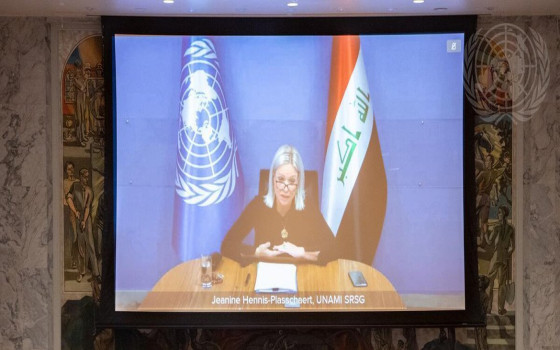
The Special Representative of the Secretary-General of the United Nations in Iraq, Jeanine Hennis-Plasschaert, said that the current Iraqi government - one year after its formation - has achieved important steps and promising initiatives. According to what was reported in the daily news bulletin of the United Nations
The Special Representative and Head of the United Nations Assistance Mission for Iraq (UNAMI) provided a video briefing to the Security Council, yesterday, Tuesday.
Among the important steps she pointed out, Plasschaert said that the Iraqi government, led by Prime Minister Muhammad Shiaa Al-Sudani, is now implementing long-awaited reforms in the banking and financial sectors.
The government also established the Iraq Fund for Development, in addition to passing a new social security law, thus “all Iraqi workers can benefit from public benefits, such as health insurance, as well as maternity and unemployment benefits.”
The government also developed a national strategy for the prevention of drugs and psychotropic substances with the aim of addressing the issue of the rapid spread of drugs.
The Special Representative referred to the recent approval of the general budget in Iraq, noting that this charts an ambitious path for the country until the end of 2025 and includes allocations capable of meeting vital needs, such as infrastructure development and reconstruction.
But despite these positive developments, the Special Representative says, “corruption remains widespread.” It quoted the Iraqi Prime Minister as saying that his government has been working to combat corruption "and will continue to work on it. Without combating corruption, we will not be able to implement our economic vision and development programs."
Provincial council elections represent a critical necessity for all Iraqis, according to Ms. Plasschaert, who called on all actors - at the national or regional level - to play their part in maintaining stability in the period leading up to the elections - including efforts to combat fake and misleading information.
Iraq and neighboring countries
The Special Envoy welcomed ongoing efforts to activate bilateral committees between Iraq and Turkey aimed at addressing security concerns over the border.
She added that Iraq, including the Kurdistan region, has made great efforts to secure its borders. More work is being done to maintain these achievements. She said that all parties consider achieving long-term security necessary.
On the other hand, Ms. Plasschaert touched on the issue of those returning from Al-Hawl camp, noting that 173 other families returned to Iraq during the past month. She said that Iraq continues to provide a role model for other countries that have citizens in Al-Hawl camp.
Missing citizens
Regarding the issue of missing Kuwaiti citizens, third-country nationals and missing Kuwaiti property - including the National Archives, she said that the government of Kuwait has identified another missing person.
Plasschaert also welcomed Iraq's handover to Kuwait of 22 genetic files that were discovered in March 2022 in Najaf. Although the fate of 308 people is still unknown, this extradition process is a key to moving this file forward, as she put it.
Climate change
Climate change and water scarcity are clear factors that multiply the risk. The Special Representative said that last June, the International Organization for Migration registered nearly 14,000 families displaced due to drought conditions in 10 Iraqi governorates.
She also highlighted the devastating fire that broke out in Al-Hamdaniya last month, which claimed the lives of more than 100 people, and offered sincere condolences to the families of the victims.

No Comments Found