
More than 400 children are killed or injured every day in Gaza. UN agencies: Women and newborns bear the brunt of the conflict.

- Europe and Arabs
- Sunday , 5 November 2023 17:8 PM GMT
Gaza - New York: Europe and the Arabs
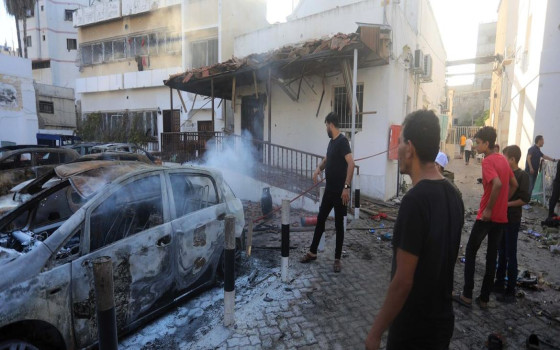
UN agencies have warned that women, children and newborns are disproportionately bearing the burden of the escalation of hostilities in the Gaza Strip.
According to data issued by the Ministry of Health, 2,326 women and 3,760 children had been killed in the Gaza Strip by November 3, representing 67 percent of the total number of victims, while thousands more were injured. This means that 420 children - some just a few months old - are killed or injured every day.
In a joint statement issued over the weekend, UNICEF, UNRWA, the United Nations Population Fund and the World Health Organization warned of a major disruption to health services for mothers and newborns due to bombing operations, damage to health facilities or their cessation of operation, massive levels of displacement, and the collapse of water and electricity supplies. As well as restrictions on access to food and medicine.
UN agencies said that 420 children - some as young as a few months old - are killed or injured every day.
The number of pregnant women in Gaza is estimated at about 50,000, and the agencies explained that these women are unable to access the services they need to give birth safely and care for their newborns.
She added: “With the closure of 14 hospitals and 45 primary health care centers, some women are forced to give birth in shelters, in their homes, on the streets amidst the rubble, or in overcrowded health care facilities, where health facilities are deteriorating, and the risk of infection and medical complications increases.” .
The agencies expected maternal deaths in Gaza to rise, and warned that the psychological effects of the hostilities also had direct reproductive health consequences, “including a rise in stress-induced abortions, stillbirths, and premature births.”
The agencies also sounded the alarm that the lives of an estimated 130 premature babies relying on neonatal and intensive care services would be threatened if hospitals ran out of fuel.
More than half of Gaza's population has taken refuge in UNRWA facilities and lives in squalid conditions, with insufficient water and food supplies, causing hunger, malnutrition, dehydration and the spread of water-borne diseases.
More than 22,500 cases of acute respiratory infections and 12,000 cases of diarrhoea have already been reported, which is of particular concern given the high rates of malnutrition.
Despite the lack of sustainable and safe access, UN agencies have sent life-saving medicines and equipment to Gaza, including supplies for newborns and reproductive health care. In her statement, she stressed the need to ensure continuous and safe access to bring in more medicines, food, and water, especially fuel, which has not entered the Strip since October 7.
Fuel is necessary to operate hospitals, water stations and bakeries.
The UN agencies added: “An immediate humanitarian truce is needed to alleviate the suffering and prevent the desperate situation from becoming catastrophic.”,




No Comments Found