

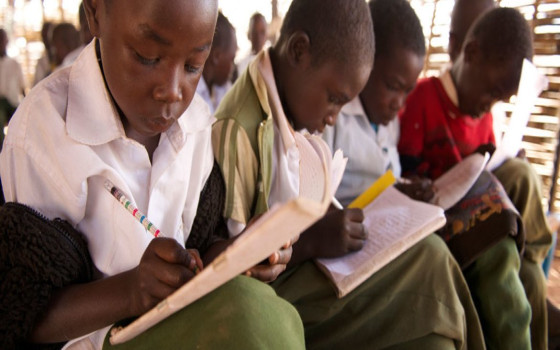
Sudan: The continuation of the conflict in Darfur threatens millions of children, and is a warning that an entire generation will lose their right to education

- Europe and Arabs
- Wednesday , 22 November 2023 15:53 PM GMT
Khartoum - New York: Europe and the Arabs
UNICEF has warned that at least 5 million children in Darfur face severe deprivation of their rights and protection risks due to the seven-month-long conflict in Sudan. The organization stressed the need for an immediate ceasefire for humanitarian reasons.
In a statement issued yesterday, Tuesday, UNICEF indicated that more than 3,130 cases of grave violations of children’s rights have been reported in the country since the outbreak of the conflict, and the Darfur region has witnessed at least half of these cases.
The UN agency warned that this number is only the tip of the iceberg, in light of the severe lack of reports due to communications outages and inability to access.
UNICEF reiterated its call to all parties involved in the conflict to respect international humanitarian and human rights laws, stop gross violations of children’s rights, and provide unfettered access and remove bureaucratic obstacles that limit the speed and scale required to reach millions of the most vulnerable children and families across Sudan.
'Forgotten crisis'
“Sudan - and especially Darfur - has become hell for millions of children for more than half a year, with thousands being targeted on a tribal basis and being killed, injured, abused and exploited day after day. This is unacceptable,” said UNICEF Executive Director Katherine Russell.
She added that the children have suffered enough, "and their parents and grandparents still bear the scars of previous cycles of violence. We cannot allow this to happen again. All parties to the conflict must stop fighting and respect international law. We cannot afford for Sudan to become a forgotten crisis."
Concern about child recruitment
UNICEF reported that the rate of gross child rights violations in Darfur had risen by 550 percent compared to the number verified in all of 2022.
Of all incidents of killing and maiming reported across Sudan, UNICEF indicates that 51 per cent involve children in Darfur. In addition, 48 percent of all cases of sexual violence in Sudan occur in Darfur. UNICEF continues to receive disturbing reports of child recruitment.
In addition to the multiple levels of violence, more than 1.2 million children under the age of five in the Darfur states suffer from acute malnutrition, and 218,000 of them face severe acute malnutrition, which is its most deadly form. Without urgent treatment and life-saving services, they are at high risk of death.
The recent escalation in fighting has also led to significant displacement in the region, with the number of newly displaced people reaching 1.7 million people in Darfur, about 40 percent of the total number of cases in the country. Almost half of them are children.
The risk of losing an entire generation
UNICEF noted the collapse of vital services in Darfur, including health care and protection, due to obstructed access, looting and lack of financial resources, and this situation was exacerbated by attacks on front-line workers.
Nurses, teachers, doctors and social workers have not received their salaries for months, and vital infrastructure, such as water supply networks and hospitals, has been damaged or depleted.
Amidst the ongoing conflict, extending beyond the immediate destruction and loss of life, a generation of children in Darfur is at risk of losing their right to education, with almost all of the region's 4,000 public schools closed, according to UNICEF.
The organization indicated that it is cooperating with its partners with the aim of delivering life-saving supplies to Darfur, supporting front-line workers, and maintaining basic infrastructure to provide vital health, nutrition, water, sanitation, hygiene, learning, and protection services for 2.2 million children and family members.
However, there is still much to be done. UNICEF called on the international community to accelerate funding for basic life-saving services, strengthen resilience and intensify advocacy support to enable unimpeded access.






No Comments Found