
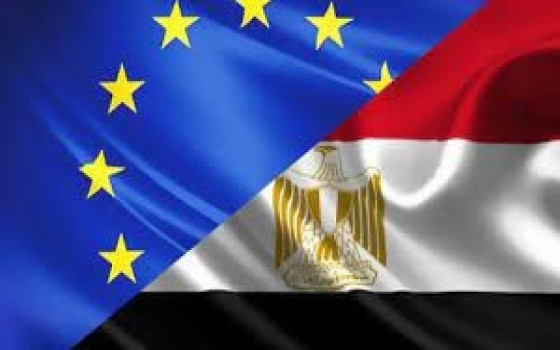
The final statement of the Egyptian-European Partnership Council meeting...agreement on several issues, including the situation in Gaza, water security, combating terrorism, diversifying energy sources, and freedom of navigation in the Gulf of Aden.

- Europe and Arabs
- Tuesday , 23 January 2024 23:36 PM GMT
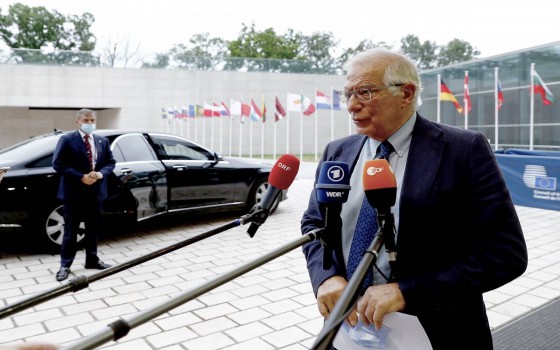
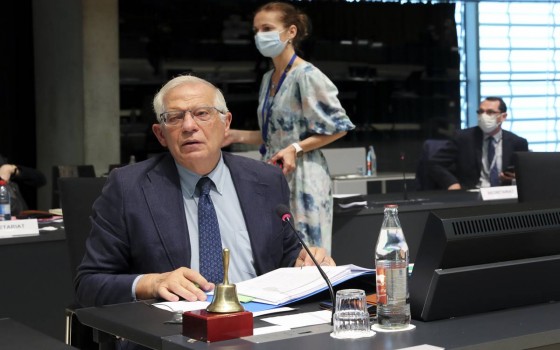
Brussels: Europe and the Arabs The tenth meeting of the EU-Egypt Association Council was held in Brussels on 23 January 2024. This event marks the 20th anniversary of the entry into force of the Association Agreement in 2004 and confirmed the strong and multifaceted partnership between the two parties. The meeting was chaired by Josep Borrell, High Representative of the European Union for Foreign Affairs and Security Policy, and Sameh Shoukry, Minister of Foreign Affairs of Egypt. A statement issued in Brussels on Tuesday evening said: “The Association Council reviewed the progress made on the joint partnership priorities that were adopted in June 2022 with the aim of promoting common interests. It intends to The European Union and Egypt will continue cooperation that strengthens multilateralism and the rules-based international order. They will continue to work together to promote stability, peace and security in the Middle East, the Mediterranean and Africa. Given the importance they attach to their relationship, the European Union and Egypt intend to raise it to the level of a comprehensive and strategic partnership.
The European Union and Egypt exchanged views on a number of regional crises and global challenges.
The European Union and Egypt expressed their concern about the catastrophic humanitarian situation in Gaza. They urged the exercise of maximum restraint and the protection of civilians in accordance with the universal principles of international humanitarian law. Both sides reiterate the need to ensure the immediate, sustainable and unconditional delivery of humanitarian and medical assistance. The European Union and Egypt commit to continuing to work closely together to alleviate the human suffering of the people of Gaza, and affirm their strong rejection of any form of individual or mass displacement, forced or otherwise, of Palestinians from any part of the occupied territories, including the Gaza Strip and the West Bank, including Jerusalem. Eastern. Egypt called for an immediate ceasefire; The European Union stressed the urgent necessity of a ceasefire for humanitarian reasons. The two parties expressed their concern about the situation in the West Bank, where settler violence and settlement expansion have reached record levels, and many Palestinian communities have been forcibly evicted, as illegal measures under international law. The European Union and Egypt stressed that the only way to a just, lasting and comprehensive solution to the conflict in the Middle East is a two-state solution that ends the occupation and leads to the establishment of an independent, geographically contiguous, sovereign and viable Palestinian state. On the borders of June 4, 1967, with East Jerusalem as its capital, it lives side by side with the State of Israel in peace, in accordance with international law and the relevant United Nations Security Council resolutions.
The European Union and Egypt emphasized that peace, security and a rules-based multilateral order lie at the heart of their long-term partnership. Referring to United Nations General Assembly resolutions ES-11/1 and ES-11/2 on Ukraine, which they voted in favor of, they reaffirmed their common principles in line with the United Nations Charter of respect for international law, territorial integrity and national sovereignty. The necessity of refraining from the use of force, respecting international humanitarian law, and resolving conflicts by peaceful means. They condemned all violations of international humanitarian law and human rights violations and abuses in conflict areas, and called for strict respect for international humanitarian law.
Recognizing Egypt's high dependence on the Nile River in the context of water scarcity, the EU reiterates its support for Egypt's water security and compliance with international law, recalling that the “do no harm” principle serves as a guiding principle in the EU. Green deal.
The European Union and Egypt recognize the importance of preserving navigational rights and freedoms in the Gulf of Aden and the Red Sea, in accordance with international law as stipulated in the 1982 United Nations Convention on the Law of the Sea.
The European Union and Egypt remain committed to promoting democracy, fundamental freedoms, human rights, gender equality and equal opportunities as constitutional rights for all their citizens. In this regard, the two sides agreed to continue their dialogue and enhance cooperation in the field of human rights within a comprehensive approach. The European Union and Egypt agreed that civil society and the private sector are important and strong contributors to the implementation of the Partnership’s priorities and are key actors to support the ongoing sustainable development process in Egypt.
Egypt appreciates the European Union's support for the presidency of the twenty-seventh Conference of the Parties. Building on the successes of the United Nations Climate Change Conference (COP27) hosted by Egypt in 2022 and the United Nations Climate Change Conference (COP28) held in the United Arab Emirates in 2023, the European Union and Egypt reaffirmed their commitment to working together on mitigation. Climate change, carbon market loss and damage, just transition and adaptation, including sustainable climate change management. Natural resources, developing sustainable agriculture, supporting sustainable industry, and expanding public transportation networks.
Diversification of energy sources and the transition to green energy, including expansion of renewable energy, energy efficiency and sustainable finance, will be a key component of these efforts. The two sides also indicated their intention to continue working in other critical areas such as biodiversity conservation, combating desertification and land degradation, and disaster risk management.
Guided by the shared vision of a more sustainable management of water resources and addressing the challenges posed by water management in the context of a growing population, competing demands for water and climate change, Egypt and the European Union agree on areas of bilateral cooperation, at the regional and international levels in the field of water in line with the Joint Declaration on Water Partnership. Between Egypt and the European Union.
The European Union and Egypt will continue to strengthen their cooperation and dialogue on all climate-related issues, including in particular their climate policies and measures, and multilateral environmental and regional negotiations on climate change. With the aim of further strengthening their long-term partnership.
The European Union and Egypt are important trading partners and will work together to strengthen bilateral trade relations and encourage investments. They will continue to strengthen their constructive trade dialogue to further enhance the business and investment environment to attract more foreign direct investment.
The European Union and Egypt will work together to enhance the competitiveness of the economy and support the development of the private sector, specifically small, medium and micro enterprises in Egypt. In this regard, Egypt and the European Union highlighted the importance of the International Investment Conference scheduled to be held in Egypt in May 2024. Its goal will be to further deepen trade exchanges between Egypt and the European Union in order to enhance the inclusive business environment and encourage Europeans. Public and private investments to benefit from the investment potential available in Egypt, including the privileges provided by the Suez Canal as the most important commercial and maritime corridor linking the East and West of the world, which ultimately strengthens Egypt’s role in the European Union. supply chains.
The European Union and Egypt stressed the importance of cooperation in the field of research and innovation in sectors such as energy, water, agri-food and health, as well as in developing digital technologies. Today's signing of the Framework Protocol Agreement will pave the way for Egypt's participation in European Union programmes, thus enhancing people-to-people exchanges.
Combating terrorism and preventing violent extremism leading to terrorism is a common goal. The European Union and Egypt welcomed the co-chairmanship of the Global Counter-Terrorism Forum and affirmed their shared commitment to addressing the root causes of terrorism with full respect for human rights and fundamental freedoms. The two sides called for increased cooperation to address the many and multifaceted manifestations of organized crime.
The European Union and Egypt agreed on the importance of adopting a comprehensive approach to migration management, establishing regular migration pathways, addressing the root causes of irregular migration, combating migrant smuggling and trafficking in persons, and ensuring the dignified and sustainable return and reintegration of irregular migrants. The European Union and Egypt are committed to protecting the rights of migrants and refugees. The European Union and Egypt will continue to cooperate to support Egypt's efforts to host refugees.



No Comments Found