

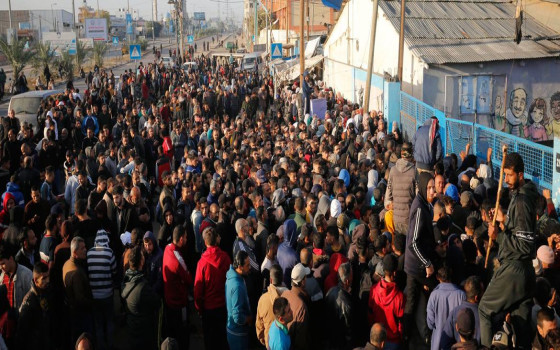
UNRWA: We remain in Gaza, and residents look forward to returning to their homes. The United Nations is examining the possibility of establishing a sea corridor to the Gaza Strip... and a warning in the Security Council of the consequences of the possible outbreak of a regional conflict.
- Europe and Arabs
- Tuesday , 6 February 2024 14:51 PM GMT
New York: Europe and the Arabs
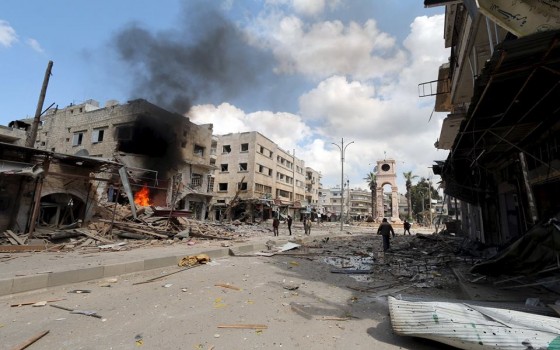
Adnan Abu Hasna, UNRWA spokesman in Gaza, said that the people of the Gaza Strip are living “the worst moments of their lives” in light of tragic conditions at all levels and the continued flow of displaced people to the city of Rafah and the Palestinian-Egyptian border. According to what was stated in the United Nations news bulletin, a copy of which we received this morning
In a phone call with United Nations News from Rafah, Mr. Abu Hasna confirmed that the United Nations remains in Gaza through UNRWA to provide whatever assistance it can to the residents there, who prefer to set up tents over their demolished homes rather than move outside the Strip.
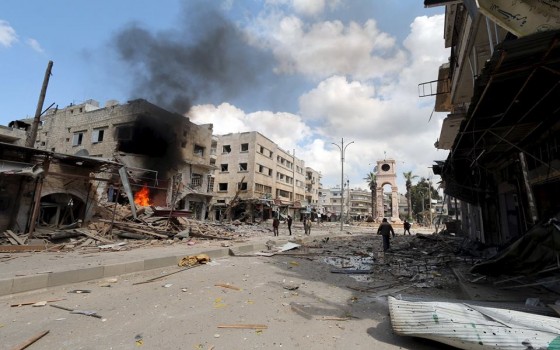
Abu Hasna warned of the repercussions of a possible Israeli ground military operation in Rafah, stressing that the Strip was facing a “serious health threat and unprecedented deterioration” if the situation remained as it was.
Under-Secretary-General for Political and Peacebuilding Affairs, Rosemary Di Carlo, said that the risk of escalation in the Middle East and its potential consequences had been clear since October 7, warning that the Middle East remained “highly turbulent.”
In her briefing to the Security Council yesterday, Monday, DiCarlo said, "The tensions that have swept many countries in the Middle East are still escalating. Unfortunately, this does not come as a surprise."
She touched on the United Nations Secretary-General's repeated warning of "the dangers of further escalation and miscalculation in the region since the horrific Hamas attacks on Israel on October 7 and the devastating Israeli counterattack in Gaza."
She pointed out that since that date, "incidents have occurred almost daily in the region, including about 165 attacks on American facilities in Syria and Iraq, which led to American strikes in the two countries."
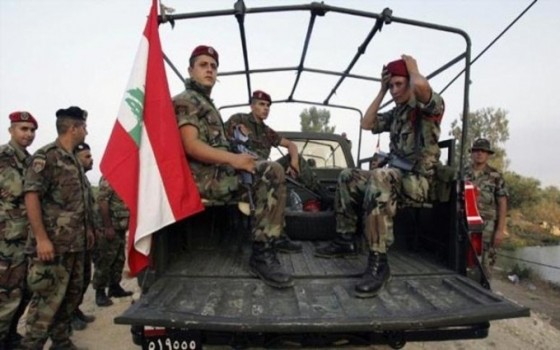
DiCarlo also noted the exchange of fire between Israeli forces and Hezbollah, along with other non-state armed groups in Lebanon, across the Blue Line on an almost daily basis since October 8, as well as repeated rocket fire over the occupied Golan between Israel and militias linked to Iran. In addition to the air strikes attributed by the Syrian government to Israel on multiple locations in Syria.
Step back from the brink
The Under-Secretary-General for Political and Peacebuilding Affairs also told the Council that the ongoing Houthi drone and missile attacks and threats to navigation in the Red Sea “raise deep concern and threaten to exacerbate the conflict and further impact international trade,” as companies divert ships away from vital sea routes.
She also noted that since January 11, the United States and the United Kingdom, with the support of 6 other Member States, have launched strikes on Houthi positions in Yemen. She reiterated the Secretary-General's call for all parties to "step back from the brink and take into account the intolerable human and economic cost of a potential regional conflict."
Sustainable political solutions
Regarding the escalation in Gaza, the UN official said that the past months have been “heartbreaking and disastrous” for Palestinian civilians in Gaza, where hunger and disease are widespread, and shelter is miserable at best for a large number of people.
She added that those months were "a period of pain and agony for the Israelis," reiterating the Secretary-General's call for the immediate and unconditional release of all hostages.
She said that the civilian population of Gaza should not pay the price for the terrorism unleashed by Hamas, reiterating the Secretary-General's call for an immediate ceasefire on humanitarian grounds in Gaza.
DiCarlo stressed that long-term regional stability requires the implementation of a clear political roadmap in each of these situations. She stated that the Secretary-General continues his intensive contacts with all major stakeholders to urge all parties to take concrete measures to calm tensions, and work to find sustainable political solutions aimed at resolving long-term conflicts, and not just managing them.
DiCarlo appealed to the Security Council to continue to work actively with all parties concerned "to prevent further escalation and exacerbation of tensions that undermine regional peace and security."
Sikhrid Kach, the United Nations Senior Coordinator for Humanitarian Affairs and Reconstruction in Gaza, concluded a visit to Cyprus, during which she discussed the possibility of establishing a sea corridor to the Gaza Strip, and met with government officials, including the President and the Minister of Foreign Affairs.
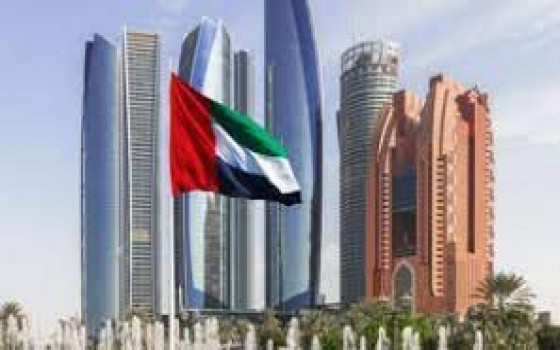
Sikhrid Kach also visited the airport and port in Larnaca. Before Cyprus, the UN official visited the United Arab Emirates to discuss the humanitarian situation in Gaza, where she met with Foreign Minister Sheikh Abdullah bin Zayed Al Nahyan.
She also met with the Chairman of the Emirates Red Crescent Authority, Sheikh Hamdan bin Zayed Al Nahyan, and the Commander of Joint Operations at the UAE Ministry of Defense, Major General Saleh Al Ameri.
During the visit, the UAE government pledged to provide $5 million to support efforts to implement Security Council Resolution No. 2720, for the sake of civilians in Gaza. The United Nations thanked the UAE for this support.
UNRWA
On the other hand, UNRWA Commissioner-General Philippe Lazzarini is on a tour in the Middle East, during which he visited the UAE and Qatar.
In Abu Dhabi, Lazzarini met with Foreign Minister Sheikh Abdullah bin Zayed, where they discussed the important role played by UNRWA in maintaining stability in the region and providing humanitarian assistance to Palestine refugees, especially in the Gaza Strip, where two million people depend on the agency for their survival.
In the State of Qatar, the UN official met with Prime Minister Sheikh Mohammed bin Abdul Rahman bin Jassim Al Thani. Lazzarini said that the meeting focused on the very disturbing developments in the region and the role of UNRWA in Gaza. The Commissioner-General called on partners to continue supporting the agency, which the Qatari Prime Minister described as a lifeline.



No Comments Found