

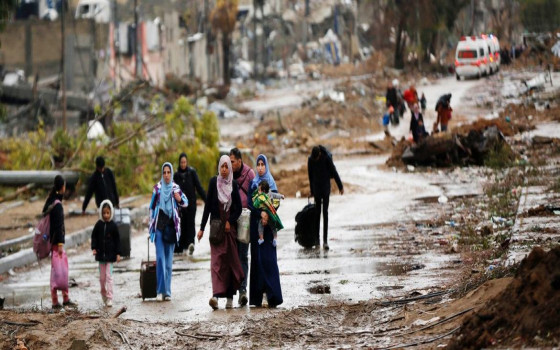
Gaza: Continued air strikes in Rafah raise fears of hindering humanitarian operations

- Europe and Arabs
- Tuesday , 27 February 2024 15:4 PM GMT
Rafah - New York: Europe and the Arabs
The United Nations Relief and Works Agency for Palestine Refugees (UNRWA) reported continued ground operations and intense fighting throughout the Gaza Strip, especially in northern Gaza, Deir al-Balah (centre), and Khan Yunis (south). The agency stated that the increasing air strikes in Rafah - including in residential areas and without prior warning - led to increased fears that would further hinder humanitarian operations that were already working beyond their capacity. According to Maja in the daily news bulletin of the United Nations, a copy of which we received on Tuesday morning
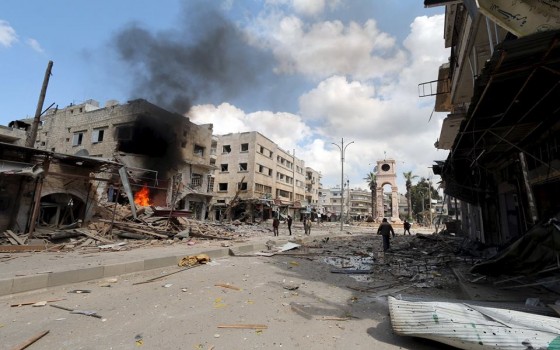
UNRWA indicated that the violent fighting in and around Khan Yunis, over the past five weeks, caused loss of life and damage to civilian infrastructure, including the Khan Yunis training center, which is the largest UNRWA shelter in the southern region.
The UN agency warned that this is forcing thousands of Palestinians to flee south towards Rafah, which is witnessing severe overcrowding, where about 1.5 million people currently reside - six times the population compared to what was the case before October 7.
At the same time, population movements were reported from Rafah towards the Deir al-Balah and Nuseirat refugee camps in the central region, although there were reports of further fighting and airstrikes in those areas. As of 25 February, up to 1.7 million people – more than 75 percent of the population – have been displaced across the Gaza Strip, some multiple times.
Families are forced to move frequently in search of safety. Following intense Israeli bombing and fighting in Khan Yunis and the central areas in recent days, a large number of displaced people have once again moved to the south.
Evacuation of patients and death of newborns
With support from the World Health Organization and the Office for the Coordination of Humanitarian Affairs, the Palestine Red Crescent Society completed an operation to evacuate 72 critically ill patients from Nasser Hospital in Khan Yunis. UN spokesman Stephane Dujarric said at the daily press conference that the hospital is still suffering from power outages, lack of food and water supplies, accumulation of solid waste, and sewage overflow.
For its part, the United Nations Population Fund reported that newborns are dying in Gaza because mothers are unable to conduct prenatal or postnatal examinations, while continuous bombing and fleeing in search of safety and anxiety cause premature births.
The United Nations Population Fund says there are only five maternity beds at the Emirates Crescent Maternity Hospital in Rafah, one of the few remaining hospitals operating in Gaza. Despite the lack of basic needs such as sheets, the facility had to handle 78 births in one night.
Dujarric said that the United Nations and its partners are doing their best to provide food and aid throughout Gaza, despite significant challenges, including ongoing air strikes and intense fighting. Last week, more than a dozen international partners were able to deliver food to 1.7 million people across Gaza. Half of these supplies went to Rafah Governorate, while the rest went to Deir al-Balah, Khan Yunis, and the north.
To do more, Dujarric stressed the need for safe and barrier-free roads in Gaza, as well as more trucks and fuel inside Gaza to ensure a steady and reliable food supply.
According to UNRWA, the two supply routes into the Gaza Strip remain inconsistent. On February 22, 220 trucks entered the Gaza Strip through the Rafah and Kerem Shalom crossings. Numbers dropped to just 50 trucks the next day.
She noted that the month of February witnessed very little aid entering, with approximately 98 trucks entering daily on average - representing a 50 percent decrease in supplies entering Gaza compared to January 2024. The number of trucks entering Gaza is still far less than The target is 500 trucks per day, with significant difficulties in getting supplies through both Kerem Shalom and Rafah.
The agency said that its trucks struggled to enter the Gaza Strip due to security restrictions and temporary closure at both crossings. UNRWA has sometimes had to temporarily stop unloading supplies due to security concerns, noting that the security of the crossing administration has been severely affected by the recent killing of several Palestinian policemen in Israeli air strikes near the crossings.
158 UNRWA employees were killed
Citing the Ministry of Health in Gaza, UNRWA reported that at least 29,514 Palestinians had been killed in the Gaza Strip since October 7, 2023 - about 70 percent of the dead were women and children, according to reports, while about 69,616 other Palestinians were injured. The UN agency stated that the total number of colleagues working in UNRWA who were killed since the start of hostilities reached 158 colleagues, as of February 25.





No Comments Found