

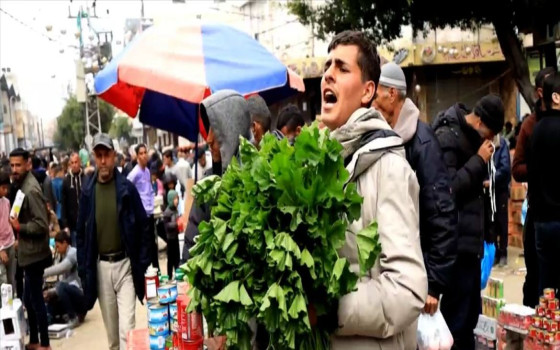
Poverty and hunger force residents of the Gaza Strip to sell and eat wild plants

- Europe and Arabs
- Thursday , 29 February 2024 14:6 PM GMT
Gaza - New York: Europe and the Arabs
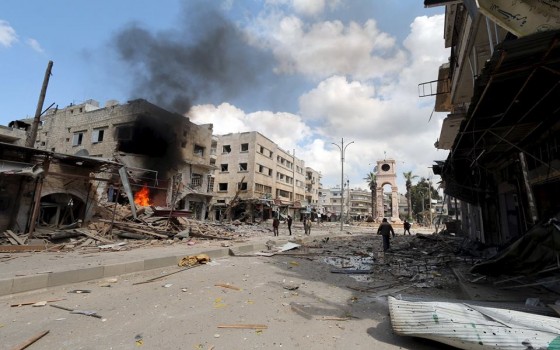
Nearly five months into the devastating war in Gaza, young people who have lost their means of livelihood are forced to collect and sell wild plants. Their journey begins in the open fields every morning in search of those plants that Palestinians have been eating as side dishes for generations, and have now become a major food source for the residents of the Gaza Strip. According to what was stated in the United Nations daily news bulletin, a copy of which we received on Thursday morning, it added, “Living conditions in the besieged Strip have reached a miserable state and are deteriorating systematically, while the latest round of violence that began on October 7 continues. According to the Food and Agriculture Organization of the United Nations ( FAO), at least one in four families in Gaza now face catastrophic levels of food insecurity or famine-like conditions.
Residents of Deir al-Balah (central Gaza Strip) say that the prices of these plants, which grow in the wild and provide little nutrition, have risen sharply after harvesting them by sellers became a common practice. In the period before the war, wild edible plants such as hibiscus were freely available to anyone who wanted to pick them, but people are now forced to buy them to feed their families as food stocks in the Strip run out and humanitarian aid becomes scarce.
From a pharmacy student to a bread seller
The voice of the young man, Ahmed Fayyad, is loud in the markets of Deir al-Balah, calling for his goods. He was a pharmacy student at a university in Gaza before the war. His situation is like thousands of young people whose dreams were disrupted by the brutal war. Ahmed now resorts to selling mallow in the streets to support himself and his family after his recent displacement amid intense fighting in the southern city of Khan Yunis.
The United Nations news bulletin said, “Ahmed spoke with colleague Ziad Talib while he was in the markets of Deir al-Balah, and described the suffering of the youth there. He said: “The person who sells hibiscus wants income and wants to work.” He is forced to sell the hibiscus against his will. There is no source of income. For five months, people have been in their homes trying to find any source of income to feed their children and fulfill responsibilities and other necessary needs. A person wants to find a source of livelihood, so he sells hibiscus or anything, even if it is grass. I am currently studying pharmacy at university to become a pharmacist, and I have been selling on the streets.”
As for Abu Ali, who was displaced from the Shujaiya neighborhood in Gaza City, he said that hibiscus is the cheapest thing in the market and is available. As for other foodstuffs, they are simply out of reach. He added: A bottle of siraj (oil), if we wanted to buy it today, would cost approximately 20 shekels (5.56 US dollars). Good food is expensive.”
Lack of necessities for life
The FAO says that more than 46 percent of agricultural land in Gaza was destroyed as a result of the war, and that 97 percent of the water in the Strip is unfit for human consumption. According to UNRWA reports, the aid entering the Gaza Strip provides no more than three percent of the needs of the Strip’s population.
Before the start of this latest conflict, 500 trucks loaded with commercial and humanitarian supplies entered Gaza daily. Today, this number has diminished to about 98 trucks on average for the month.
As for the northern Gaza Valley, where famine looms, the United Nations has not been able to provide any aid since January 23, and people there have been forced to resort to animal feed to survive. United Nations humanitarian workers in the occupied Palestinian territory also reported that aid convoys heading to northern Gaza continued to come under fire and were prevented from arriving by the Israeli authorities.




No Comments Found