

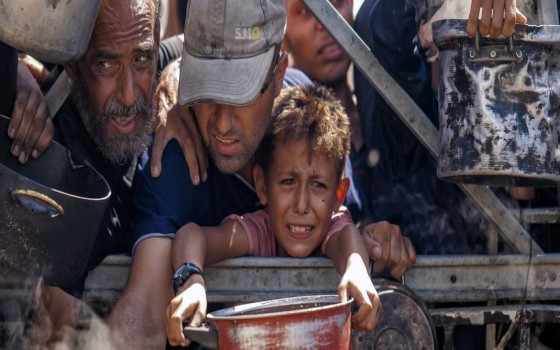
Hunger could reach unprecedented levels in the Middle East if the escalation continues and oil prices rise… UN expands emergency aid

- Europe and Arabs
- Wednesday , 18 March 2026 3:38 AM GMT
New York: Europe and the Arabs
The World Food Programme (WFP) has warned that global hunger levels could reach record highs in 2026 if the escalating conflict in the Middle East continues to destabilize the global economy. This warning was issued in the UN's daily news bulletin, a copy of which was received this morning, Wednesday.
New analysis by the WFP indicates that continued conflict and rising oil prices could push an additional 45 million people into acute food insecurity, on top of the 318 million already suffering from hunger. These figures could return to the levels of 2022, when 349 million people were affected by the cost-of-living crisis.
Some of the key points in the analysis include:
An additional 45 million people could slip into acute hunger if the conflict continues.
Global hunger could return to levels seen at the start of the war in Ukraine.
Africa and Asia are most vulnerable to increased hunger due to their reliance on imports.
The WFP explained that the interconnectedness of energy and food markets makes the impact of the current conflict far-reaching, threatening to exacerbate the suffering of vulnerable families who may be unable to meet their basic food needs. For example, Sudan imports about 80% of its wheat needs, and any increase in the price of this staple commodity will push more families into hunger. In Somalia, which is facing a severe drought, the prices of some basic commodities have risen by at least 20% since the start of the conflict, according to local reports.
Carl Skau, Deputy Executive Director and Director of Operations for the World Food Programme (WFP), said that the continuation of the conflict would have "shocking consequences" globally, warning of a potential catastrophe if sufficient funding for the humanitarian response is not provided.
The WFP noted that shipping disruptions and rising energy and fertilizer costs are exacerbating the crisis, particularly in sub-Saharan Africa and Asia, where the number of those affected is expected to increase by up to 20%.
Faced with a funding shortfall, the WFP warned that worsening hunger without increased resources could lead to a catastrophe in the most fragile countries. In the same vein, the UN Daily News reported, "The crisis in the Middle East continues to escalate, with the death toll rising. UN agencies warn that health systems are under increasing strain, while children are increasingly affected by violence and displacement, as hundreds of thousands of people have been forced to flee their homes. Despite mounting logistical and security challenges, UN agencies are expanding their emergency assistance efforts as the impact of the conflict widens in the region and beyond." The UN Daily News summarized the key developments as follows:
Reports: More than 1,400 killed in Iran, and nearly 890 in Lebanon
UN Coordinator stresses the importance of Lebanon focusing on issues including a comprehensive roadmap to address the future of Hezbollah
UNIFIL: Exchanges of fire continue across the Blue Line
Children among the most affected, with worsening trauma and loss of shelter
Disruptions to airspace and transport corridors impact humanitarian operations
Internet outages continue in Iran
Warning of record levels of hunger if the conflict continues
UNESCO provides support Emergency for education and heritage protection









No Comments Found