
The EU's Largest Budget Ever, Worth €2 Trillion: President Visits Member State Capitals to Secure Agreement... Germany and the Netherlands Request Spending Cuts, Italy and Greece Lead the Opposition
- Europe and Arabs
- Tuesday , 11 August 2026 6:18 AM GMT
Brussels: Europe and the Arabs
European Council President António Costa is launching an intensive campaign to pave the way for an agreement on the EU's largest-ever seven-year budget by the end of the year.
Seeking compromise, Costa is prepared to travel. According to Playbook, the Brussels-based European edition of Politico, the 27 EU leaders are increasingly urgent to finalize negotiations on the €2 trillion Multiannual Financial Framework before national elections next year derail the talks. Costa is embarking on a field tour to help achieve this.
Costa told Playbook that he will begin a tour of EU capitals on August 25. He will meet with heads of state and prime ministers to understand "the priorities of Europe's leaders and the citizens they represent," starting in Slovakia and then moving north through Central Europe and the Baltic states. The only country he will miss, for now, is Sweden, which will hold parliamentary elections next month.
Check your wallet: There remains a sharp divide over the Multiannual Financial Framework between the EU's frugal members, who are seeking to reduce their contributions, and those eager for European funding.
On the frugal side, Germany is demanding hundreds of billions of euros in spending cuts in the proposals. The Netherlands has described the "negotiating fund" proposed by Cyprus in June (when it held the EU presidency) as "unacceptable" due to its large size.
On the opposing side is the "Cohesion Friends" alliance, comprising 16 members including Italy, Poland, Greece, and Spain. This alliance insists that the cuts will undermine the European economy and withdraw funding from key sectors at a time when they desperately need support.
Ireland, which assumes the EU presidency in the second half of this year, will present a new draft budget before the European Council meeting in October, leaving Costa to rally the leaders. Costa's top priority: The Council president made it clear that he fully understands his responsibility to keep the negotiations on track, adding that reaching an agreement on the Multiannual Financial Framework is "the most important" decision to be made this year. "It is our collective responsibility to strike the right balance for our Union, our citizens, and our future," he said.
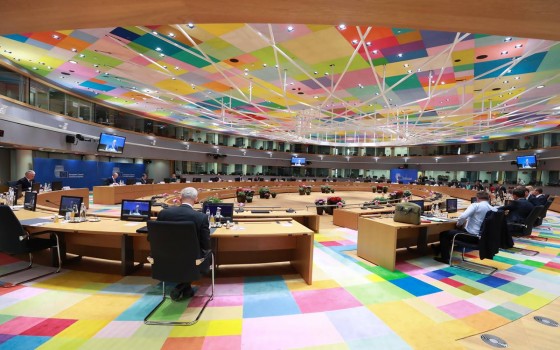
The timeline is tight: While the European Council president is confident that an agreement can be reached before the end of 2026, the consequences of failure could be severe. The European Parliament needs to approve the terms, and national capitals need time to implement legislation in preparation for the new budget. Elections in France, Spain, Greece, Estonia, Italy, Poland, and Slovakia could bring about changes in government, potentially prompting opposition politicians to push for a reopening of negotiations.
There are no signs yet that either side is willing to back down. Siegfried Murešan, the European Parliament member leading the negotiations for the center-right European People’s Party, told Playbook: “We recognize the financial constraints facing member states. But if we all agree that competitiveness, security, and defense are priorities, then we must allocate the necessary resources” and not cut them excessively.
Murešan is seeking to solidify the EU’s authority to raise funds through its own resources, specifically through bloc-wide taxation. He believes a tax on the digital economy is the “most viable” option, in addition to the revenue measures proposed by European Commission President Ursula von der Leyen on carbon emissions, tobacco, and e-waste. He added that, regardless of the outcome of the negotiations, Parliament will refuse to approve the budget without sufficient funding.
Diplomatic maneuvering is expected to intensify as the year draws to a close. “The last thing we want is to be on the brink and not be ready by 2028,” said one EU official working on the budget. It could come down to the last minute—officials expect the Council meeting in October to last two days, with further summits planned for November and December.


No Comments Found