


The United Nations calls for urgent action to protect children from the dangers of online information. More than 80% of young people aged 15 to 24 worldwide are currently using the internet.

- Europe and Arabs
- Tuesday , 11 August 2026 6:38 AM GMT
New York: Europe and the Arabs
More than 80% of young people aged 15 to 24 worldwide are currently using the internet. In low-income countries, the percentage of young people using the internet is nearly double that of the rest of the population.
The United Nations warned on Monday that this highly connected generation often bears the brunt of risks to information security, including misinformation, harassment, algorithmic bias, and the malicious use of artificial intelligence.
In a new briefing note released ahead of International Youth Day, the UN urged member states, technology companies, advertisers, media outlets, and researchers to prioritize protection and engagement to address the harm caused by these risks. This was reported in the UN Daily News, a copy of which we received on Tuesday morning.
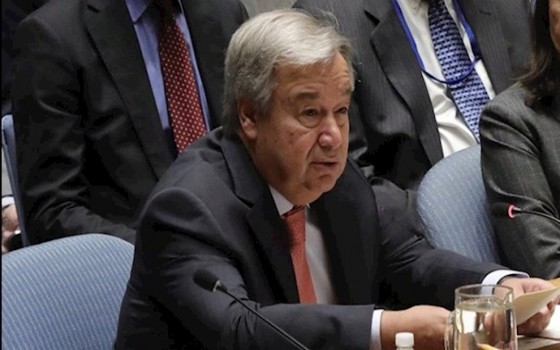
Last month, UN Secretary-General António Guterres called for a pledge on children's safety in the context of artificial intelligence, comparing emerging AI technologies to untested drugs, and urging stricter oversight and regulation.
“No child should be a guinea pig for unregulated AI,” Guterres said in his remarks at the first Global Dialogue on AI Governance. “When a child is harmed, the answer should never be: ‘The algorithm did it.’”
Online harm is not accidental.
The briefing note explains that the harm young people face online is not random, but rather the result of business models that profit from exploiting attention and personal data, along with design choices aimed at maximizing engagement and spending.
From algorithms that keep young users hooked, to “dark patterns,” loot boxes, and other tactics that encourage compulsive use, the note warns that children—whose habits, identities, and relationships are still developing—are particularly vulnerable to these risks.
It adds that AI is advancing faster than efforts to address its rapid spread, exacerbating risks ranging from AI-generated content to AI-facilitated exploitation. The memo also identifies increasingly subtle advertising tactics used to exploit children and drive online spending.
The memo states that these practices, taken together, normalize widespread commercial surveillance and manipulative designs during the years when children and young people are most vulnerable.
They are not just a vulnerable group.
The memo emphasizes that children and young people are much more than just potential victims; they are content creators, advocates, and organizers, from youth-led movements that are reshaping civic life to young journalists and content creators who participate in public discourse.
But the same online spaces that empower youth movements to mobilize and organize also expose their organizers—often young women, minorities, and activists—to online harassment and surveillance.
The memo argues that young people's perspectives must be integrated into research and policymaking that leads to solutions for issues related to information security. “Children and young people are among those most affected by the current information crisis, and among those best positioned to help resolve it,” said Charlotte Skadán, the UN’s senior advisor on information security. “Protecting them and engaging them are not mutually exclusive goals; we must do both.”
The window of opportunity is rapidly closing.
The memo notes that governments and child rights advocates have increasingly brought online child safety to the forefront of policy discussions, including addictive design features, behavioral advertising, content moderation, and privacy.
However, it warns that, as artificial intelligence (AI) becomes more prevalent, the window of opportunity to integrate children’s rights into AI governance frameworks is rapidly closing.
The memo suggests pathways for Member States to enact legislation, for technology companies to enhance child safety, for advertisers to prioritize children’s rights, for news media to serve young audiences, and for researchers to address gaps, including those in the Global South.
The United Nations continues to contribute to efforts to regulate artificial intelligence, including through the Global Dialogue and the International Independent Scientific Group on Artificial Intelligence (IISI), a scientific body tasked with assessing the opportunities and risks associated with AI.
The memo states: “As digital technologies and information environments continue to evolve, the current moment presents an urgent opportunity to move from principles to practical action.”







No Comments Found