

Erdogan: We want to continue our relationship with Israel, regardless of the election results. The Arabs are anxiously looking at Netanyahu's return.. Some see it as a balance in the face of Iran.

- Europe and Arabs
- Thursday , 3 November 2022 10:59 AM GMT
Turkish President Recep Tayyip Erdogan has said he wants his country's relations with Israel to continue on the basis of mutual understanding, regardless of the outcome of the elections, at a time when former Prime Minister Benjamin Netanyahu appears to be on his way back to power.
Erdogan's statement, in an interview with Turkish broadcaster ATV, came amid an improvement in long-strained relations between Turkey and Israel.
Israeli President Yitzhak Herzog visited Ankara this year, the first by an Israeli leader to Turkey since 2008.
The likely return of Benjamin Netanyahu to power in Israel will raise fears of exacerbating tensions with its Arab neighbors, but the Gulf states that established relations with Israel during his leadership will see it as a regional balancing factor in the face of Iran.
Arab leaders were largely silent on Wednesday about Netanyahu's victory in the Israeli elections. The head of the caretaker government in Lebanon expected that a new agreement to demarcate the maritime borders would hold, while Palestinian and Jordanian experts expected new tensions.
In the Gulf region, where Arab states' concern about Iran's growing regional power dominates the region's security strategy, Netanyahu's hard-line approach to opposing the Shiite-dominated Islamic Republic has helped establish ties with Sunni Arab leaders.
Under the Netanyahu government, Israel concluded agreements to normalize relations with the UAE and Bahrain in 2020, and a few months later with Morocco.
Abdul Khaleq Abdullah, a prominent Emirati political analyst, said that Iran is a major source of concern to the Gulf states, including the UAE, and that Israel, regardless of which government takes power in it, always takes a strong stance against Iran and its nuclear agreement with world powers.
"Netanyahu was a party to the Ibrahim agreements and signed them, so there is no change in the course of normalization," he added.
He went on to say that the Gulf states would consider Netanyahu's return an internal Israeli affair that they had nothing to do with, and they would be happy to deal with whomever the Israeli people choose as their leader.
Abdullah said that the victory of what he described as "the worst of the worst in the Israeli political scene" will mainly affect the Palestinians and will eliminate any talk of a two-state solution.
Saudi Arabia has not yet normalized relations with Israel, although it has taken some steps towards rapprochement.
Saudi academic Abdulaziz Al-Ghasyan said that no further moves should be expected from Riyadh.
Al-Ghashiyan added that for any significant changes to occur, there must be a peace process between the Palestinians and the Israelis, and this is unlikely now under the new government.
Lebanon agreement
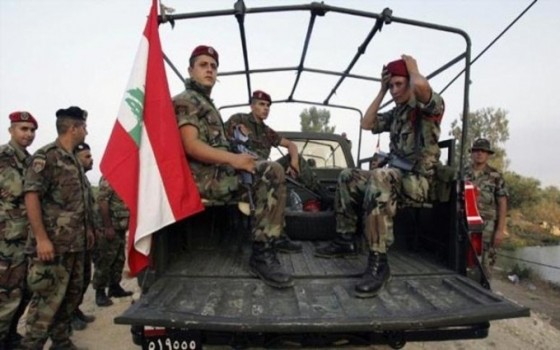
Regarding Lebanon, Netanyahu has threatened to "neutralize" the US-brokered maritime delimitation agreement even though Lebanon still considers itself at war with Israel. Beirut said it had received assurances from Washington that the agreement would not be destroyed.
Lebanon's caretaker prime minister, Najib Mikati, told Reuters by phone, "We are not afraid of a change of authorities in Israel. If Netanyahu or someone else wins, no one can stand in the way of this issue."
He added that US guarantees would ensure the implementation of the maritime border demarcation agreement with Israel, despite opposition from Netanyahu, who said it might benefit the Hezbollah armed group that fought Israel.
"Israel cannot go too far in opposing US wishes because it needs American protection, and therefore a government led by Netanyahu is unlikely to tear up the US-brokered maritime border demarcation agreement," said Lina Al-Khatib, director of the Middle East and North Africa program at London-based think tank Chatham House. The United States ... despite Netanyahu's strong statements."
The Palestinians and Jordan
The leaders at a summit in Algeria overcame their differences over relations with Israel and renewed their support for the establishment of a Palestinian state, something Netanyahu strongly opposed, but they did not mention the elections.
Netanyahu, whose policies have angered many in the Arab world since he first came to power nearly 26 years ago, vowed that a government headed by him would act responsibly and avoid "unnecessary adventures" and "widen the circle of peace."
But in Jordan, home to millions of Palestinian refugees and their families, his expected victory has been met with concern.
Relations between the two countries deteriorated at the time of the last government headed by Netanyahu to the extent that Jordan's King Abdullah terminated part of the Jordanian-Israeli peace treaty concluded in 1994 that allowed Israel to use two areas of Jordanian land on the border.
Hamada Pharaoh, a former member of the Jordanian parliament, whose majority in April demanded the annulment of the peace treaty, said that Israeli policy under Netanyahu was confrontational with official Jordanian policy.
Pharaoh added that Jordan fears that more tension and violence in the Palestinian territories will push more Palestinians to leave and emigrate to the kingdom.
The Jordanian Islamic opposition called on the Arab countries to adopt a strong position.
Murad Adaileh, Secretary-General of the Jordan Islamic Action Front, said that the Israeli right is talking on Wednesday about expelling the Palestinians and saying that there will be no Palestinian state.
He added that the Arab countries are required to rely on their people and support the resistance of the Palestinians.
H.A. Heller, a scholar at the Carnegie Endowment for International Peace, said Egypt, which was the first Arab country to conclude a peace treaty with Israel and mediates an end to the Israeli-Palestinian conflicts, is likely to find a way to work with Netanyahu again.
He said that Netanyahu was rejecting even any aspect of a peace process, which Egypt officially supports, "but they dealt with it and will deal with it again."
Source: Reuters





No Comments Found