

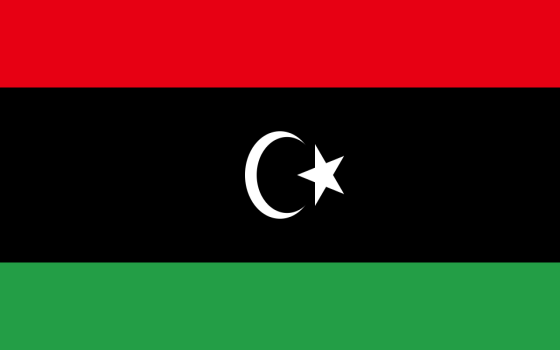
After Washington's assertion that the Libyans deserve a unified army that defends the country's sovereignty, the Presidency Council proposes an initiative to overcome the political impasse
- Europe and Arabs
- Saturday , 10 December 2022 17:28 PM GMT
Brussels: Europe and the Arabs - agencies
A statement issued by the Libyan Presidential Council said that an initiative was put forward to solve the crisis in Libya and create an atmosphere for a constitutional dialogue as a priority to end the transitional stages, which includes the initiatives, ideas and visions put forward by the Libyan national parties and forces, and this came a few hours after statements by the US ambassador to Libya in which he emphasized the Libyans deserve an army that defends the country's sovereignty
The statement of the Libyan Presidential Council indicated that the initiative is launched under the slogan "The Presidency Council's approach to overcoming the political impasse and achieving national consensus" through a consultative meeting between the Presidency Council and the High Council of State and the House of Representatives, in coordination with the Special Envoy of the Secretary-General and head of the United Nations Support Mission, Abdullah Batili.
The Presidential Council indicated that the initiative comes in line with the provisions of the road map issued by the Libyan Political Dialogue Forum governing the stage, and based on the moral responsibility of the Presidential Council, and in the interest of achieving consensus between the House of Representatives and the Supreme Council of the State to issue a constitutional rule that establishes parliamentary and presidential elections, and deals with Outstanding contentious points in light of the continued faltering of holding the referendum on the draft constitution.
The initiative comes in light of the differences between the State Council and the House of Representatives following the latter's issuance of a law establishing a constitutional court in the eastern city of Benghazi.
For his part, a member of the Libyan House of Representatives, Muhammad al-Abani, welcomed in statements for the seventh day any initiatives that push towards holding presidential and parliamentary elections in the country, indicating that the Libyan crisis is not political or a peaceful transfer of power, but rather "security chaos and armed groups usurping power with all its power." "
The Libyan parliament member criticized ignoring the presence of armed groups that possess power, and the election results cannot be imposed on these groups unless they have the ability to do so, stressing that ending the crisis in Libya depends on ending the security chaos, the proliferation of weapons, and the usurpation of power.
For his part, State Council member Belkacem Qazit welcomed, in statements to "The Seventh Day", any Libyan initiative for dialogue between the parties, stressing that Libya needs a constitutional basis to move forward towards holding elections, noting that the State Council adopted parallel tracks to resolve the crisis, and perhaps the most urgent of them is al-Qaeda. Constitutional, which is the most difficult file ever to agree on.
Qzit stressed the need to work to achieve consensus between the Libyan parties on the easiest and easiest paths, and then to launch paths that are difficult to agree on quickly, expressing his welcome to the Presidential Council's initiative to resolve the crisis, provided that it does not focus on one specific path without the other paths.
In addition, the Justice Committee of the Libyan House of Representatives reviewed the justifications and reasons for the Council’s creation of the Constitutional Court, which included sparing the Supreme Court the scourge of political pressure, and the head of the Justice and National Reconciliation Committee in the Libyan House of Representatives, Al-Hadi Al-Saghir, stressed in a statement that the law aims to “spare the Supreme Court the scourge of pressure.” Politics, mobilization, media pumping, and perhaps the expected constraint from some armed influential parties that possess corrupt money,” noting that these challenges motivated Parliament to create a constitutional court that is resorted to using predetermined channels and tools and within the narrowest frameworks.
This came after the Ambassador of the United States of America and its special envoy to Libya, Richard Norland, affirmed that the Libyans deserve a unified army capable of defending Libya's sovereignty, and a democratically elected government that represents all Libyans, expressing his country's aspiration to partner with such an army under the civil authority of such the government.
This came in two tweets to him published by the US Embassy in Libya on its official page on the social networking site (Twitter) and reported by the Libyan News Agency (WAL) on Friday.
In the two cables, Norland expressed his happiness at participating in the plenary session of the Security Working Group on Libya, which was held in Tunis.
The US ambassador said that the United States supports the UN envoy (Bateley) and the Libyan military professionals in their efforts to remove foreign forces, fighters and mercenaries, and unify the Libyan army.




No Comments Found