


FAO representative in Lebanon: Two million people suffer from food insecurity and the situation may worsen

- Europe and Arabs
- Sunday , 26 February 2023 16:2 PM GMT
According to the first analysis on Lebanon of what is known as the Integrated Classification of Food Security Phases, about two million people, including 1.29 million Lebanese citizens and 700 thousand Syrian refugees, face food insecurity at the present time.
The analysis launched by the Food and Agriculture Organization of the United Nations (FAO), the World Food Program and the Lebanese Ministry of Agriculture expects the situation to deteriorate in the coming months, pointing to the depreciation of the Lebanese currency, the abolition of subsidies and the high cost of living, which prevents families from obtaining sufficient food and daily basic needs.
To learn more about the findings and recommendations of this first-of-its-kind analysis in Lebanon, M. contacted Ms. Noura Orabih Haddad, FAO Representative in Lebanon, who warned of dire consequences for the health and well-being of vulnerable populations if urgent action is not taken to address the situation.
Details in this dialogue.
UN News: The first analysis on Lebanon of what is known as the Integrated Food Security Phase Classification reflects a bleak picture of the food security situation there. What are the most prominent figures and results of the analysis?
Noura Orabih Haddad: In general, the food security situation is very worrying, according to the results of the Integrated Phase Classification of Acute Food Insecurity in Lebanon issued by the Food and Agriculture Organization, the World Food Program and the Ministry of Agriculture.
This study sheds light on the deteriorating level of food security for the Lebanese and the displaced Syrians.
Indeed, this deterioration comes as a result of the three-year economic crisis. The devaluation of the currency, the lifting of subsidies, and the rise in the cost of living are among the reasons that led to this unfortunate situation, which pushed more than two million people to need assistance, including 1.29 million Lebanese and 700,000 displaced Syrians.
It is expected that the living situation will worsen in the coming months, between January and April of this year, with the possibility of a worsening situation for the equivalent of one and a half million Lebanese residents and about 800,000 displaced Syrians, according to this stage classification.
UN News: How did you do this analysis and what did you base these really huge numbers on?
Noura Orabih Haddad: The Food and Agriculture Organization (FAO) and the World Food Program received a request from the Ministry of Agriculture in Lebanon to include an analysis of the level of food security in Lebanon due to the worsening economic, financial and living conditions of the population.
Then the technical team from FAO, the World Food Program and the IPC (Analysis Team) trained about 55 experts from all ministries, public institutions, United Nations agencies and concerned non-governmental organizations in Lebanon, on collecting and analyzing data on food security according to the methodology approved by the Global Platform for Phase Classification. integrated food security.
The experts relied on all statistical research, studies and analyzes available from various sources of information, in addition to the analysts' knowledge of the characteristics and reality of Lebanon with regard to the economic, social and agricultural conditions in each district.
The final report was prepared and is the first of its kind in Lebanon.
UN News: In light of the dire food situation revealed by the analysis, how do these people secure their daily sustenance? Do they resort to negative coping methods?
Noura Orabih Haddad: The economic crisis, the depreciation of the currency, the unprecedented increase in the prices of food and non-food items, and the lifting of subsidies on these items are all reasons that affect the livelihoods of the Lebanese and the displaced Syrians and make them in need of aid.
When families do not have enough food or money to buy food, they adopt negative coping methods to cope with food shortages. Among these means, we mention the change in the patterns of food consumption and its quality through the purchase of inexpensive foodstuffs or reducing the number of meals or the sizes (portions) of the amount of foodstuffs or meals.
According to statistics, 87% of the Lebanese and 96% of the displaced Syrians resorted to an unhealthy diet.
UN News: What does FAO attribute this rise in food insecurity in Lebanon to?
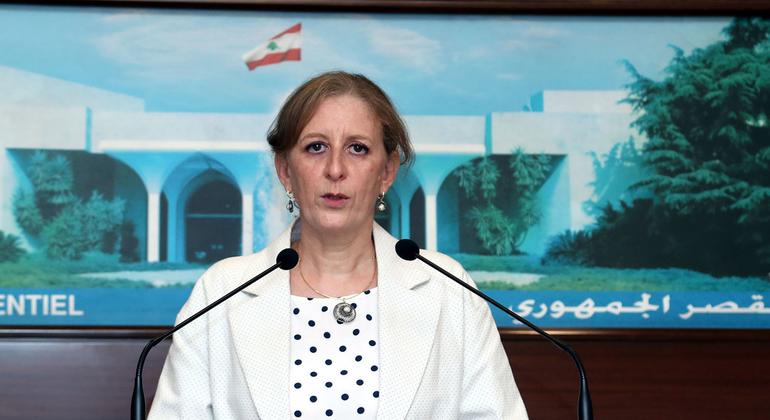
Representative of the Food and Agriculture Organization (FAO) in Lebanon, Ms. Noura Haddad.
Noura Orabih Haddad: There are several main drivers that contributed to the rise in food insecurity, including:
The level of inflation is constantly increasing in conjunction with the lifting of subsidies and the rise in fuel, energy, food and non-food prices.
The depreciation of the Lebanese currency
Lifting subsidies on food and non-food commodities (including medicines and fuel...)
Declining purchasing power, especially for low-income people
The decline in job opportunities and the increase in unemployment, as the unemployment rate increased from 11% of the population in 2019 to reach 30% in 2022.
The widening gap between the value of humanitarian aid provided and the cost of living.
fragility of food systems. As Lebanon relies on imports for more than 80% of its food needs, and the share of the agricultural sector's participation in the general GDP does not exceed 2.5%.
Of course, the political instability in Lebanon, the negative impact on all public administrations, and the low level of public services.
UN News: You work in the field, through your direct interaction with those affected, what do they ask of you?
Noura Orabih Haddad: According to a survey conducted by the Ministry of Agriculture in Lebanon with technical support from FAO on the impact of successive crises in Lebanon on a sample of farmers, it was found that 94% demanded immediate aid:
46% of them need direct financial support.
81% of the plant production farmers demanded the provision of agricultural inputs, especially agricultural fertilizers.
74% of the population needs agricultural pesticides, while livestock breeders need fodder and veterinary services.
In the medium and long term, the necessary support must be provided to farmers and urged to adopt good agricultural practices to raise productivity
their crops.
This is what the organization does in cooperation with the public and private sectors and representatives of the international community through integrated programs that support the transformation of food systems to more sustainability.
UN News: Mrs. Noura, what does the report recommend? How will you work with partner UN organizations, including the World Food Program, and the Lebanese authorities to alleviate food insecurity in Lebanon?
Noura Orabih Haddad: This report recommends a number of measures, including:
Take urgent action to meet the needs of families most vulnerable to poverty,
Identifying the most needy families as a priority to provide them with urgent support,
The report also recommends that all concerned partners be urged to continue providing humanitarian aid and work hand in hand to closely monitor and evaluate the situation.
Everyone should also adopt a “multi-sectoral approach” to prevent the worsening of malnutrition to improve diets.
The report also recommends following up and monitoring risk factors from all sides to ensure that the affected population is identified in a timely and effective manner and for prompt intervention in providing the necessary support. The report also urges follow-up support to all ministries concerned with food security and public institutions.
UN News: What is the Agricultural Register launched by the Ministry of Agriculture in cooperation with the FAO and who benefits from it?
 .
.
Nora Orabih Haddad: On the second of March, the Ministry of Agriculture, in cooperation with the Food and Agriculture Organization of the United Nations in Lebanon, will announce the launch of the stage of registering male and female farmers on all Lebanese lands within the farmers' registry funded by the European Union.
This record constitutes a basic reference and information base for the development and organization of the agricultural sector in Lebanon.
The register is intended for all male and female workers in plant and animal production and in the investment of pastures, forests and their primary products.
It is a special information program that relies on entering information about farms, the farm, the location and type of agriculture, agricultural machinery, and animals, in addition to information about the living situation of the farming family and the number of workers within the farm.
Through this program, we can also determine the farm's location, area, and type of production based on aerial maps and photos.
This register will serve as a basic basis for regulating the agricultural profession and assisting decision-makers in:
Developing agricultural development policies aimed at strengthening the agricultural sector and improving the living conditions of farmers, as well as directing support policies that ensure fair and effective distribution of in-kind aid
Securing social protection for farmers and workers in this sector,
Develop an effective crisis response mechanism,
In addition to establishing an effective legal framework to institutionalize the relationship between farmers and the concerned departments.
It should be noted that the system designed and developed in Lebanon has been used in the Hashemite Kingdom of Jordan through the FAO and funded by the European Union. We could also see a number of other countries interested in developing a similar program in the future.





No Comments Found