

100 days since the conflict in Sudan - a UN call for an end to violence amid escalating displacement and violations

- Europe and Arabs
- Tuesday , 25 July 2023 15:24 PM GMT
New York - Khartoum: Europe and the Arabs
The United Nations High Commissioner for Refugees has called for an end to the fighting in Sudan, in light of serious concerns about the increasing number of displaced persons and refugees who are forced to flee in search of safety. According to the United Nations news bulletin, a copy of which we received on Tuesday morning.
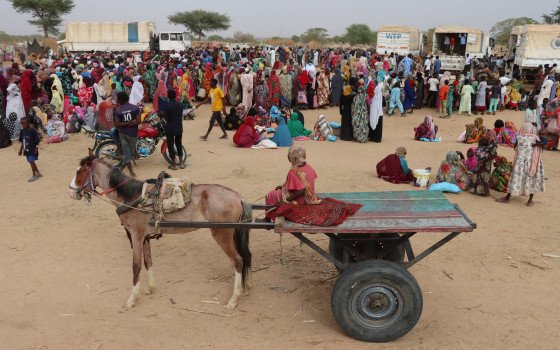
The UNHCR said in a press release published on Monday that with the conflict in Sudan entering its 100th day, more than 740,000 refugees, including an increasing number of returnees among refugees, have fled Sudan and arrived in neighboring countries in dire conditions. Among these countries are Chad, the Central African Republic, Egypt, Ethiopia and South Sudan.
More than 185,000 refugees who were hosted by Sudan have also been forced to move to safer areas inside the country, and are now stuck in an "endless cycle of displacement".
The escalation of conflict in Khartoum and in the regions of Darfur and Kordofan has led to large-scale internal displacement, and to civilian casualties and deaths.
OHCHR noted alarming reports of grave human rights violations, including sexual abuse and other protection risks, when people flee.
She was particularly concerned about the serious health and nutrition crisis unfolding in White Nile state, where UNHCR teams have reported the death of nearly 300 South Sudanese refugee children from suspected measles and malnutrition since the start of the conflict.
The Commission said that if the fighting continues, "we fear that these numbers will continue to rise, reaching an alarming rate."
"tragic war"
The UN High Commissioner for Refugees, Filippo Grandi, described these figures as "staggering. It is unfortunate that civilians who have nothing to do with this conflict are fleeing their homes and losing their livelihoods every day. This must stop."
“It is time for all parties to this conflict to end this tragic war immediately. Pending this much-needed peaceful dialogue, people must be allowed to leave areas of conflict and seek safety, both inside and outside the country, and be protected from all forms of violence,” Grandi added.
UNHCR reports that displacement sites within the country and in neighboring countries are rapidly becoming overcrowded, with more people continuing to flee.
The rainy season is also in full swing, which increases the risk of exacerbating the suffering of the population and complicates the logistical arrangements for moving refugees away from border areas. The rise in food and fuel prices exacerbates the suffering of families and individuals in need, while the imbalance in the supply chain and high inflation rates increase the cost of delivering humanitarian aid.
Gross violations of children's rights
In turn, the United Nations Children's Fund (UNICEF) said that it had received reports of 2,500 grave violations of children's rights - the equivalent of one violation every hour.
The organization stated in a press statement published today, Monday, that the real scale of violations may be higher than that, stressing that this matter is a reminder of the daily impact of the crisis on the most vulnerable children in a country where 14 million children need humanitarian assistance.
“The scale of the impact of this conflict on children in Sudan over the past 100 days is unimaginable,” said Ted Chaiban, UNICEF Deputy Executive Director for Humanitarian Action and Supply Operations, who is in Sudan this week.
“Parents and grandparents who lived through previous cycles of violence will now have to watch their children and grandchildren suffer the same horrific experiences. Every day, children are killed, injured and abducted, and they see the destruction, damage and looting of the schools, hospitals, infrastructure and life-saving supplies on which they depend,” he added.
Kidnapping and recruiting children
The organization reported that at least 435 children were reported killed in the conflict and at least 2,025 children were injured.
UNICEF has also received disturbing reports of an escalation of attacks against health facilities in parts of Sudan. An estimated 68 percent of hospitals in the hardest-hit areas have had to suspend service. At least 17 hospitals were bombed.
Many other hospitals are believed to have been turned into military bases, and ambulances have been reported to have been attacked.
UNICEF indicated that prior to the crisis, there were 3.8 million displaced persons in Sudan, including 1.9 million children. In the three months since the conflict began, an additional 1.7 million children have been forced from their homes and are now moving within Sudan, crossing its borders, and remaining vulnerable to hunger, disease, violence and separation from their families.
The organization added that there are increasing reports of kidnapping and recruitment of children into armed groups, tribal violence, and gender-based violence against women and girls, with 4.2 million women and girls at risk of gender-based violence.
devastating effects
UNICEF warned that the restriction of movement due to the security situation, administrative barriers, bureaucratic obstacles, and denial of access to humanitarian aid remains a major obstacle to the delivery of necessary aid to those in dire need, and poses a threat to aid workers.
In addition to the looting and destruction of vital supplies and facilities, the situation exposes at least 690,000 children to acute malnutrition, and 1.7 million children under one year of age are at risk of missing out on critical immunizations, increasing the risk of disease outbreaks, she said.
UNICEF Deputy Executive Director for Humanitarian Action and Supply Operations, Ted Chaiban, said that the past 100 days, as in any conflict, have shown that the direct and indirect effects on children and families are "devastating", stressing that without concerted action, including the commitment of the parties to the conflict to stop fighting and abide by international law,Gross violations of children's rights will only get worse.
“Without guaranteed, safe and unimpeded access for humanitarian workers and life-saving supplies, along with urgently needed additional funding, the futures of millions of children will remain at stake,” Chaiban added.





No Comments Found