
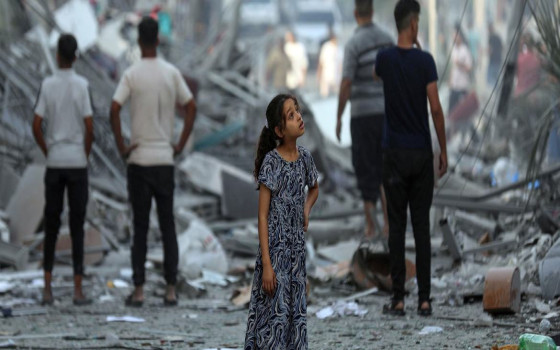
Israeli bombing of the West Bank, devoid of Hamas. International organizations warn: Aid is scarce and there are fears of a high number of deaths due to the spread of diseases and limited health care.

- Europe and Arabs
- Sunday , 22 October 2023 12:23 PM GMT
New York - West Bank: Europe and the Arabs
The director of UNRWA in the West Bank said that Israeli security forces carried out an operation - which included air strikes - that lasted 28 hours in the Nour Shams refugee camp, and that reports indicated that at least 13 Palestinians, including 5 children, were killed. According to what was stated on the United Nations website yesterday, Saturday.
UNRWA official Adam Boulokos added that the agency was forced to suspend its services, including education and health. He pointed to reports that an Israeli soldier was killed and dozens were injured.
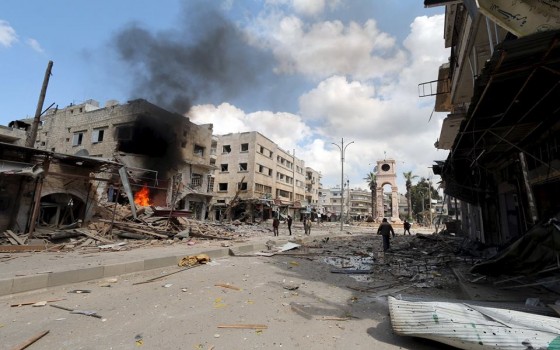
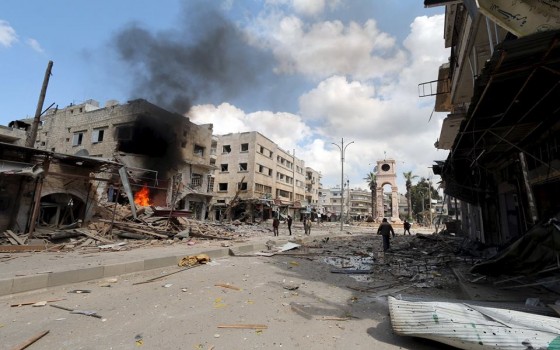
Initial estimates indicate that 50 homes were damaged, some of them severely, while roads, electricity, water, internet, and sewage networks in the camp were severely affected.
UNRWA received reports that several homes were being used for military purposes, exposing residents to serious danger.
Boulokos said that these recent events are a symbol of the ongoing escalation that is endangering the lives of Palestine refugees in camps across the West Bank. He added that this operation is the largest since the operation carried out in Jenin in July. This comes despite the absence of Hamas members in the West Bank, which is the justification that Israel tried to use as an excuse to divide the Palestinians in Gaza.
During the current year, more than 270 Palestinians were killed in the West Bank, 20% of whom were children and more than half of whom were refugees. This number is the largest number of Palestinian deaths recorded in one year since UNRWA began collecting data on a regular basis in 2012.
The agency official said that these events in Nour Shams camp are likely to exacerbate already escalating tensions, given the ongoing conflict in Gaza.
At least 82 Palestinians have been killed in the West Bank since October 7.
In a joint statement, five United Nations agencies said that the relief convoy that entered Gaza on Saturday through the Egyptian Rafah crossing provides life-saving aid to civilians, but it is not sufficient at all and is only a small beginning.
The five agencies indicated that the first shipment, “albeit limited,” of life-saving humanitarian supplies from the Egyptian Red Crescent and the United Nations entered the Gaza Strip on Saturday on board 20 trucks.
The five agencies that issued the press release are the United Nations Development Programme, the United Nations Population Fund, the World Food Programme, and UNICEF and World Health Organization.
The statement said that this aid is a "lifeline" for some of the hundreds of thousands of civilians - mostly women and children - who have been cut off from water, food, medicine, fuel and other basic supplies.
But UN agencies indicated that this aid was insufficient, and said that more than 1.6 million people in Gaza are in critical need of humanitarian relief, and that children, pregnant women, and the elderly remain the most vulnerable groups. It is noteworthy that children represent about half of the population of the Gaza Strip.
With much of Gaza's civilian infrastructure destroyed or damaged during nearly two weeks of sustained bombardment, including on shelters, health facilities, water, sanitation and electricity systems, the agencies said "time is running out before the death toll rises dramatically due to disease outbreaks and limited care capacity." "health."
It is noteworthy that about a third of the population of Palestine suffered from food insecurity before this conflict in Gaza.
The five United Nations agencies called for a humanitarian ceasefire and to ensure immediate and unimpeded relief access throughout the Gaza Strip, so that humanitarian workers can reach all civilians in need, save lives and prevent further human suffering.
She stressed the need for the flow of humanitarian aid to be widespread and sustainable.
Other demands included in the statement of the five agencies are:
Sustainable and safe access to water, food, health - including sexual and reproductive health - and fuel, which are essential to provide basic services,
Protect all civilians and civilian infrastructure,
Protecting aid workers who risk their lives to serve others,
Respect for international humanitarian law by all parties
The representative of the United Nations Children's Fund (UNICEF) in Egypt, Jeremy Hopkins, said that the aid convoy that entered the Gaza Strip on Saturday is a "drop in the ocean", given the enormous scale of humanitarian needs. He called for opening a humanitarian corridor in a sustainable manner.
Hopkins added - in an interview with UN News - that there is “a need to have, instead of 20 trucks, at least 100 or 200 trucks” entering the sector daily.
He called for "an immediate cessation of all hostilities" because it is the only way humanitarian workers can safely deliver aid.
He also called on all parties to avoid targeting health and educational facilities, and to protect health workers so that they can perform their work



No Comments Found