

United Skies: Brussels announces an agreement to improve the efficiency of airspace management in the European Union

- Europe and Arabs
- Wednesday , 6 March 2024 14:29 PM GMT
Brussels: Europe and the Arabs
The Presidency of the Council of the Union and European Parliament negotiators have reached a provisional agreement on reforming the Single European Sky. The aim of the reform is to improve the performance, organization and management of European airspace and the provision of air navigation services to increase capacity, reduce costs and increase the adaptability of the system, while also trying to reduce the impact of aviation on the environment and climate. According to what was stated in a statement distributed in Brussels on Wednesday morning, which also stated, “The legislative package consists of an amended proposal to reformulate the Single European Skies Regulation (SES 2+) and a proposal for a regulation amending the Basic Regulations of the European Union Aviation Safety Agency (EASA).
“I am pleased with this result, reached under our presidency, which will enable significant progress in reducing carbon dioxide emissions from the aviation sector, and will also give Member States more tools to reduce the inconvenience caused by aviation activity. Although There is still a lot to be done to help the sector achieve carbon neutrality, and we will continue to work to achieve this, and the efforts made by all parties to bring this new legal framework for European skies to a successful conclusion must be commended, according to the statement, according to Georges Gilkennet, Belgian Minister of Mobility who His country holds the current rotating presidency of the European Union
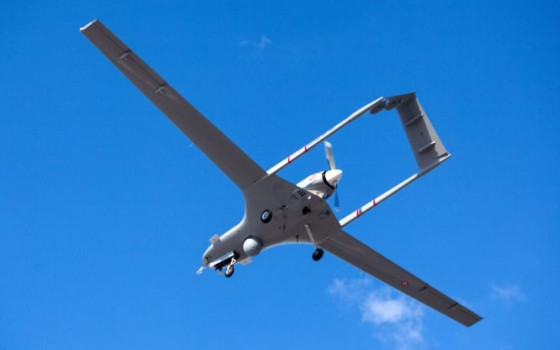
The interim agreement retains the main objectives of a single European sky: reform must respond to capacity needs, help reduce the climate and environmental footprint, while being cost-effective. It should also contribute to the regulation of drones.
The new rules open the way to improve the climate and environmental performance of airspace management, in particular by expanding binding targets for environmental and climate terminal services and adjusting fees to incentivize improved environmental performance for airspace users. An independent, permanent and professional Performance Review Board has been established to advise the Commission on the implementation of performance plans and fee setting.
Main elements of the interim agreement
The main elements of the interim agreement between the participating legislators can be summarized as follows:
A national supervisory body is appointed by the Member State to evaluate the extent to which air navigation service providers adhere to economic requirements, such as financial sustainability and organizational structure, in cooperation with the competent national authority responsible for accrediting air navigation service providers.
Air navigation service providers and the national supervisory authority can be part of the same organization provided that they are functionally separate and meet independence requirements.
It will also be possible for Member States to integrate economic and safety control functions into the same administrative entity. This solution cuts red tape and adapts to existing organizational models.
Member States may decide to allow the opening of some air navigation services due to market conditions.
National supervisory authorities and the Commission will jointly evaluate the performance of air navigation services, in accordance with the principles of subsidiarity and proportionality. The Committee is assisted in this process by the Performance Review Board (PRB), which has an advisory role. The PRB is established as a stable and permanent entity and will be financed from the EU budget.
A mandatory adjustment to en-route tolls will be introduced to encourage airspace users to support improvements in climate and environmental performance, such as use of the most fuel-efficient route available or increased use of alternative clean propulsion technologies, after a cost-benefit analysis determines that such an adjustment is feasible and represents added value. .
The Interim Agreement also strengthens the network perspective by adding new functions to the network and by giving the current network manager, Eurocontrol, additional clearly defined tasks so that it can better contribute to the sustainable and efficient use of the airspace.
Next steps: The interim agreement is now subject to approval by the Council and the European Parliament. On the part of the Council, the Belgian Presidency intends to submit the text to representatives of Member States (Coreper) for approval as soon as possible.
Once approved, the draft legislative bills will be submitted to a legal/linguistic review before being formally adopted by the participating legislators, published in the Official Journal of the European Union, and entering into force 20 days after their publication. The Commission launched the Single European Sky (SES) initiative in 2009. The Commission proposed an interim update to the SES rules, called SES 2+, in 2013 but it was never finalized. In September 2020, the Commission presented an update to its 2013 proposal for SES 2+ with two legislative proposals: SES 2 amended. + Proposal (recast) setting out the comprehensive European Single Sky System and proposing an amendment to the EASA Basic Regulation entrusting EASA with the role of performance review body





No Comments Found