

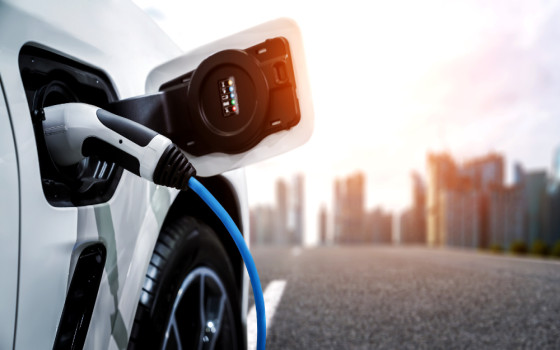
Brussels: Agreement on more recharging stations and alternative fueling throughout Europe

- Europe and Arabs
- Tuesday , 28 March 2023 15:8 PM GMT
Brussels: Europe and the Arabs
More recharging and alternative fueling stations will be deployed in the coming years across Europe to enable the transportation sector to significantly reduce carbon emissions following today's interim political agreement between the European Council representing the member states of the Union on the one hand and the European Parliament on the other.
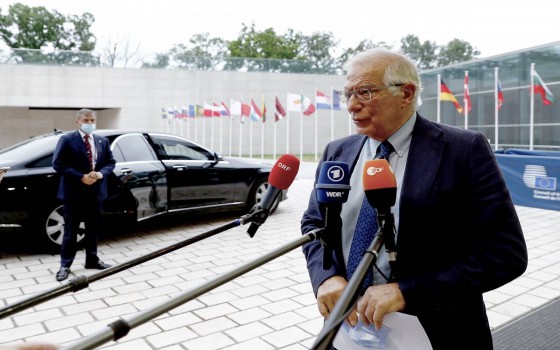
“The agreement sends a clear signal to citizens and other stakeholders that user-friendly charging infrastructure and refueling stations for alternative fuels, such as hydrogen, will be installed across the EU. This means that more public charging capacity will be available on the streets in urban areas as well as along highways. Citizens will no longer have a reason to worry about finding charging and refueling stations for their electric or fuel cell vehicles.” According to what was reported by a European statement, on Tuesday, by Andreas Carlson, the Swedish Minister of Infrastructure and Housing, whose country currently presides over the high session of the European Union, which began at the beginning of the year and ends at the end of next June.
The main objectives of the proposed legislation
The objective of the proposed Alternative Fuels Infrastructure Regulation (AFIR) is threefold:
To ensure an adequate infrastructure network to recharge or refuel vehicles or ships with alternative fuels
To provide workarounds so that ships at anchor and stationary aircraft do not need to keep their engines running
To achieve full interoperability across the European Union and to ensure that the infrastructure is easy to use
According to the European statement in Brussels, "The proposed regulation will play an important role in accelerating the deployment of this infrastructure so that the adoption of zero and low emission vehicles and ships is not impeded, the start of an effective link for the transport sector, and the achievement of the goals of the European climate law."
Key elements retained from the Commission's proposal
The interim agreement retains the essential aspects of the Commission's proposal, ie the main general parameters that will have a real impact on the climate, in particular:
To recharge light electric vehicles, total power capacity requirements based on registered fleet size and Trans-European Transmission Network (TEN-T) coverage requirements must be provided in 2025 and 2030
For heavy electric vehicle recharging and hydrogen refueling, TEN-T coverage requirements by 2030, from 2025 for heavy electric vehicles
For the supply of electricity to ships at the quayside to the requirements in force from 2030
Major amendments to the committee proposal
The text of the interim agreement modifies, however, some aspects of the Commission's proposal:
Given the specific dynamics of heavy electric vehicles and the fact that the market is less developed than that of light vehicles, a gradual process of infrastructure deployment is scheduled to start in 2025 with the aim of covering all TEN-T routes by 2030
To maximize the efficiency of hydrogen refueling investments and adapt to technological developments, requirements focus on the deployment of gaseous hydrogen refueling infrastructure with particular attention to urban nodes and intermodal hubs
To ensure that electric recharge requirements are compatible with a wide range of conditions on the ground and that investments match needs, the total capacity of electric recharge ponds has been adapted and the maximum distance between recharge ponds for very low traffic road sections can be increased.
To make the electric recharging and hydrogen refueling infrastructure easy to use, different payment and pricing options are available, while avoiding disproportionate investment, especially in existing infrastructure.
With regard to ashore power supply at seaports, the provisions are now fully in line with the recently agreed Maritime FuelEU proposal.
The text defines the obligations of each stakeholder involved, provides progress tracking, ensures that users are properly informed and provides the industry with common technical standards and specifications.
Due to the significant technological and market developments that will affect heavy vehicles, the text of the interim agreement includes a provision on a specific revision in the short term, while the entire regulation will also be revised in the medium term.






No Comments Found